
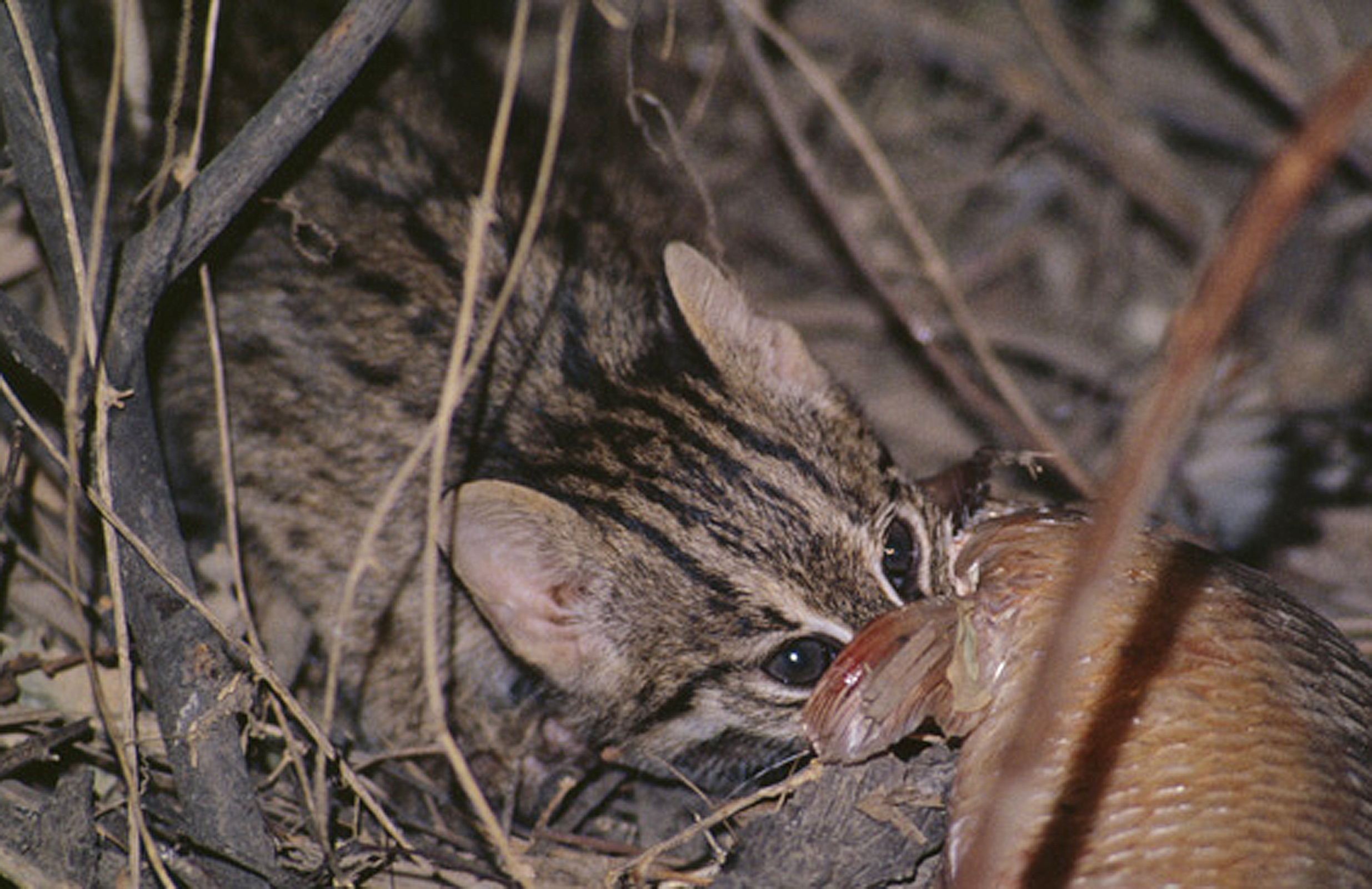
The coastal forest department rescued two fishing cat cubs from a sawmill at Acharbunia in Ward 5 of Sabrang union, Teknaf upazila, Cox's Bazar, on Saturday, 3 February 2024. Jagonews24 reported the same day that the cubs were sent in the afternoon to the Bangabandhu Sheikh Mujib Safari Park at Dulahazara in Chakaria upazila, the government safari park run by the Forest Department in the same district. The fishing cat, called mechho bagh or mechho biral in Bengali, is a wetland cat that was listed as Endangered in Bangladesh's national Red List of 2015 and as Vulnerable on the global IUCN Red List, and it is a protected animal under the Wildlife (Conservation and Security) Act 2012.
What happened at the Acharbunia sawmill
According to Teknaf coastal range officer Bashir Ahmed, quoted by Jagonews24, a worker went to the sawmill at Acharbunia in the morning and saw a large fishing cat with two cubs beside a tree. When he tried to approach them, the mother ran away, and the two cubs were caught. Jagonews24 put the time of the rescue at around 7am. The forest department then took the cubs into its care and, the report said, sent them to the safari park at Dulahazara in the afternoon. The range officer said the mother had probably wandered into the area with her cubs in search of food.
bdnews24.com's Teknaf correspondent, in a report filed at 5.26pm the same day, gave a slightly different account of the morning. That report said workers at the sawmill, which it said belonged to a man named Mostak Ahmed, found the cubs at about 10am inside a pile of timber, told the owner, caught the cubs and informed the forest department. Ahsanul Kabir, a beat officer of the Teknaf coastal forest department, told bdnews24.com that forest staff went to the sawmill, rescued the cubs and brought them to the range office. The Daily Ittefaq, Ajker Patrika and Shomoyer Alo also reported the rescue of the two cubs in Teknaf on 3 February 2024.
The two accounts differ on the hour, but they agree on the place, on the number of cubs, on the role of the coastal forest department and on the destination. Jagonews24 reported the cubs as already sent to the safari park; bdnews24.com, writing earlier in the day, reported that they would be handed over to the Bangabandhu Sheikh Mujib Safari Park at Dulahazara once the divisional forest officer gave instructions.
Why the cubs went to a safari park and not back to the hills
Ahsanul Kabir told bdnews24.com that the cubs were still very small, so releasing them into the hills would not be right, and that the forest staff were feeding them fish and chicken. He also said the animals had probably come into settlements because deforestation had left them short of food. Range officer Bashir Ahmed made a similar point to Jagonews24, saying the mother had probably come to the area looking for food.
Very young kittens depend on their mother. Field and zoo studies summarised by the cat biologists Mel and Fiona Sunquist in their 2002 reference work Wild Cats of the World found that fishing cat kittens weigh about 170 grams at birth, move about actively at around one month, begin to play in water and take solid food at about two months, and are weaned at about six months. They reach adult size at around eight and a half months and get their adult canine teeth at about 11 months. A cub separated from its mother well before weaning cannot hunt for itself, which is why rescued kittens in Bangladesh are often taken to a safari park, a zoo or a rescue facility rather than released alone.
Conservationists have also questioned how rescued fishing cats are released. In a 2015 paper in CATnews, the newsletter of the IUCN Species Survival Commission's Cat Specialist Group, Sayam U. Chowdhury and colleagues noted that 13 fishing cats, including kittens, rescued in Moulvibazar district had all been released by the Forest Department in Lawachara National Park, a 1,250-hectare semi-evergreen forest. They wrote that such a forest may not be ideal habitat for a cat so strongly tied to wetlands, and that releases far from the capture site could lead to the death of the released animals. They called for training in systematic and prompt rescue and release.
The safari park at Dulahazara
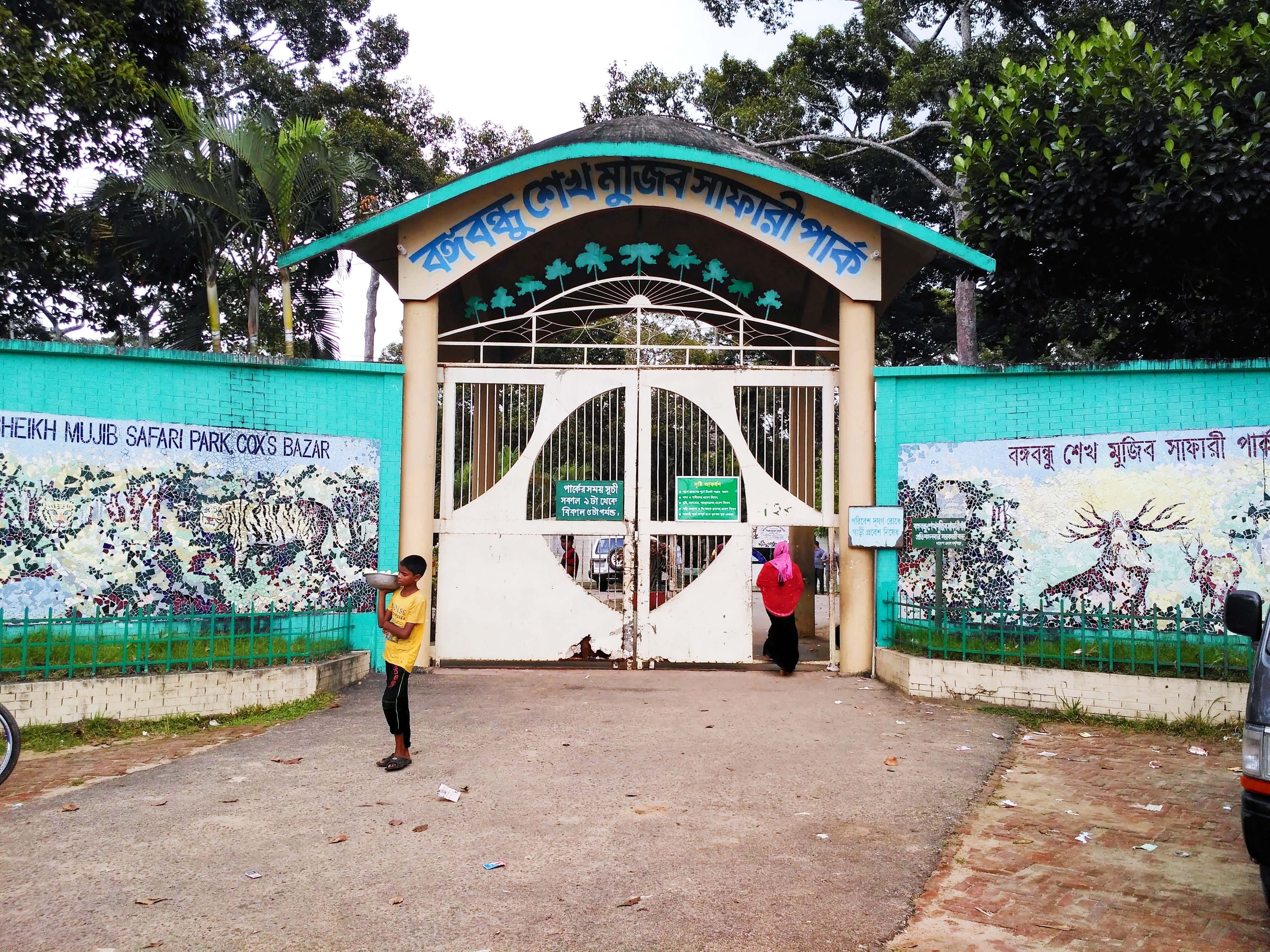
The Bangabandhu Sheikh Mujib Safari Park at Dulahazara, often called the Dulahazara Safari Park, lies in Chakaria upazila of Cox's Bazar district, about 107 kilometres from the port city of Chattogram. It was the country's first safari park and is managed by the Forest Department. The Wikipedia entry on the park gives 1999 as its founding year and describes its purpose as eco-tourism, research and entertainment, and the conservation of wild animals in a natural setting.
A report in The Daily Star's Star Chittagong supplement on 29 June 2005 described how the park was built. Work began in 1998-99 on 300 hectares at a cost of Tk 9.90 crore, and a second phase added 600 hectares and was completed in 2005, bringing the park to about 900 hectares. The report listed the areas set aside inside the park:
- 60 hectares of grazing land for tigers and lions;
- 50 hectares for deer (sambar, spotted deer and hog deer) and gayal;
- 50 hectares with eight water reservoirs for amphibians and migratory birds;
- 20 hectares for bears;
- 100 hectares for elephants;
- 10 hectares for crocodiles.
The same report said the park's stated aims were to save wildlife from extinction, to support the breeding of major animals such as tigers, deer and elephants, to create a sanctuary for migratory birds and grazing grounds for herbivores, and to support eco-tourism, education and research. It said 29 freshwater crocodiles from a batch of 40 collected from the Madras Crocodile Bank Trust in India had been released there. In 2007 The Daily Star reported that animals rescued from homes and establishments and some donated animals, among them spotted deer, barking deer, sambar, crocodiles, black bears, pythons and peafowl, had been sent to the park.
Teknaf and Sabrang: where the cubs were found
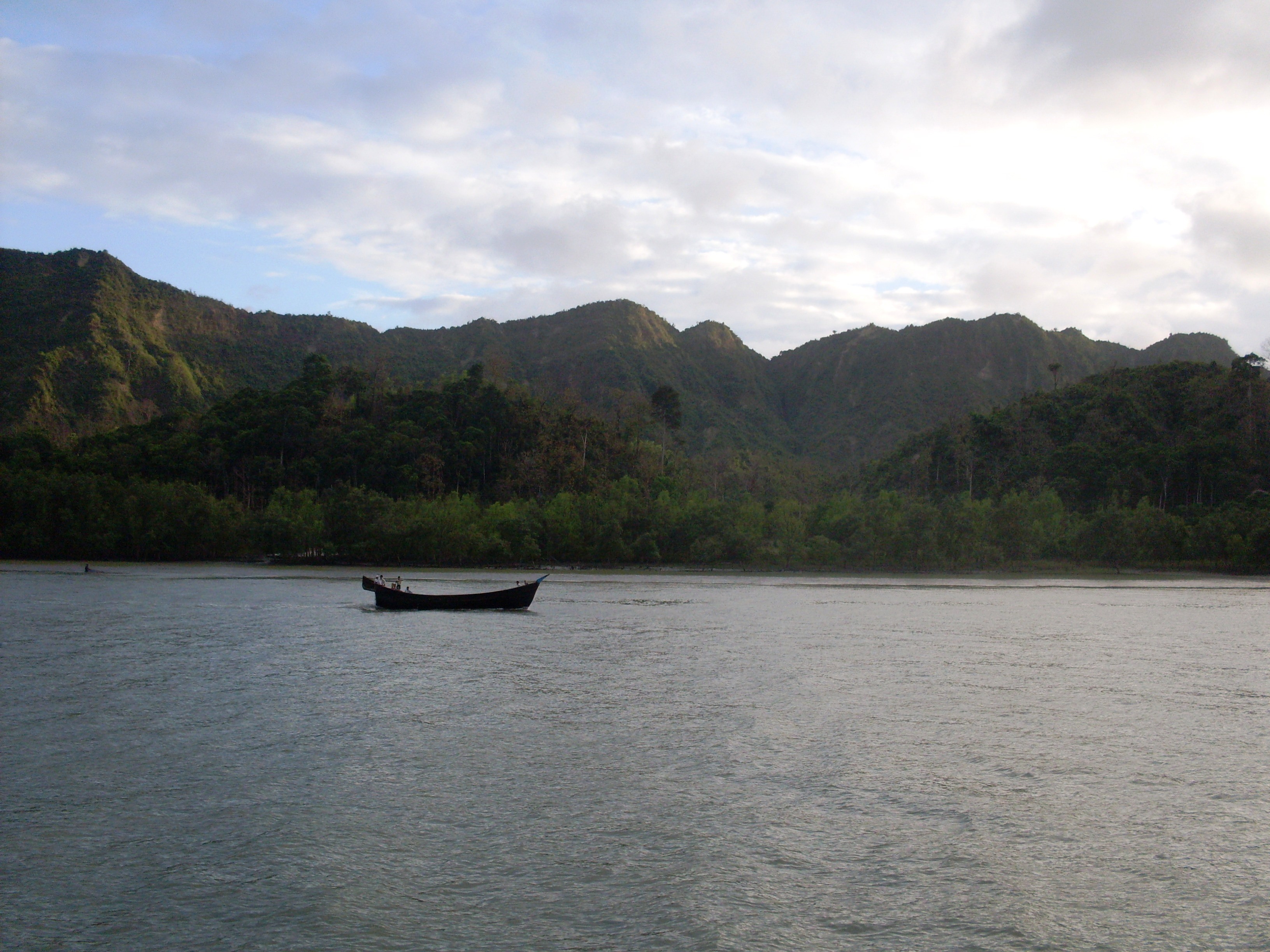
Teknaf is the southernmost upazila of mainland Bangladesh. Banglapedia, the national encyclopedia published by the Asiatic Society of Bangladesh, gives its area as 388.66 square kilometres and places it 86 kilometres south of Cox's Bazar town. It is bounded by Ukhia upazila to the north, the Bay of Bengal to the south and west, and Myanmar's Arakan (Rakhine) state to the east, across the Naf River, its main river. The upazila has six unions: Teknaf, Baharchhara, Sabrang, Whykong, Nhilla and St. Martin's Island.
Banglapedia lists paddy, betel leaf and potato as Teknaf's main crops and mango, jackfruit, banana, papaya, coconut and betel nut as its main fruits. Agriculture is the largest source of household income, at 44.95 per cent, followed by commerce at 21.88 per cent. Banglapedia lists Sabrang Hat, Shah Parir Dwip Hat, Whykong Bazar and Qila Bazar among its main markets.
Much of the Teknaf peninsula's hill forest is protected as the Teknaf Wildlife Sanctuary, established in 1983 as the Teknaf Game Reserve. It covers 11,615 hectares between the Naf River to the east and the Bay of Bengal to the west, and spans five unions of the upazila: Baharchhara, Nhilla, Sabrang, Teknaf Sadar and Whykong. It is one of the few places in Bangladesh where wild Asian elephants can still be seen. The IUCN's 2016 assessment of the fishing cat noted records from the Chittagong Hill Tracts, but also that one study there had found only three possible records, so the cat's numbers in the south-eastern hills were poorly known.
What a fishing cat is
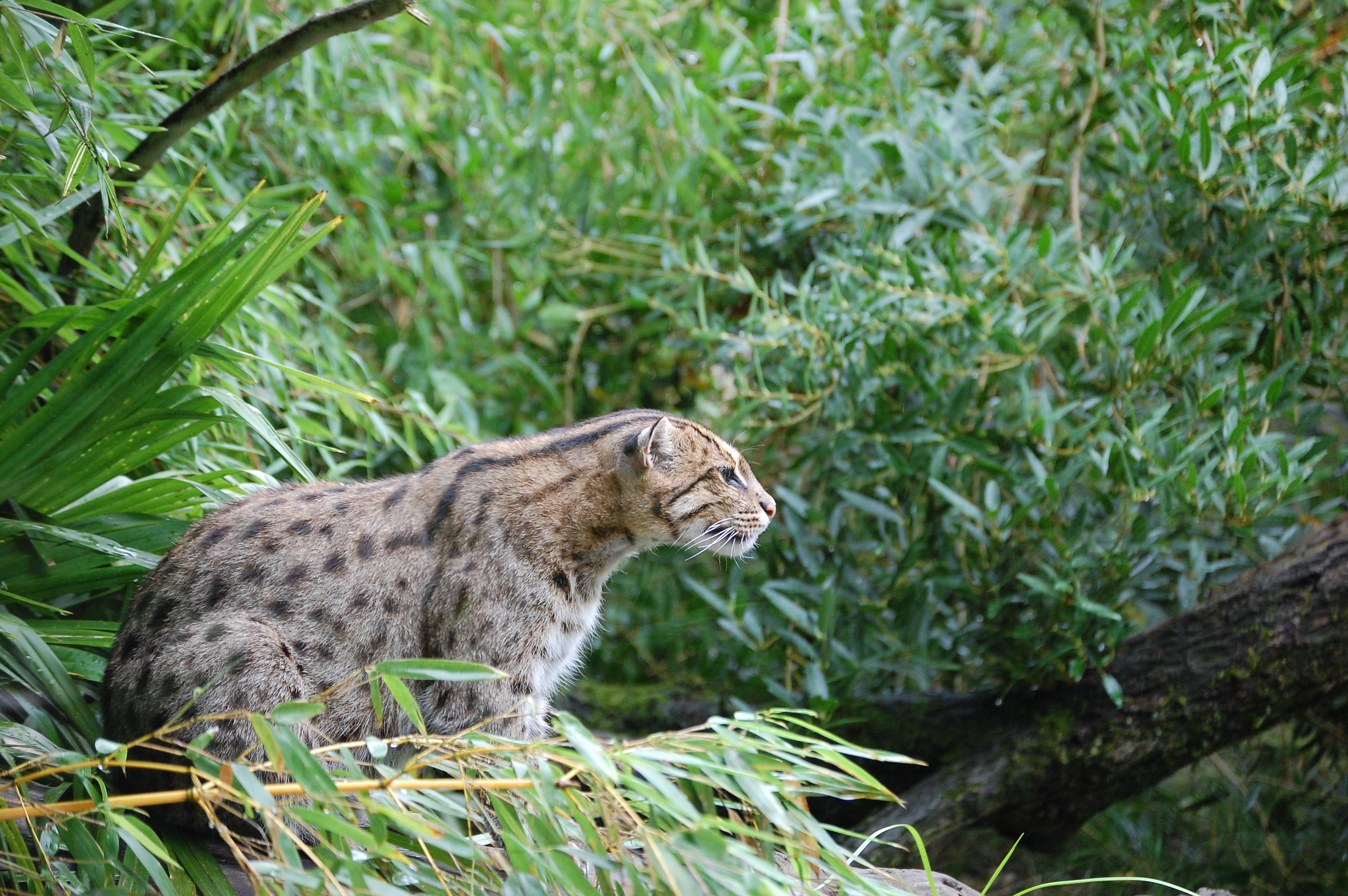
The fishing cat (Prionailurus viverrinus) is a medium-sized wild cat of South and Southeast Asia, about twice the size of a domestic cat and the largest member of its genus. Its head and body measure 57 to 78 centimetres, with a tail of 20 to 30 centimetres. Males weigh 8 to 17 kilograms and females 5 to 9 kilograms. The coat is a deep yellowish grey with black lines and spots, with two stripes across each cheek and two above the eyes. Short, dense underfur helps keep it dry and warm in water, its paws are partly webbed, and its claws are not fully sheathed.
As its name says, it lives by water. It is found in densely vegetated wetlands around slow-moving water: swamps, marshes, oxbow lakes, tidal creeks and mangroves, mostly in the lowlands. It is mainly nocturnal and a strong swimmer, even under water. It hunts along the edge of the water and dives for prey further out, spending much of its time waiting in ambush. Fish made up about three-quarters of its diet in a study at Keoladeo National Park in India. The IUCN's 2016 assessment called it a dietary generalist that eats rodents, birds and fish, and cited a study in Howrah district of West Bengal estimating that each fishing cat eats between 365 and 730 rodents a year.
The national Red List of Bangladesh, published by IUCN Bangladesh in 2015, describes the fishing cat in this country as a nocturnal, solitary and shy animal, most active at dawn and dusk, that prefers wetlands, marshes and haor areas and lives in rural areas along rivers, near water bodies and in thickets on the banks of wetlands. It is mainly a fish eater, the assessment says, but near human settlements it will kill small animals it can catch, such as chickens, ducks, geese and young goats or sheep.
Adults without young live alone. In a radio-tracking study in Chitwan National Park in Nepal, the home ranges of females covered 4 to 6 square kilometres and that of a male 16 to 22 square kilometres. Mating in the wild is thought to happen mostly in January and February, with kittens seen mainly in March and April. In captivity, pregnancy lasts 63 to 70 days and a litter has one to four kittens, usually two or three. The cats reach sexual maturity at about 15 months, and captive animals have lived up to 10 years.
A threatened cat, in Bangladesh and worldwide
When the cubs were rescued, the fishing cat's global status was set by the IUCN Red List assessment of 2016 (assessors S. Mukherjee and colleagues, dated 21 June 2016), which listed the species as Vulnerable. It had been listed as Endangered in 2008 and 2010; the assessors explained that the change reflected better information, not an improvement in the cat's situation. The assessment named Sri Lanka, Bangladesh, West Bengal in India and the Terai-Duar belt of the Himalayan foothills as the cat's known global strongholds, and suspected that habitat loss and killing by people had cut the global population by 30 per cent or more over the previous 15 years, or three generations.
The same assessment expected irreversible losses of around 30 per cent of fishing cat habitat in the Ganges-Brahmaputra Delta, which includes most of Bangladesh, over the following 15 years, and a further 30 per cent fall in the global population. In South Asia it named the main threat as habitat loss and fragmentation from urbanisation, industry, agriculture and aquaculture, including prawn and shrimp farms. In Bangladesh it recorded the cat in the Sundarbans, in unprotected wetlands of the Brahmaputra basin and in the Chittagong Hill Tracts, and judged it relatively safe in the Sundarbans mangroves and the north-eastern swamps. The fishing cat is listed in Appendix II of CITES, the convention that regulates international trade in wild species, and hunting it is prohibited in Bangladesh.
Nationally the picture was worse. The Red List of Bangladesh (Volume 2: Mammals), assessed by Mohammed Mostafa Feeroz and published by IUCN Bangladesh in 2015, listed the fishing cat as Endangered, the same category it had held in the 2000 national list. The assessment said the cat was widely distributed but at low density, that more than 50 per cent of its population was suspected to have declined over the previous two decades, and that its area of occupancy and habitat quality were still shrinking. It found the largest population in the Sundarbans mangrove forest, with smaller and declining populations in the countryside and other forests.
Conflict with people
Killing by people is a major threat to fishing cats in Bangladesh. Chowdhury and colleagues, in the 2015 CATnews paper, analysed fishing cat reports in The Daily Star, Prothom Alo and local newspapers from January 2010 to March 2013. They found 82 reports, including 30 confirmed deaths, 14 releases by the Forest Department and 38 cases in which the cat's fate was not known. Almost all the deaths were caused by people: beatings by groups of villagers, strangling, snaring, or capture followed by starvation. The authors suspected that people killed the cats because they believed the cats preyed on their livestock, fish and poultry, and that many cats were taken for tiger cubs or other carnivores. They noted that locals had often misidentified fishing cats, especially cubs.
The same study found that 90.6 per cent of the reports came in the dry season between November and May, when, the authors suggested, the cats are forced to hunt in shrinking water bodies near settlements and fish ponds. Fishing cats were reported from every division of the country. The authors linked the conflict to the loss of wetlands, noting that nearly 45 per cent of Bangladesh's wetlands had been converted and the rest were being degraded, and wrote that shrinking habitat and food shortage had possibly driven the cats into human settlements. They recommended surveys of fishing cat populations, education programmes for villages near wetlands, a way for villagers to report fishing cats to wildlife authorities, and better poultry husbandry to cut losses.
A later study looked at why people kill the cat. Meherun Sultana and colleagues, writing in the Journal of Threatened Taxa on 26 October 2022, interviewed people around Hakaluki Haor, a large wetland in north-eastern Bangladesh. They found that most fishing cats there were killed by groups of 10 to 15 people using whatever tools were at hand, that the bodies were not used afterwards, and that fear was the strongest motive for killing. The authors concluded that economic solutions alone would not stop the killings and that attitudes towards the species had to change.
What the law said
At the time of the rescue, wild animals in Bangladesh were protected by the Wildlife (Conservation and Security) Act 2012 (Act No. 30 of 2012, dated 10 July 2012). The fishing cat, named in the Act's Bengali text as mechho biral, appears among the cats in Schedule 1, the list of protected wild animals. Section 6 of the Act prohibited anyone from hunting any wild animal without a licence or permit under the Act, and the Act defines hunting broadly: killing, catching or poisoning a wild animal, chasing it for any of those purposes, or injuring or harming it.
The penalty for breaking Section 6 was set in Section 39: imprisonment of up to one year, a fine of up to Tk 50,000, or both, and for a repeat offence imprisonment of up to two years, a fine of up to Tk 1 lakh, or both. Tigers and elephants (Section 36) and leopards, clouded leopards, hoolock gibbons, sambar deer, crocodiles, gharials, whales and dolphins (Section 37) carried heavier penalties. Section 41 made anyone who helped or encouraged an offence liable to the same penalty. The Act also defined a wildlife breeding centre as a government-approved centre where rare, endangered or critically endangered wild animals that have been captured or rescued are kept for rehabilitation and breeding.
Earlier rescues in Teknaf and elsewhere
The Acharbunia rescue came ten days after another in Teknaf. On Wednesday, 24 January 2024, according to The Daily Star's Bengali edition and bdnews24.com, local people found a young fishing cat hiding at a betel-leaf shop near the bus station in Teknaf municipality and caught it. Forest staff took it to the range office, fed it fish and chicken, and released it that afternoon in the protected forest of the nursery park area of the Teknaf forest range. Range officer Mizanur Rahman told bdnews24.com that the animal was a male about one to one and a half years old, and that he believed deforestation had left it short of food and driven it into the settlement.
Similar cases had been reported elsewhere. On 23 January 2023 The Daily Star's Bengali edition reported that a fishing cat and her cub had been found caught in a bamboo trap by a canal at Raghunathpur village in Harinakunda upazila, Jhenaidah. A local farmer had set the trap after losing ducks and chickens for several days. Mofizur Rahman of the Khulna forest division said the mother and cub were rescued with help from local volunteers, given initial treatment and released in a protected forest. Jhenaidah also appeared in the 2015 CATnews study, which cited reports of 22 fishing cats killed in different upazilas of the district.
Photo: Anirnoy / Wikimedia Commons (CC BY-SA 4.0)
Sources: Jagonews24, bdnews24.com, The Daily Ittefaq, Ajker Patrika, Shomoyer Alo, The Daily Star, IUCN Red List (2016 assessment of the fishing cat), IUCN Bangladesh Red List of Bangladesh Volume 2: Mammals (2015), CATnews (IUCN SSC Cat Specialist Group), Journal of Threatened Taxa, Wildlife (Conservation and Security) Act 2012 (bdlaws.minlaw.gov.bd), Banglapedia, Wikipedia
Comments
(0)