
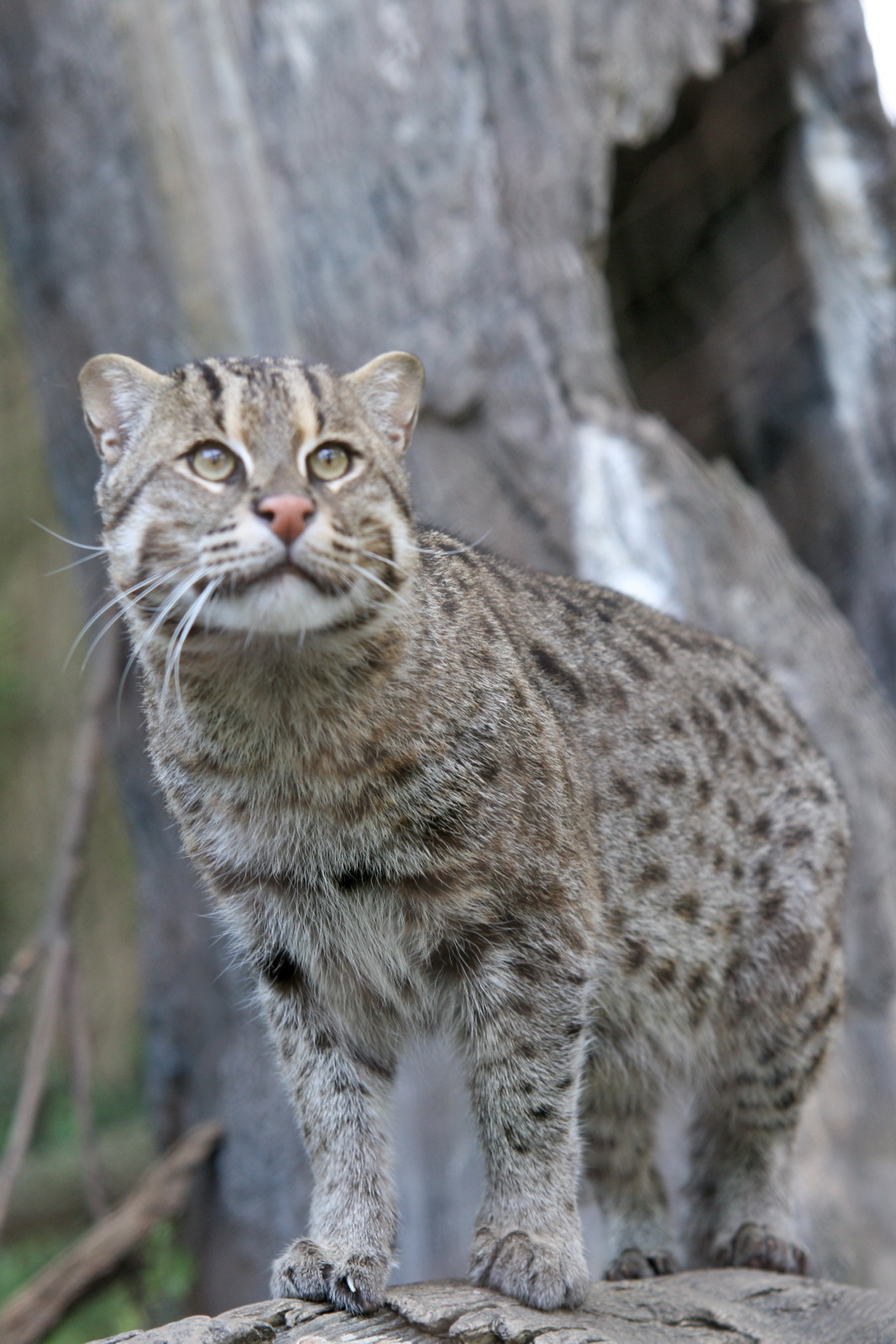
Forest Department staff in Teknaf, Cox's Bazar, rescued a young male fishing cat from a house in Naitongpara, a neighbourhood beside the hills of Teknaf municipality, on Monday 22 May 2023, and released it into the forest the same afternoon. Children playing at the home of Mohammad Shah Emran spotted the animal at about 11am; local people then caught it with a net and informed the Forest Department. Officials put its age at one to one and a half years. Sarwar Alam, divisional forest officer (DFO) of the Cox's Bazar South Forest Division, confirmed both the rescue and the release, which took place in the Sairon canal area next to Betbagan, under the department's Teknaf Sadar range.
How the rescue unfolded
Four newspapers reported the event on 22 May 2023, Jagonews24, Prothom Alo, The Daily Ittefaq and Shampratik Deshkal, and their accounts agree on the sequence. The children raised the alarm, neighbours gathered, and people caught the cat with a net before calling the Forest Department. Forest staff went to the house, took the animal into their care and carried it to the range office. Abul Kalam, the forest beat officer of Teknaf Sadar, told Prothom Alo and Shampratik Deshkal that the cat was given fish to eat at the office, and that a crowd gathered there to see it.
Abul Kalam described the animal as a male, about one and a half feet tall and two and a half feet long, with striped markings, grey fur and a face like that of a domestic cat. Prothom Alo placed the house in the Naitongpara area near Naitong hill, within Teknaf municipality. The name is spelled in several ways in the reports; Banglapedia's entry on Teknaf upazila lists Naitong hill as the site of a Buddhist temple.
DFO Sarwar Alam told Prothom Alo: "At first we rescued the fishing cat cub, brought it in and kept it in a room for observation." The officials found it healthy, and on his instruction it was released that afternoon; Prothom Alo put the time at about 3pm. According to Prothom Alo and Shampratik Deshkal, the DFO said he believed the young cat had come into the settlement because unchecked clearing of forest and undergrowth had left it short of food.
The reports called the animal a cub, but the age the officials gave matters for understanding what was found. According to Mel and Fiona Sunquist's reference work Wild Cats of the World, fishing cats reach adult size at about eight and a half months, have adult canine teeth by 11 months and become sexually mature at about 15 months. An animal of one to one and a half years had therefore already passed the age at which the species reaches adult size, which fits the measurements the beat officer gave.

What a fishing cat is
The fishing cat, Prionailurus viverrinus, is a medium-sized wild cat of South and Southeast Asia. The English zoologist Edward Turner Bennett described it in 1833 from a skin sent from India. In Bengali it is called mechho bidal or mechho bagh, the "fishing cat" or "fishing tiger", and Banglapedia lists it among the eight wild cat species of Bangladesh. Despite the word "tiger" in its local name, it is not a big cat: it is the largest member of its genus and about twice the size of a domestic cat.
Its head and body measure 57 to 78 centimetres, with a tail of 20 to 30 centimetres. Males weigh 8 to 17 kilograms and females 5 to 9 kilograms. The coat is a deep yellowish grey to ashy grey, marked with black lines and spots. The paws are partly webbed and the claws are not fully sheathed, and the short, dense, layered fur is thought to help keep water out, an adaptation to a life spent around water.
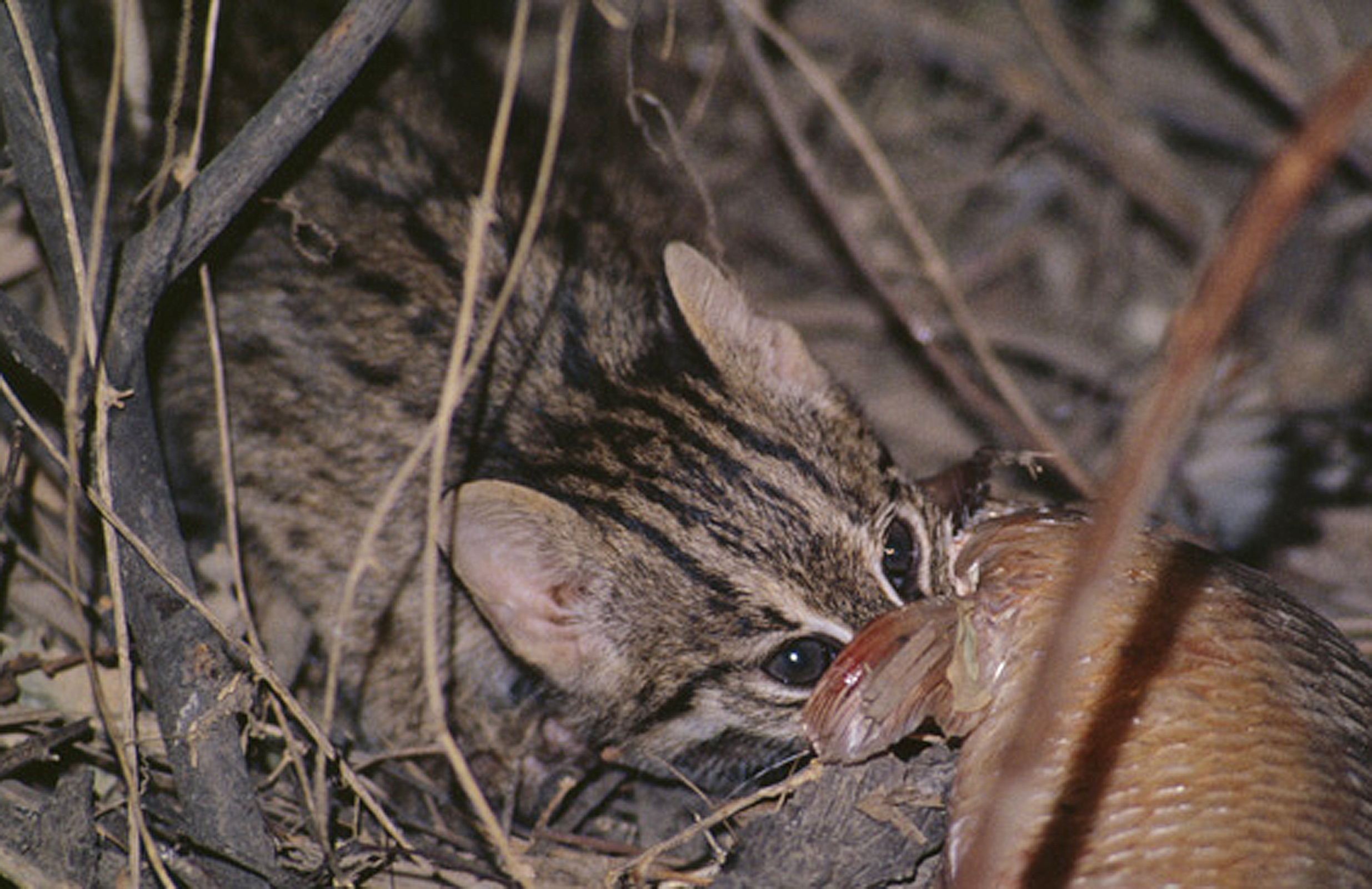
It lives in densely vegetated wetlands around slow-moving water: swamps, marshes, oxbow lakes, tidal creeks and mangrove forests. The IUCN's 2016 assessment describes it as strongly associated with water bodies and with marshland covered by tall reeds and grasses. Most records come from the lowlands, though in Sri Lanka it also lives in wetlands in hilly areas. It is largely nocturnal and hunts along the edges of watercourses, grabbing prey from the water and sometimes diving after it, and it spends much of its hunting time waiting in ambush.
Fish is its main food. In Keoladeo National Park in India, analysis of droppings found fish made up about three quarters of its diet. It is, however, a dietary generalist that also eats rodents, birds, insects, molluscs, reptiles, frogs and crabs. A study in the Howrah district of West Bengal, cited in the IUCN assessment, estimated that each fishing cat eats between 365 and 730 rodents a year, and found that livestock made up less than 5 per cent of its diet. The IUCN Bangladesh Red List of 2015 notes that near settlements it may kill poultry, ducks, geese and young goats or sheep, which is where much of its trouble with people begins.
In the wild, mating most likely takes place in January and February, and kittens are mostly seen in March and April. In captivity, gestation lasts 63 to 70 days and litters average two or three kittens. Kittens weigh about 170 grams at birth, start eating solid food at about two months and are fully weaned at six months. A radio-tracking study in Chitwan National Park in Nepal found home ranges of 4 to 6 square kilometres for three females and 16 to 22 square kilometres for a single male. The IUCN uses a generation length of five years for the species.
A threatened cat, worldwide and in Bangladesh
On the IUCN Red List the fishing cat was listed as Vulnerable, under an assessment by Shomita Mukherjee and colleagues dated 21 June 2016; this was its global status in May 2023. It had been listed as Endangered in 2008 and 2010, as Vulnerable in 2002 and as Lower Risk/near threatened in 1996. The IUCN stated that the 2016 change was not a genuine improvement: it reflected better information, not a better conservation situation.
The 2016 assessment suspected that habitat loss and the killing of fishing cats in conflict with people had cut the global population by 30 per cent or more over the previous 15 years, or three generations, and judged a further 30 per cent fall likely over the next 15 years. It named Sri Lanka, Bangladesh, West Bengal in India and the Terai-Duar belt of the Himalayan foothills as the species' known strongholds, and warned that about 30 per cent of its habitat in the Ganges-Brahmaputra Delta was likely to be lost irreversibly over the coming 15 years. In Bangladesh it recorded the cat in the protected Sundarbans, in unprotected wetlands of the Brahmaputra basin and, on a few records only, in the Chittagong Hill Tracts, and judged it relatively safe in the Sundarbans mangroves and the north-eastern swamps.
At national level the species was rated Endangered in the Red List of Bangladesh, Volume 2: Mammals, published by IUCN Bangladesh in 2015 and assessed by Mohammed Mostafa Feeroz. That assessment suspected that more than half of the population had been lost over the previous two decades and noted that the area it occupies and the quality of its habitat were still declining. It described the cat as found across the country, in the countryside, in village homestead woodland, in natural forests and in wetlands, with the largest population in the Sundarbans and numbers falling in other forests.
The two lists are often mixed up in Bangladeshi news reports. Some, including a Prothom Alo report of May 2022 and a Daily Star report of February 2018, called the fishing cat globally endangered. Since 2016 the global listing has been Vulnerable, while Endangered is its status on the national list for Bangladesh.
Conflict with people in Bangladesh
The most detailed look at what happens when fishing cats meet people in Bangladesh was published in CATnews, the newsletter of the IUCN Species Survival Commission's Cat Specialist Group, in spring 2015. Sayam U. Chowdhury, Abida R. Chowdhury, Sakib Ahmed and Sabir Bin Muzaffar reviewed fishing cat reports in The Daily Star, Prothom Alo and local newspapers between January 2010 and March 2013, checked the photographs to confirm each identification, and interviewed Forest Department staff and conservationists. They found 82 reports. Their table counts 30 confirmed deaths, 14 cats rescued and released by the Forest Department, and 38 cases whose outcome could not be determined.
Fishing cats were reported from every division of the country: 17 reports from Sylhet division, 14 each from Khulna and Dhaka divisions, and only one from the dry Rangpur division. More than 90 per cent of the reports, 90.6 per cent, fell in the dry season between November and May. The authors suggested that in those months the cats are forced to hunt in the smaller water bodies left around villages, fish farms and lake-like wetlands where people also fish.
Almost every death they recorded was caused by people: beating by groups of villagers, strangling, snaring, or capture followed by starvation, with dead animals sometimes hung up for display. The authors suspected that people kill fishing cats mainly because they believe the cats take their livestock, fish and poultry, and that many were probably mistaken for tiger cubs or other carnivores, often out of fear. They concluded that shrinking habitat and food shortage had possibly driven the cats into settlements, where people then react by killing them.
The study also questioned where rescued cats were being released. It recorded 13 fishing cats, including kittens, rescued in Moulvibazar district and all released in Lawachara National Park, a 1,250-hectare tropical semi-evergreen forest, which the authors said may not be ideal for a species so closely tied to wetlands, warning that releases far from the capture site could lead to the animals' deaths. Its recommendations were surveys of fishing cat populations inside and outside protected areas, large education programmes for communities near wetlands, a way for villagers to report fishing cats to the wildlife authorities, better housing for poultry to reduce losses, and training in prompt rescue and release.
Later reports showed some of these ideas being put into practice. On 12 May 2022 Prothom Alo reported, from data supplied by the Forest Department's Wildlife Management and Nature Conservation Division in Moulvibazar, that between January 2020 and January 2022 the department had rescued 59 fishing cats in that district, of which 7 died and 52 were released alive, 26 of them cubs. Most had been caught in traps set near fish farms, poultry farms, homes and paddy fields. Earlier releases into Lawachara and Satchari national parks had often left the cats short of food, so that they were caught again; the division had since begun releasing them where they were found, after explaining their usefulness to local people. Its wildlife and biodiversity conservation officer, Mirza Mehedi Sarwer, told the paper: "Fishing cats are no longer being beaten to death."
Rescues of young fishing cats close to homes were not new. In February 2018 The Daily Star reported that forest officials had rescued four three-month-old fishing cat kittens near a house in Kanaighat upazila of Sylhet and released them into Mulagul forest the same afternoon.
Teknaf, its hills and its sanctuary
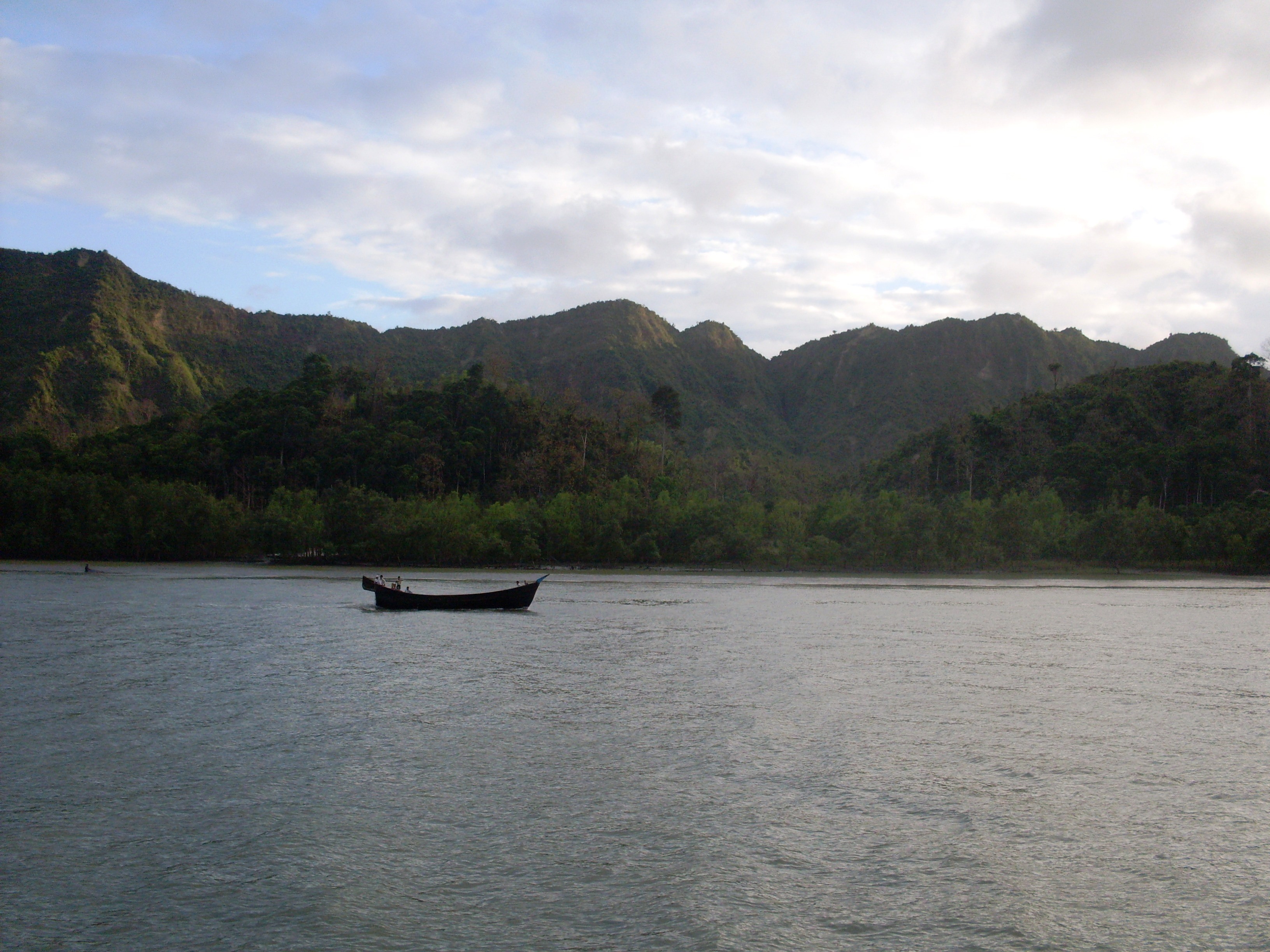
Teknaf upazila lies at the south-eastern tip of Bangladesh, 86 kilometres south of Cox's Bazar town, according to Banglapedia. It covers 388.66 square kilometres and is bounded by Ukhia upazila to the north, the Bay of Bengal to the south and west, and Myanmar's Arakan (Rakhine) State to the east, across the Naf River, its main river. It has six unions, Teknaf, Baharchhara, Sabrang, Whykong, Nhilla and St. Martin's Island, and a municipality of 4.05 square kilometres with nine wards. Banglapedia gives agriculture as the largest source of income, at 44.95 per cent; the main crops are paddy, betel leaf and potato, shrimp is farmed at 255 fishery sites, and betel nut, betel leaf, fish and salt are the main exports.
The hill forests of the peninsula are protected in the Teknaf Wildlife Sanctuary, declared a game reserve in 1983 under the Bangladesh Wild Life (Preservation) (Amendment) Act 1974 and formerly known as the Teknaf Game Reserve. It covers 11,615 hectares across five unions of the upazila, Baharchhara, Nhilla, Sabrang, Teknaf Sadar and Whykong, with the Naf River to the east and the Bay of Bengal to the west. Its features include Naitong hill, Kudum cave and Toinga peak, at about 1,000 feet, and it is one of the few places in Bangladesh where Asian elephants can be seen in the wild. The May 2023 reports did not say whether the release site at the Sairon canal near Betbagan lies inside the sanctuary.
Pressure on the forests of Cox's Bazar
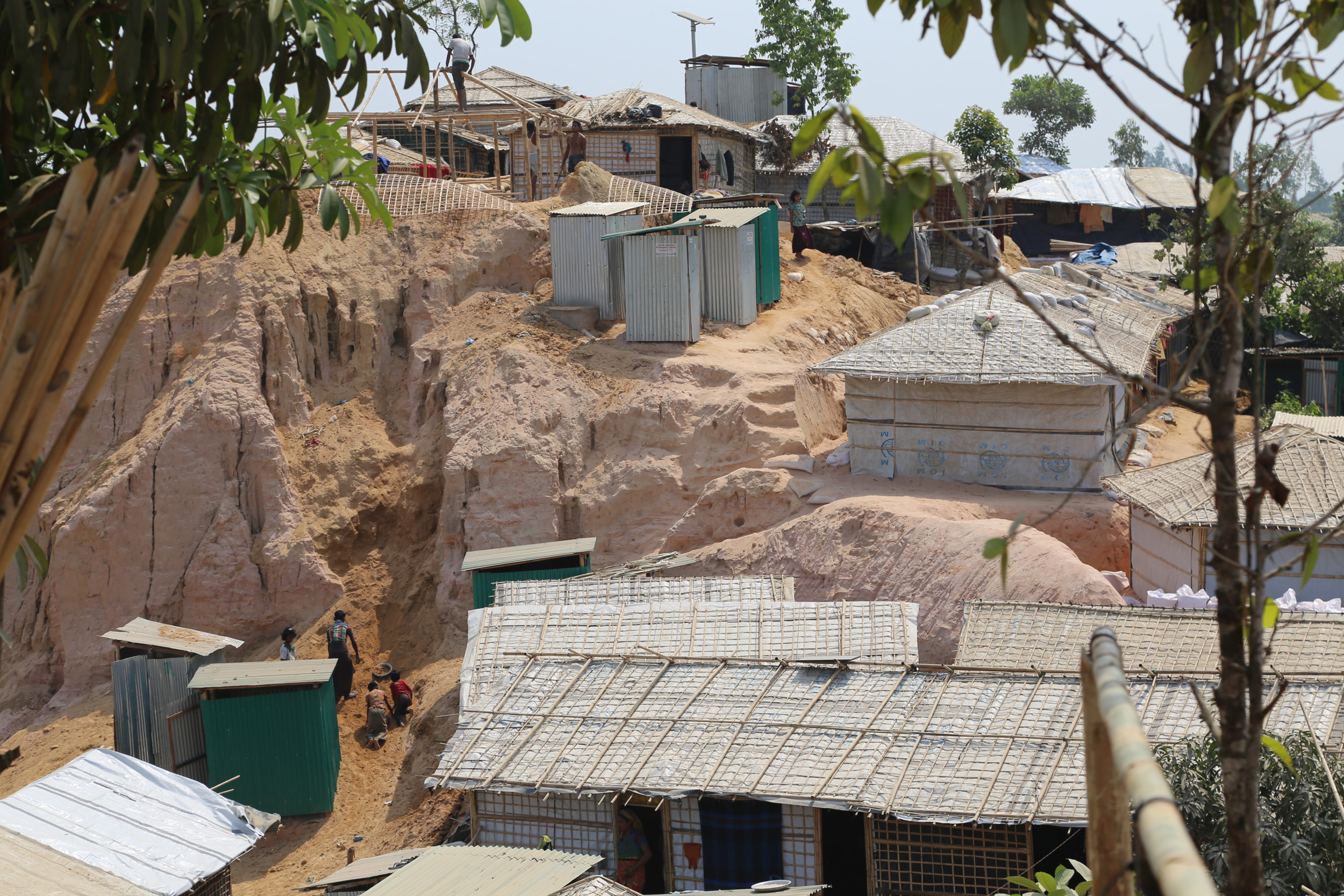
The DFO's explanation, that a lack of food had pushed the young cat into a settlement, echoes years of warnings about the forests of southern Cox's Bazar. After at least 655,000 Rohingya people fled Myanmar into Bangladesh from 25 August 2017, by the count of the UN refugee agency UNHCR, the United Nations Development Programme (UNDP) assessed the environmental impact of the camps in Ukhia and Teknaf. Prothom Alo reported in December 2017 that the UNDP had counted 1,156 species of plants and animals in the surrounding area, including 43 mammals, 243 birds, 54 reptiles and 27 amphibians, and that the Teknaf sanctuary, Himchhari National Park and the proposed Inani National Park were at risk.
In January 2019 The Daily Star reported on UNDP's Rapid Environmental Impact Assessment, submitted to the environment ministry. It found that the influx had affected 26,600 of the 60,000 hectares of forest land in Cox's Bazar, and that 1,485 hectares of forest land under the Ukhia, Whykong and Teknaf ranges had been encroached, 700 hectares of it plantation. About half of the hills in the influx area had been completely stripped of cover, more than 1,500 social forestry participants had lost their benefits, and the report warned that continued firewood collection could turn the wider forest into low-growing scrub. Camps had also been built on elephant corridors.
Neither report studied fishing cats in Teknaf, and the May 2023 news did not establish why this particular animal came into Naitongpara. The Chowdhury study, however, reached a similar general conclusion for the country as a whole: conflicts between people and fishing cats rise as habitat is degraded and encroached, and food shortage can drive the cats into villages.
What the law said in 2023
In May 2023 wildlife in Bangladesh was protected by the Wildlife (Conservation and Security) Act 2012, Act No. 30 of 2012, dated 10 July 2012. Section 6 of the Act forbade anyone to hunt any wild animal without a licence or permit, and the Act defined hunting broadly: killing, catching or poisoning a wild animal, or any similar attempt; chasing it for any of those purposes; and injuring or harming it.
Under section 39, breaking section 6 was punishable by up to one year in prison, a fine of up to Tk 50,000, or both, and a repeat offence by up to two years, a fine of up to Tk 1 lakh, or both. Sections 36 and 37 set heavier penalties for killing particular animals, among them tigers, elephants, leopards and clouded leopards; the fishing cat was not among the species named in those sections. The Act also provided for wildlife breeding centres, where rare, endangered and critically endangered wild animals that have been seized or rescued are kept and bred for rehabilitation, and allowed the government to make rules on compensation for loss of life and property caused by wild animals.
Beyond national law, the fishing cat is listed in Appendix II of CITES, the Convention on International Trade in Endangered Species of Wild Fauna and Flora, and the IUCN's 2016 assessment records that hunting it is prohibited in Bangladesh. Several wetlands that hold fishing cat populations are Ramsar sites of international importance, the Sundarbans of Bangladesh among them. In the Teknaf case the people who caught the young cat handed it to the Forest Department, which is the step the Chowdhury study had urged: a way for villagers to bring fishing cats to the attention of the wildlife authorities so that they can act.
Photo: Cliff / Wikimedia Commons (CC BY 2.0)
Sources: Jagonews24, Prothom Alo, The Daily Ittefaq, Shampratik Deshkal, IUCN Red List of Threatened Species (Mukherjee et al. 2016), IUCN Bangladesh (Red List of Bangladesh, Volume 2: Mammals, 2015), CATnews (IUCN SSC Cat Specialist Group, 2015), The Daily Star, Banglapedia, Bangladesh Laws (Legislative and Parliamentary Affairs Division), Wikipedia
Comments
(0)