
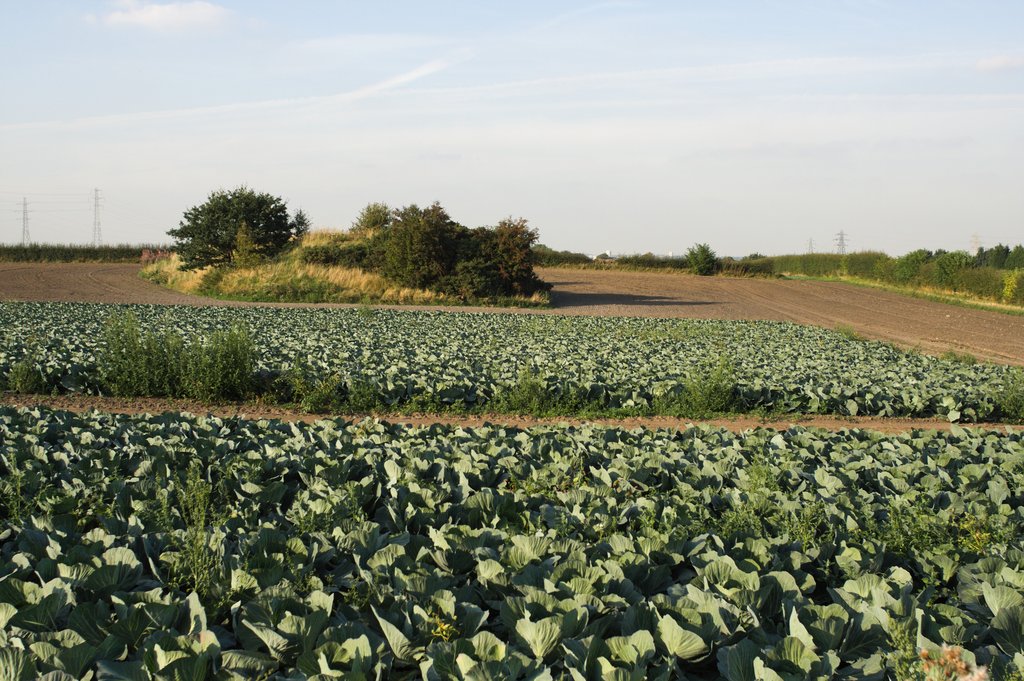
A severe drought through July and into August put exceptional pressure on Ireland's outdoor vegetable growers, and the difference between crops came down to access to irrigation, Teagasc says in a report published on 24 September, 'The 2026 Drought and Its Aftermath: Impact and Recovery in the Irish Outdoor Vegetable Sector'.
Unirrigated crops lost 25% to 40% of their yield and quality, while irrigated crops kept substantially more of their value. But growers who could irrigate paid heavily: in some crops more than €2,700 a hectare in water alone, before equipment and infrastructure.
"Growers with access to irrigation were applying water four, five or even six times more than normal," said Eoin Sweetman, a Teagasc vegetable adviser — an extra €1,380 to €2,070 a hectare in some crops. Even irrigated ground saw higher grade-outs and more produce outside specification, "so growers were often paying more to produce less marketable yield".
Only 30% to 35% of the vegetable area has enough irrigation capacity, which depends on equipment, infrastructure, labour, location and soil as well as water, and even well-equipped growers built for two-to-three-week dry spells were tested by a drought lasting eight to nine weeks. Rain returned from the third week of August, but uneven recovery means the main risk now is disrupted continuity of supply.
"2026 wasn't an anomaly — it was a rehearsal, and not just for Ireland," said Dermot Callaghan, head of Teagasc's horticulture development department. Ireland has plenty of water over a year, he said; what is missing is the infrastructure to manage it to crops' seasonal needs.
The report was written by Kathleen O'Sullivan for Agriland.
Photo: Mark Anderson / Wikimedia Commons (CC BY-SA 2.0)
Source: Agriland
Comments
(0)