
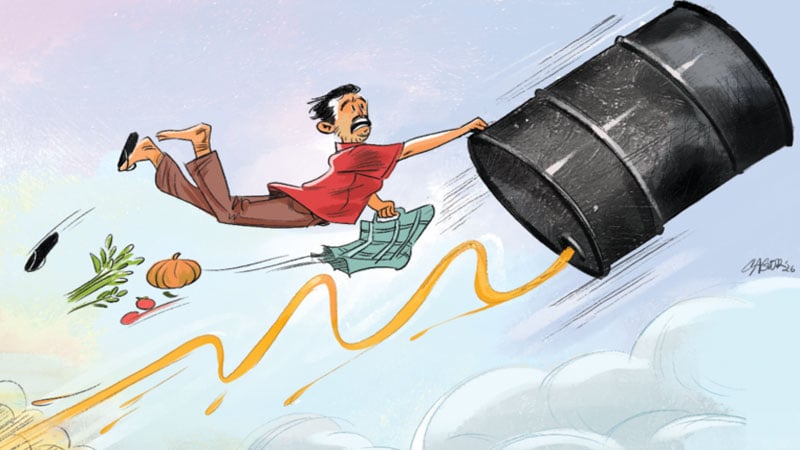
The Tk 20-a-litre rise in the price of diesel has reached the vegetable and egg stalls first. Within two days, retail prices of a range of vegetables in Dhaka have gone up by Tk 10 to 20 a kilogram and eggs by Tk 5 a dozen, and traders put it down to higher truck fares.
At Mohakhali, Kalmilata, Tejgaon Colony and Karwan Bazar markets on Tuesday, pointed gourd and okra sold for Tk 60–80 a kg, against Tk 40–60 on Sunday. Ridge gourd, sponge gourd, long aubergine and bitter gourd rose from Tk 50–70 to Tk 60–80, and green chilli climbed Tk 30 to Tk 130–150 a kg.
At Karwan Bazar, truck driver Alamgir Hossain, who had brought 27 sacks of carrots from a cold store in Fatullah, Narayanganj, said he charged Tk 2,500 for a trip that used to cost Tk 2,300. His truck does roughly six kilometres to a litre of diesel, so a 50 km run now burns more than Tk 160 of extra fuel compared with two days earlier.
The carrots' owner, wholesaler Abdul Hannan, said the extra fare has to be recovered from the carrots. A kilogram that sold wholesale for Tk 50 on Monday would go for Tk 55 on Tuesday, he estimated, but he could not say how much more shoppers would pay at retail.
Mizanur Rahman, a retailer at Mohakhali, explained that vegetables pass through three hands between the farmer and the shopper: the bepari who trucks them to Dhaka, the wholesaler and the retailer. If the bepari adds one taka, each of the next two adds another, so the shopper pays three. Traders expect other consumer goods to follow.
S M Nazer Hossain, vice-president of the Consumers Association of Bangladesh (CAB), called the diesel increase “a blow on top of a blow” for consumers already squeezed by inflation, and said the market cannot be controlled without strict monitoring. Zahirul Islam, director general of the Directorate of National Consumer Rights Protection, said surveillance is being stepped up across the country, but enforcement alone cannot secure every aspect of consumer protection.
For farmers the question cuts both ways: getting produce from the field to city markets now costs more, while much of the price rise is added along the transport and trading chain. Vegetable prices also rose briefly after the cabinet approved a new pay scale for government employees on 31 August, then eased; how far this round of diesel-driven increases runs is still to be seen.
Source: samakal



Comments
(0)