
Prime Minister Tarique Rahman called on everyone to come forward to protect the environment when he launched a tree-planting programme on the banks of the Sagardi canal in Barishal city on Monday, 13 July 2026. "We must protect our own environment ourselves," he said, according to Jagonews24. "If we do not look after the environment, we will be the ones who suffer."
The prime minister spoke at about 2.15pm at the start of a programme to plant 350 saplings at once along both banks of the canal, next to the area known as Trish Godown in the city. It was the second planting programme of his day in Barishal district: in the morning he had inaugurated a larger planting drive on the banks of re-excavated canals in Gournadi upazila. The visit came four days after the national tree-planting campaign and tree fair of 2026 opened in Dhaka.
What he said on the canal bank
In his remarks, as Jagonews24 reported them, the prime minister framed the care of the environment as a matter for ordinary people rather than for the authorities alone. He asked the crowd a question: "Will we envy the beautiful places of other countries while destroying all the places in our own?"
He stressed that the work does not end when a sapling goes into the ground. "The responsibility does not end with planting the saplings," he said. "I would request that the local people and everyone who planted saplings here look after these trees together. When the trees grow, not only local people but also those who come here will benefit."
He closed his appeal with a pledge he asked the gathering to share: "Let us pledge through this tree planting that each of us, from where we stand, will do our utmost to keep the environment beautiful and healthy."
The point about aftercare echoed what he had said at the opening of the national tree fair on 9 July. There, according to Prothom Alo, he said that planting new trees is necessary, "but making sure that the planted tree is growing safely is also very important", and he asked that old "mother trees" that have long been part of local ecosystems be protected and not cut down.
Who was there
Jagonews24 listed those with him on the canal bank: Information and Broadcasting Minister Zahir Uddin Swapan; State Minister for Shipping Md Rajib Ahsan; Advocate Mojibur Rahman Sarwar, member of parliament for Barishal-5 (Sadar); Abul Hossain Khan, member of parliament for Barishal-6 (Bakerganj); Advocate Bilkis Akhter Jahan Shirin, administrator of Barishal City Corporation; and Akon Kuddusur Rahman, administrator of Barishal Zila Parishad, among others.
The day's programme in Barishal
According to Jagonews24, the prime minister reached Bhurghata in Gournadi, the gateway to Barishal on the Dhaka-Kuakata highway, at around 9.30am, where local administration officials and leaders and activists of his party, the BNP, welcomed his motorcade. Jagonews24 described it as his first visit to Barishal as prime minister since the government was formed. Bangladesh Sangbad Sangstha (BSS), the state news agency, reported the same morning that it was his first formal visit to Barishal division as head of government, and that his additional press secretary had said the day included tree planting among several programmes, after which he would return to Dhaka in the evening.
The Gournadi programme was itself a canal-side planting. Jugantor reported at 10.40am that the prime minister had inaugurated the simultaneous planting of 2,500 saplings on the banks of the re-excavated Batajor canal in Gournadi, opening it at about 10am by planting a coconut sapling beside the re-excavated Sharikal canal in Batajor union. Under the programme, Jugantor said, 6,000 saplings were to be planted along the Batajor canal. BSS had reported in advance that he would plant trees beside the newly dug Sharikal canal in Batajor union.
According to Jagonews24, after the programmes in Gournadi he left for Barishal city, and his motorcade reached Band Road in the city at 2pm, shortly before the Sagardi canal programme.
The day's itinerary, published by the Prime Minister's Office and reported by Prothom Alo on 10 July, had listed two separate planting programmes, one at Batajor in Gournadi and one in the area next to the Trish Godown killing ground in Barishal city, followed by a short break at the circuit house and a party organisational meeting at the Barishal District Shilpakala Academy in the afternoon.
The Sagardi canal and Barishal's disappearing canals
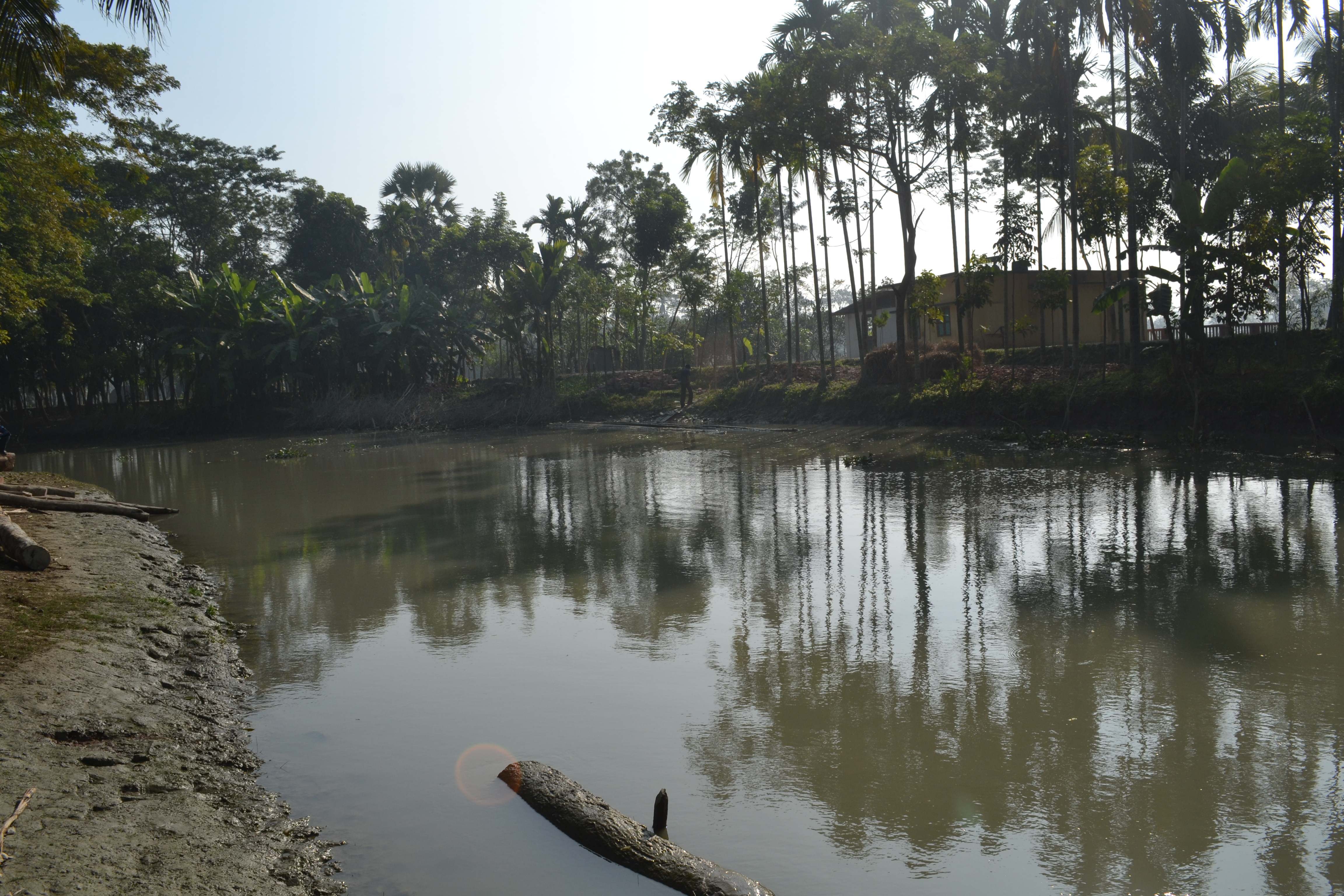
The Sagardi canal is one of the canals that run through Barishal city, and it had been the subject of restoration work in the two and a half years before the planting. Bonik Barta reported in January 2024 that 24 canals in the city were at risk of disappearing through encroachment, pollution and unplanned urban growth, and that the Bangladesh Water Development Board (BWDB) had begun excavating seven of them to bring back the flow of water.
The seven canals named by the BWDB were the Amanatganj, Jail Khal, Rupatali, Palashpur, Sagardi, Chandmari and Bhatar Khal. The work was estimated to cost Tk 6.07 crore, of which Tk 2.67 crore was set aside for the Sagardi canal, the largest single share. The BWDB's executive engineer in Barishal told Bonik Barta that excavation had begun on 20 December 2023 and was expected to be finished by June 2024.
Protidiner Bangladesh, reporting in November 2023 as the work was about to start, gave the lengths the project covered: about 17 kilometres of canal in all, including 3 kilometres of the Amanatganj canal, 1.7 kilometres of the Palashpur canal, 2.35 kilometres of the Jail Khal, 180 metres of the Bhatar Khal, 1.8 kilometres of the Chandmari canal and its branch, 3 kilometres of the Sagardi canal and 1,100 metres of the Rupatali canal. The engineer said the work was part of the BWDB's project to dig rivers and canals in 64 districts.
The same report said that part of the Sagardi canal was being dug by Barishal City Corporation through a project under the climate fund, so the BWDB would work on the stretch beyond the corporation's section. It recorded that tenders for the seven canals had first been invited on 29 March 2022, that the city corporation had written to the Ministry of Water Resources on 12 April 2022 asking for the work to be halted, and that new tenders had later been issued. A local civic leader quoted in the report said digging the canals would ease waterlogging only if the city's drainage was also brought into one integrated system.
The canal banks were being remade at the same time. Dhaka Mail reported on 10 January 2024 that work had begun on a walkway and cycling way along both banks of the Sagardi canal at a cost of about Tk 4.25 crore. According to the city corporation, the 1,240-metre path would have 86 concrete benches, 150 steel dustbins, 68 floodlights and four approach ramps, with a walkway 5.5 metres wide and a cycle way 4.5 metres wide. It is along this kind of public canal bank that the 350 saplings of 13 July were planted, and the prime minister's request that people who come to the canal should benefit from the trees, as Jagonews24 reported it, was addressed to its visitors as well as its neighbours.
A canal with a history from 1971
The planting site lies next to a place of national memory. BSS and the Prime Minister's Office itinerary described the venue as the area adjoining the Trish Godown killing ground (boddhobhumi) on the Sagardi canal, a name that marks it as a killing ground of the 1971 Liberation War.
Bangla Tribune reported in December 2025 that freedom fighters in Barishal described the Pakistani army's camp and torture cell at the WAPDA colony, beside the Kirtankhola canal, as the largest in the southern region during the war. One freedom fighter who was held there for 19 days told the paper that prisoners were shot on the bridge over the Sagardi canal behind the colony and their bodies thrown into the canal. Barishal City Corporation preserved the torture cell, bunkers, killing ground and bridge on about one and a half acres at a cost of about Tk 4 crore, built a memorial named "Smritistambha 71" on the bridge, and opened the site to the public on 8 December 2020, the paper said.
Barishal city and its river
Barishal city lies on the Kirtankhola river, which Banglapedia, the national encyclopaedia published by the Asiatic Society of Bangladesh, lists as the city corporation's main river. According to Banglapedia, the town's municipality was formed in 1876 and became Barishal City Corporation on 25 July 2002. Its entry, based on the 2001 census, gives the city corporation an area of 24.91 square kilometres and a population of 224,389 at that census.
The city's canals and its waterlogging are closely linked. Residents quoted by Bonik Barta in 2024 said that in the monsoon the canals overflowed at normal high tide, leaving knee-deep water on the roads, and hoped that re-excavation would let the tidal water of the Kirtankhola flow through again and bring back clean water.
The national planting campaign of 2026
The Barishal programmes were part of the national tree-planting season that runs through the monsoon. The National Tree Plantation Campaign and Tree Fair 2026 was opened by the prime minister on the morning of 9 July at the Bangladesh-China Friendship Conference Centre in Dhaka, together with the World Environment Day observance and the Environment Fair, organised by the Ministry of Environment, Forest and Climate Change, Prothom Alo reported. The campaign's theme for the year was "Brikkho ropone sajai desh, sobar age Bangladesh" (decorate the country by planting trees; Bangladesh before all). At that event he presented the National Tree Plantation Award 2025 and the National Wildlife Conservation Award 2026.
At a press conference at the Secretariat on 8 July, reported by Jugantor the next day, Environment, Forest and Climate Change Minister Abdul Awal Mintoo said the government had drawn up a plan to plant 25 crore trees over five years and look after them, and that the real target was to plant 32 crore so that at least 25 crore survive, since some would die. The survival of each tree was to be monitored using satellites, GIS, remote sensing, drones and a national tree database. The programme also aimed to create 3.5 lakh green jobs and 10,000 new nursery entrepreneurs.
State Minister Sheikh Faridul Islam said at the same press conference that the government planned to plant 5.5 crore saplings by 17 February, of which 2 crore were to be mangrove trees and 3.5 crore native fruit trees, and that the Forest Department had already planted 83 lakh saplings. Besides the month-long national fair in Dhaka, the minister said, tree fairs were to be held for 15 days in seven divisional cities, for seven days in 56 district towns and for three days in 29 upazilas, with 120 stalls at the national fair.
BSS reported on 2 July 2026 that the 2026-27 budget speech and the Bangladesh Climate Budget Report described a "Tree Monitoring App" being developed to track the survival of saplings, especially under the "One Child, One Tree" programme, which aimed to plant one crore trees at the homes of government primary school pupils. The budget documents, BSS said, also planned zone-appropriate planting on the unused land along roads, highways, embankments, riverbanks and canal banks, along with urban forestry and agroforestry.
The same BSS report set out what the app and the wider afforestation drive were to involve. The app was to be linked to GPS and GIS-based data collection so that a digital map and database of areas planted under the Forest Department could be kept, and it was expected to play a central part in checking sapling survival in scattered village and town plantings that are hard to inspect in person. Under the National Green Mission, BSS said, the five-year target of 25 crore trees was meant to restore degraded forests, protect ecological balance and increase carbon absorption, while creating about 3.5 lakh direct and indirect green jobs. The budget documents also planned to bring 50 percent of the coastal mangrove forest under a carbon trading system, and gave special weight to planting mangrove species on coastal chars, restoring sal forests in the hill and central regions and conserving endangered forest species. At the 9 July opening, according to Prothom Alo, the prime minister also said that green volunteering had been introduced at every educational institution and that about 90,000 trees had recently been planted at once at schools under one programme.
Why coconut palms and native fruit trees
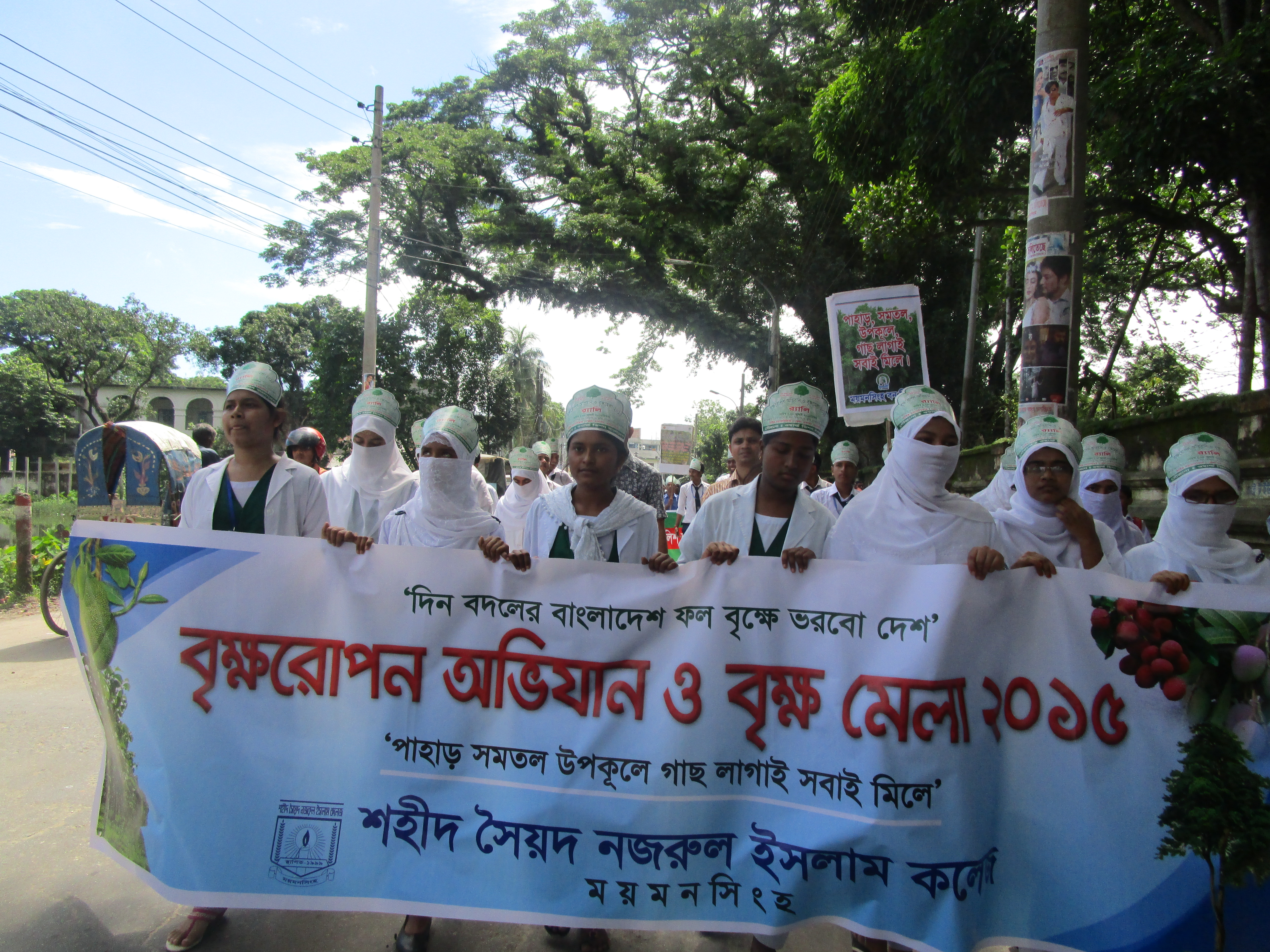
Both Barishal programmes began with a coconut sapling, according to Jugantor's report from Gournadi. The coconut palm (Cocos nucifera) is a familiar tree of the southern districts. Banglapedia describes it as a tree of tropical regions that grows 8 to 30 metres tall, says a well-cared palm may yield 200 or more fruits a year, and notes that in Bangladesh it is grown as a homestead plant for fruit and many other uses, and also as an avenue plant along roads.
Almost every part of the palm is used, Banglapedia notes: the flesh is eaten raw or used in sweets and other foods; dried copra gives oil, and the pressed oil cake is fed to livestock; the husk gives coir for mats, rope and brushes; the shell is burned as fuel and charcoal; the leaves are woven into mats and baskets and used for thatching; and tender green coconuts are in demand as a drink. Banglapedia gives the area under coconut in Bangladesh as about 31,600 hectares and production as about 96,000 tonnes.
The choice fits the direction the ministry set out for the season. At the 8 July press conference, the state minister said the government wanted to plant saplings of fast-growing native fruit trees, Jugantor reported. At the 9 July opening, according to Prothom Alo, the prime minister said that trees should not be planted at random but with regard to the soil, setting and weather, that trees harmful to the environment should be avoided, and that native species, including medicinal, bamboo-type forest, fruit, cash-value and endangered trees, should be planted.
Waste, canals and the law
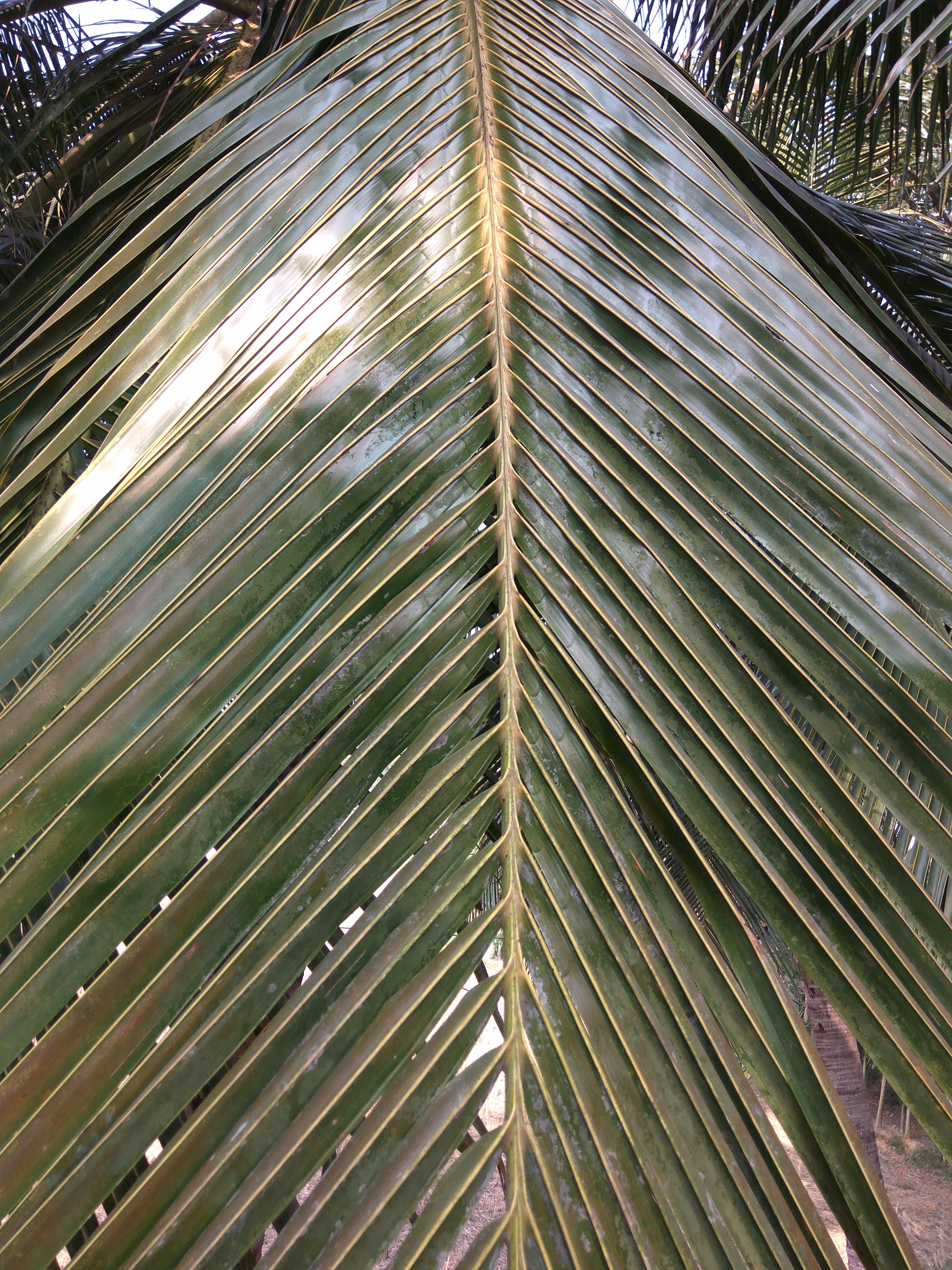
The prime minister's appeal on the Sagardi canal, that people should look after their surroundings rather than leave it to others, followed the same line as his 9 July speech on waste. There, Prothom Alo reported, he said that waste management could not be brought under control by city authorities or the police alone but needed awareness and responsible behaviour from every citizen, and asked people not to throw rubbish just anywhere. He also said the government had begun work to reduce plastic waste significantly and had taken up composting, recycling, waste-to-energy and the "reduce, reuse, recycle" principle at national level, and that the programme of excavating and re-excavating 20,000 kilometres of rivers and canals would give farmers year-round irrigation.
Bangladesh's environmental law already covers both plastic bags and water bodies. Section 6A of the Bangladesh Environment Conservation Act 1995 lets the government, if it is satisfied that polythene shopping bags or other polyethylene or polypropylene goods are harmful to the environment, ban their production, import, marketing, sale, display, storage, distribution and commercial transport or use, across the country or in a given area, by notice in the official gazette. Section 6E, added by an amending act in 2010, provides that a place identified as a water body may not be filled or have its class changed in any other way, though the restriction may be relaxed in an essential national interest with the clearance of the Department of Environment.
For a city whose canals had been shrinking through encroachment and pollution, as the BWDB and residents told reporters in 2023 and 2024, these were the rules in force when the saplings went into the Sagardi canal bank in July 2026.
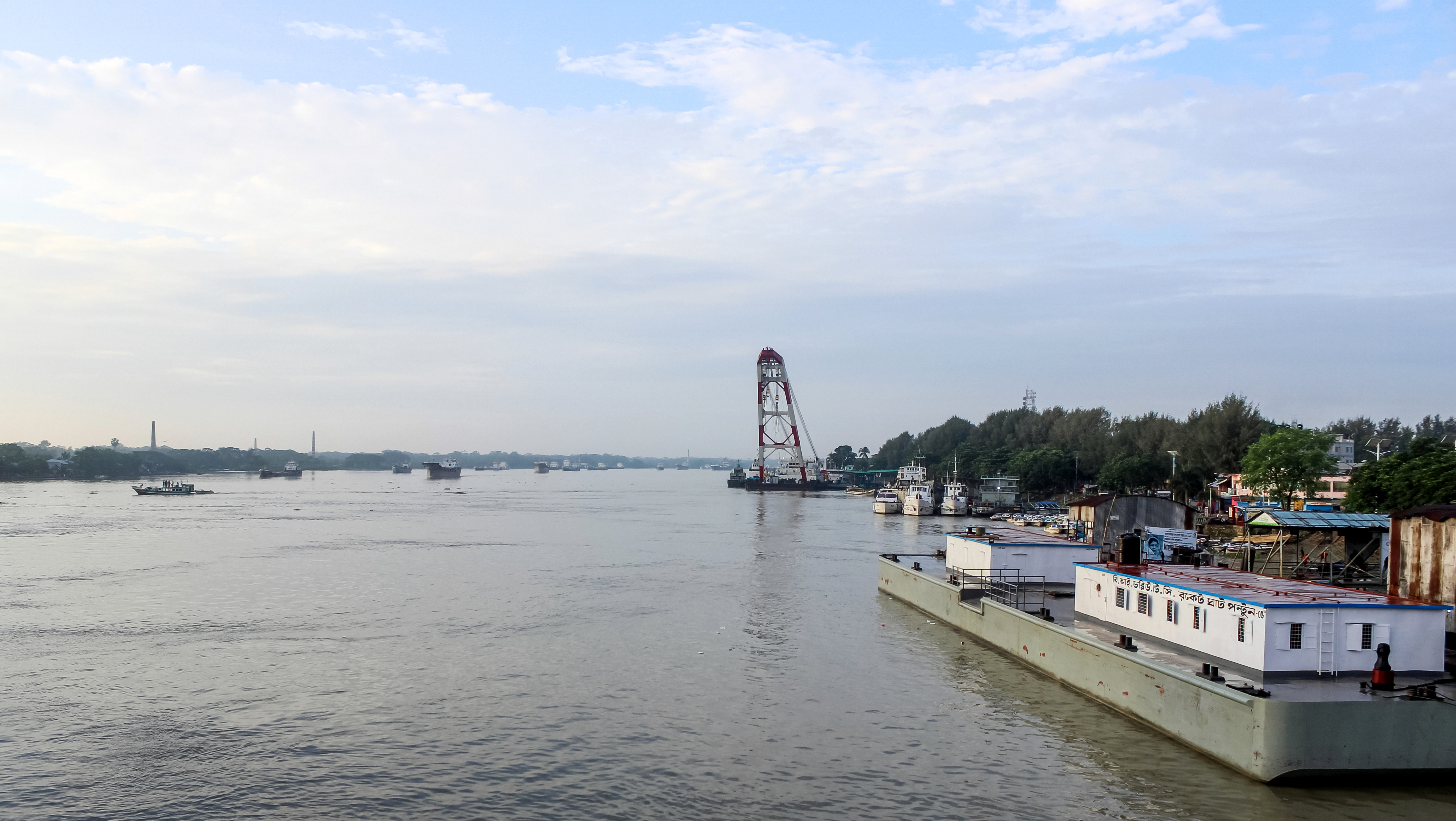
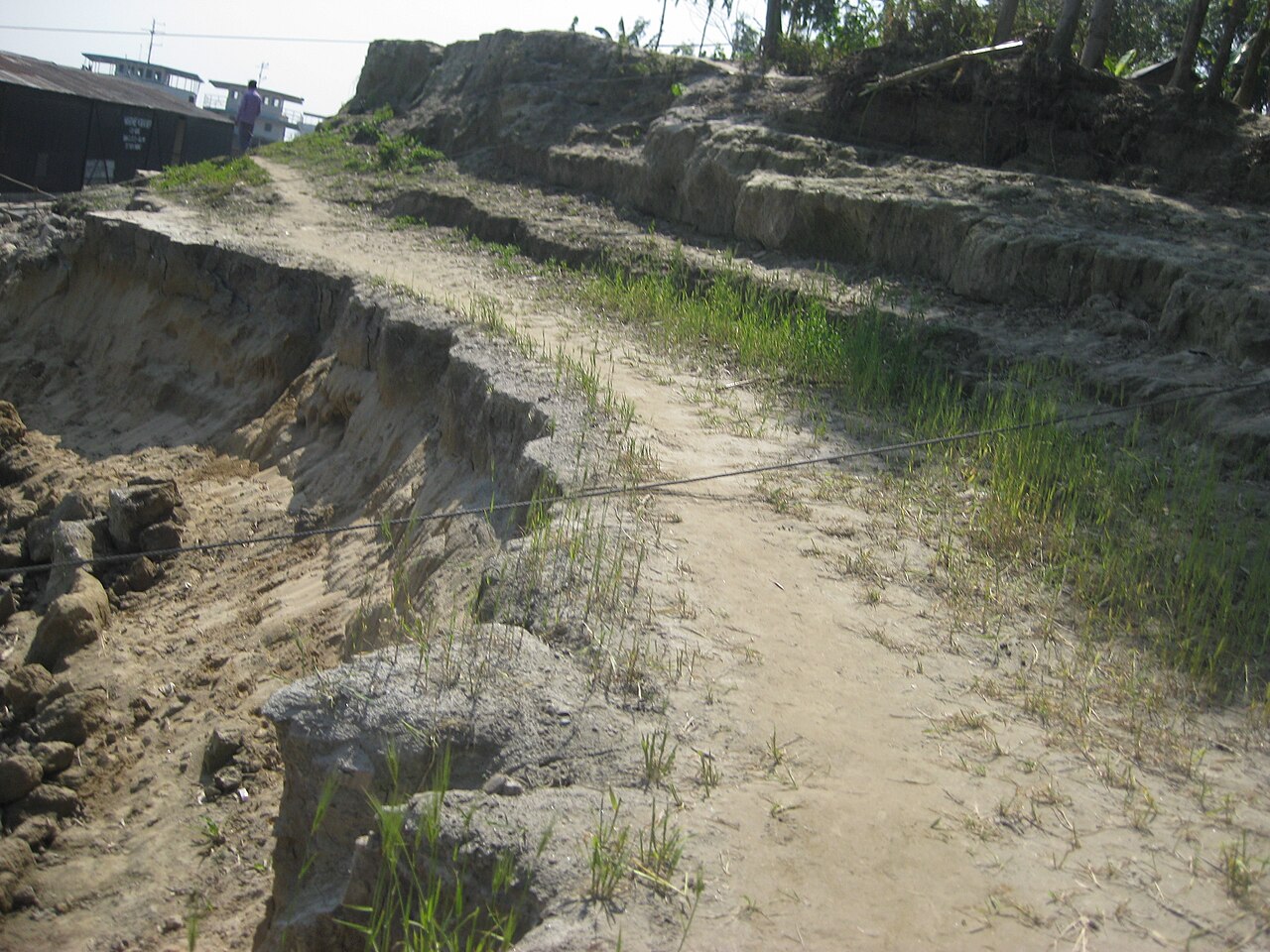
Photo: Md Shaifuzzaman Ayon / Wikimedia Commons (CC BY-SA 4.0). The top picture shows the Kirtankhola river, the main river of Barishal city, as background; it is not the Sagardi canal or the planting of 13 July 2026.
Sources: Jagonews24 (13 July 2026), Bangladesh Sangbad Sangstha (BSS) (2 and 13 July 2026), The Daily Jugantor (9 and 13 July 2026), Prothom Alo (9 and 10 July 2026), Bonik Barta (16 January 2024), Protidiner Bangladesh (21 November 2023), Dhaka Mail (10 January 2024), Bangla Tribune (17 December 2025), Banglapedia (Asiatic Society of Bangladesh), Bangladesh Environment Conservation Act 1995 (Laws of Bangladesh, bdlaws.minlaw.gov.bd)
Comments
(0)