
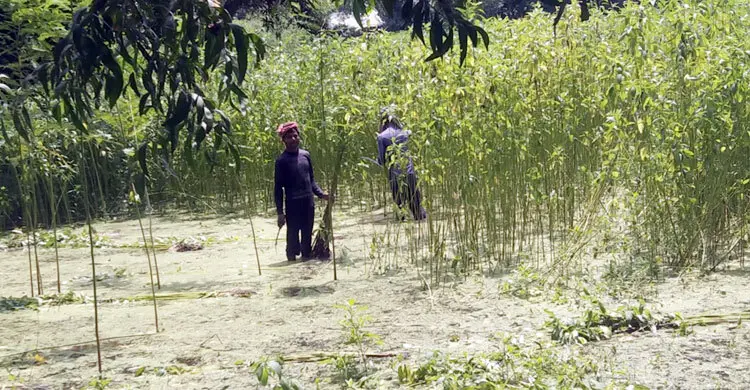
With favourable weather, more jute has been grown in Tangail this year. This season 230,690 bales of jute are expected from 19,650 hectares. The target for this year was 19,600 hectares, so jute has been grown on 50 hectares more than targeted. Farmers are smiling as both the golden fibre and the silvery sticks are selling at good prices.
Jute growers, meanwhile, have demanded a complete end to polythene bags, the reopening of all the country's jute mills and steps to export jute so they can get good prices. Prices of jute and jute sticks are good this time, with jute selling at Tk 3,500 to Tk 4,000 a maund. Farmers are earning money from the fibre, while the sticks can be used as fuel and for house fencing.
Area rising every year
The Department of Agricultural Extension (DAE) in Tangail says cultivation of the golden fibre is rising in the district every year because of good prices. In the 2023-24 fiscal year, 252,558 bales were produced from 19,020 hectares. In the current 2024-25 fiscal year, 230,690 bales of jute are expected from 19,650 hectares. The target for this year was 19,600 hectares, and jute has been grown on 50 hectares more than that. This year 6,200 people in the district were given 1 kg of jute seed each free of charge.
On a visit, jute was found to have been grown in all 12 upazilas of the district. Farmers are busy stripping fibre from retted jute. Most of the jute has been harvested and most of it retted. Many are stripping fibre, some are tying jute sticks into bundles to dry in the sun, and others are folding jute and spreading it out in the sun.
Jute farmers said deshi, tossa, kenaf, Robi-1 and the Indian Bangabir variety are the most widely grown in the district. The agriculture office gives free jute seed and fertiliser almost every year, but the seed does not reach them on time, which hampers cultivation; if they got the seed on time, cultivation would grow considerably. Although a lack of rain early on made sowing difficult, enough rain late in the season increased the jute area. Because of intensive care and advice from the jute and agriculture offices, there has been little disease. Farmers are happy that market prices for jute are good this time.
Farmers and traders
Md Delowar Hossain, a jute grower from Poila village in Tangail Sadar upazila, said: "This time I grew jute on 25 decimals and will get about 6 maunds. The crop is good. Jute is selling at Tk 3,500 to Tk 4,000 a maund, and a load of 100 bundles of jute sticks sells for Tk 1,000. The 25 decimals needed 15 labourers, each paid Tk 500."
Anwar Hossain, a farmer from Ag Deuli village in Deuli union of Delduar upazila, said: "This year I grew jute on 4 bigha. The yield was 7 maunds a bigha. I sold the jute from the 4 bigha at Tk 3,400 a maund and got Tk 95,000. Growing jute on the 4 bigha cost me Tk 40,000, so I made a profit of about Tk 55,000 or more."
Farmer Chhanowar Hossain said: "I grew jute on 10 decimals of sharecropped land and got 3 maunds. The first sorted jute I sold at Tk 2,400 a maund, and the later jute at Tk 3,800 a maund."
Ramjan, a farmer from Ag Deuli village, said: "There was no rain early in the season, so I sowed jute with irrigation. The jute from the seed I sowed then sold at Tk 4,000 a maund. Later I sold some at Tk 3,400-3,500 a maund, and some is still to be cut. We are very happy with the yield and the price."
Monirul Islam, a jute trader at Chhilimpur haat in Delduar upazila, said: "We buy jute from local farmers and sell it to various mill parties in Bangladesh. Every Friday we also buy jute from farmers at Chhilimpur haat, where about 500 to 600 maunds change hands on a market day. This year we are buying at Tk 3,500-3,800 a maund and sell to mill parties at a profit of Tk 80-100 a maund."
Free seed, fertiliser and training
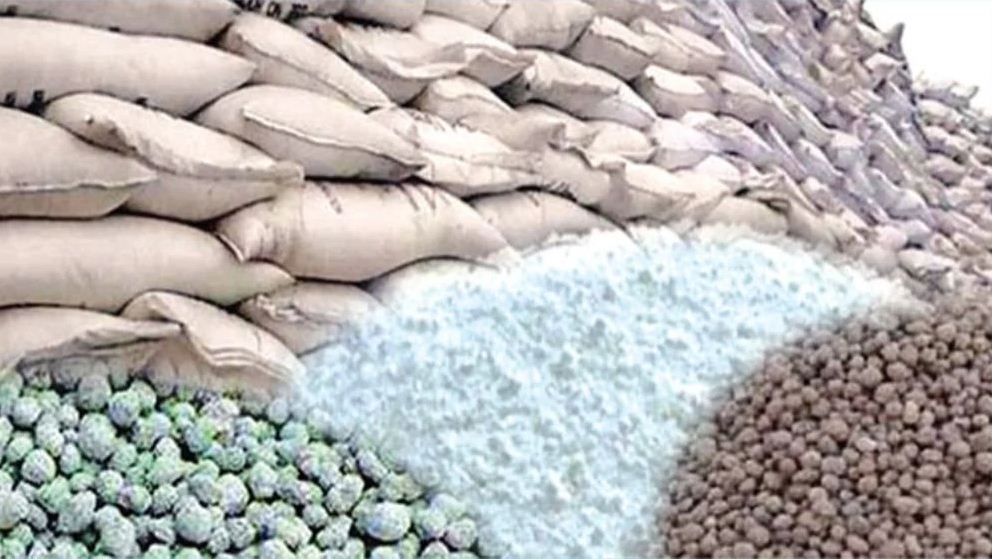
District jute development officer Wahiduzzaman Khan said the Department of Jute this year distributed 1 kg of jute seed and 12 kg of fertiliser free to each of 36,000 farmers in the district's 12 upazilas, and 900 listed farmers were given training.
Dulal Uddin, district training officer of the DAE in Tangail, said farmers had turned to jute as prices rose and were now profiting from it. All kinds of support are being given to encourage farmers, and he claimed that good days have returned for jute growers.
Source: Jagonews24. First published in Bengali on The Agro News.

Comments
(0)