
Rina Begum, a housewife from Mamudpur Madhyapara village in Delduar upazila of Tangail, has changed her fortunes by growing poison-free vegetables and other crops. She has not only changed her own life but also the face of her village, and many now see her as an example.
Through years of effort, and with encouragement from her husband, she is now a successful farmer. Her success is not confined to Delduar: she is now known beyond the country, internationally.
From leased land to safe food
Rina Begum was born into a farming family and has known farm work since birth. Alongside her studies she did household work and helped her parents on the farm. After marriage she began learning to grow vegetables in the yard and around the homestead from her mother-in-law.
In 1991 she leased 70 decimals of land and, on her mother-in-law's advice, began growing vegetables, paddy and jute using organic fertiliser alongside chemical fertiliser. The first harvest was good. In 1997 she started farming with fresh energy on 110 decimals of land she inherited from her father.
In 2007 she turned her focus to producing safe food. She gave up chemical fertiliser and began making her own organic fertiliser. Other farmers in the area mocked her for it, but she was not discouraged.
"My mother-in-law used to say that crops grown with fertiliser from the market cause disease when you eat them. Using her knowledge and following her advice, I dropped market fertiliser and farm with fertiliser I make myself," Rina Begum said. Later, various NGOs came forward and encouraged her.
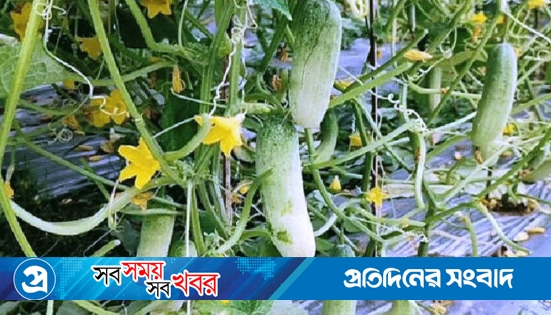
Poison damages the environment and does serious harm to people; the body breaks down, and all the money goes on treating the diseases it causes. That is why, she explains, she farms with organic fertiliser. She now grows aubergine, ash gourd, sponge gourd, snake gourd, chilli, turmeric, teasel gourd, taro and lemon, and other crops in other seasons.
A seed bank of 100 varieties
Alongside farming, Rina Begum preserves the seeds of different crops. In 2002 she started a seed bank in one room of her house with eight kinds of seed. It now holds seeds of about 100 varieties of vegetables and other crops. Wherever she goes, she collects any good seed she finds. "Seed is very important. Good seed gives a good crop," she said.
Word of her poison-free farming spread, and the government took notice. In 2015 it declared Rina Begum a model farmer. The same year, the Food and Agriculture Organization of the United Nations honoured her as a model farmer, one of four farmers from Asia. The award was handed to her in Thailand on World Food Day.
Impressed by her skill in poison-free farming, the government set up a society in 2009 called the Mamudpur Madhyapara Mohila Samabay Samiti (women's cooperative society), with Rina Begum as its president. At its meetings she explains crop problems and how to solve them, and on her advice the women members also grow poison-free crops in their yards and nearby land.
"Women like me can move forward through work," Rina Begum said. "One day we will not be here. Those who remain should be able to grow poison-free crops and live free of disease. If we keep using market fertiliser, the soil may one day turn to stone, and good crops will no longer be possible. So for safe food, farmers must keep seeds at home and farm with organic fertiliser. This practice must be spread to neighbouring villages and across the country."
Source: Dhaka Tribune. First published in Bengali on The Agro News.
Comments
(0)