
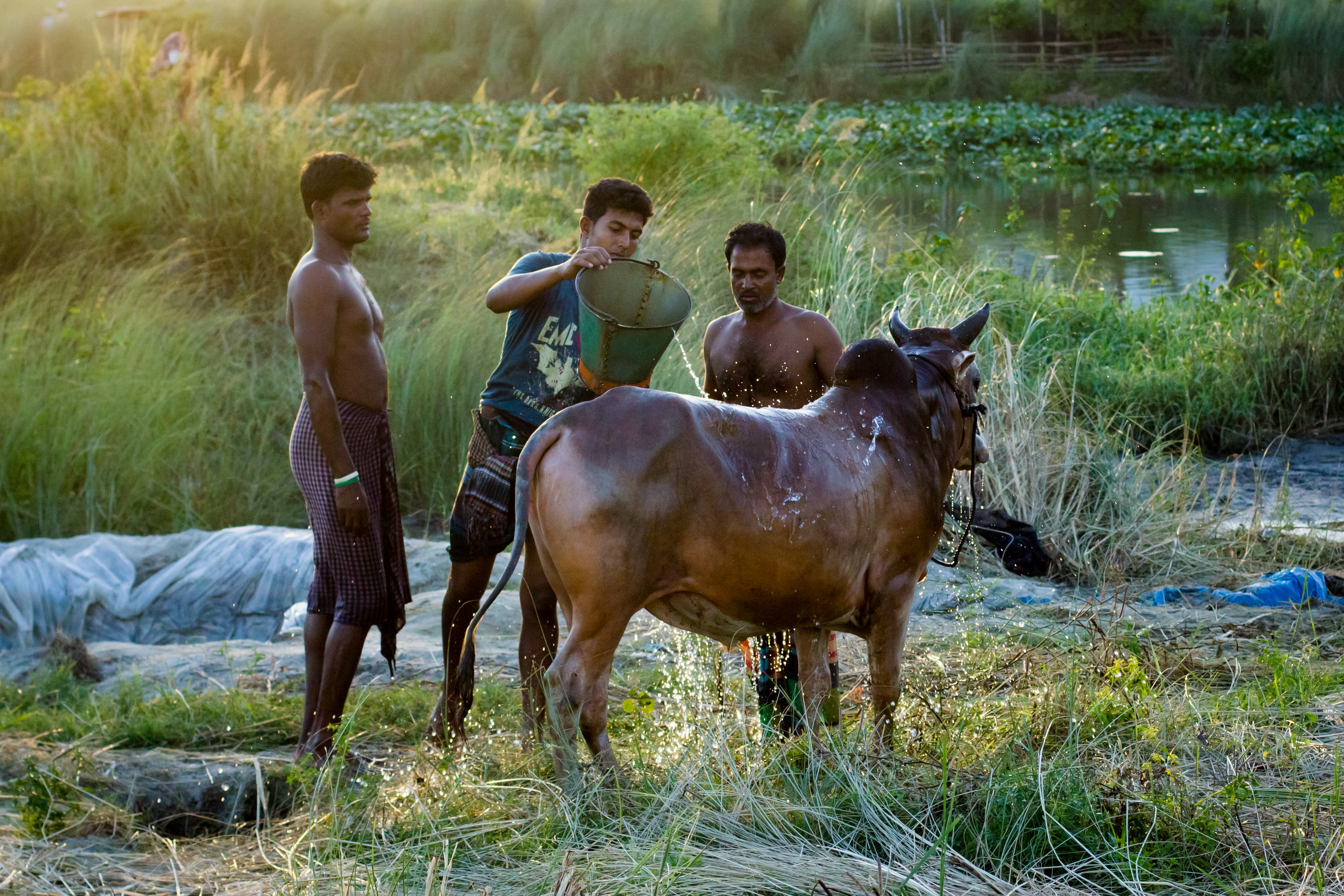
A giant black-and-white bull named Manik, put by its owner at about 56 maunds and raised for nearly ten years by a young woman farmer in Tangail, was sold in May 2026 a few days before Eid-ul-Azha. Its owner, Hamida Akter, 29, of Bhengula village in Delduar upazila, told Jagonews24 that she had sold the bull for Tk 11.2 lakh to the Alauddin Ahmed Foundation of Kumarkhali in Kushtia, after buyers in two successive years had agreed a higher price and never come back. When the paper's Kushtia correspondent visited the foundation's farm on the morning of Wednesday 27 May 2026, Manik was being kept in a tin-roofed brick shed with a fan turning overhead. Staff there said the bull would be slaughtered on the third day of Eid and its meat cooked and served to orphans, the destitute and the helpless.
Two Eids, two buyers who did not return
Hamida Akter raised the bull with great affection, like her own child, according to the Jagonews24 report, and named it Manik as a matter of fondness. She had hoped to sell it at a good price at the Eid-ul-Azha of 2025. One man offered Tk 15 lakh that year, she said, but he never came back, and the bull went unsold.
She then borrowed money and, with great difficulty, kept Manik for another year, planning to sell him at the 2026 Eid. Again a buyer agreed on a price, this time Tk 18 lakh, and left. As Eid drew near, she said, he did not return either. The bull she loved, in the words of the report, became the biggest 'thorn in the throat' of her life.
The Jagonews24 correspondent also wrote that many people had made videos of the huge animal and posted them on social media, gaining likes, views and income, while no one had stood by the farmer behind the camera through her hard times.
Speaking to the paper for about 13 minutes, Hamida Akter set out the numbers as she remembered them. Two years earlier, she said, the bull had weighed 2,080 kilograms; she did not know its current weight. She had wanted Tk 20 lakh for it. "Last year one person offered Tk 15 lakh and this year one offered Tk 18 lakh, and they left and never came back," she said. "But at the last moment there is no one to buy big cattle, and I don't have the money to raise him another year. So I sold him for Tk 11.2 lakh to a good person. I am happy with that."
She said she had always meant to sell Manik to a good person rather than to a trader or a butcher, even if that meant losing a little. "My only gain is that I can pay off some debts. Still, Alhamdulillah," she said. "I am very happy to have sold him to a good person."
Ten years of feed, cost and debt
Hamida Akter told Jagonews24 that from the price she received, not even half of what she had spent on feed had come back, leaving aside the labour and the sleepless nights. She described Manik's daily ration in detail:
- ten hali (forty) seeded bananas a day;
- four kilograms of chickpeas (boot) a day;
- as much bran as the bull would eat;
- rice cooked from one kilogram of atap (non-parboiled) rice.
She said she had borrowed heavily to keep the bull and had used the sale money to repay part of the debt. By her account she still owed Tk 4.8 lakh after the sale.
Her circumstances, as the report described them, were modest. Her mother died in 2024, while she was studying for her undergraduate degree. Her family now consisted of a younger sister and an elderly father. At the time of the report she was studying for a master's degree and, besides running a bKash mobile-money shop, looked after the farm at home, where she said she had ten more cattle.
"My wish is to build a farm and use the profit to stand by helpless people," she said. "I wanted Tk 15 lakh, but as I would not find a buyer, I sold him at this price. Still, Alhamdulillah. Please pray for me. There are 10 more cows on the farm. May they bring a good profit." The figures in this account, the weight, the offers, the sale price and the debt, are her own and were not independently confirmed in the report.
Manik at a foundation farm in Kumarkhali
The buyer was the Alauddin Ahmed Foundation, set up by Alauddin Ahmed, a resident of Kumarkhali in Kushtia. Manik had been brought from Tangail on Monday 25 May and was being kept at the foundation's farm at Alauddin Nagar in Nandalalpur union of Kumarkhali upazila. During the Wednesday visit, some curious people had come to see him.
Rehena Begum, an employee at the farm, told Jagonews24: "The giant Manik was brought from Tangail on Monday (25 May). He is being cared for with quality feed. After Eid he will be cooked and fed to orphans."
Morshed Alam, the foundation's manager, said that when the plight of the woman entrepreneur came to light online, Alauddin Ahmed, whom he called a philanthropist, came forward. "On the third day of Eid the bull will be cooked and served to bring a little smile of satisfaction to those faces that have not had a piece of good food on their plates for years," he said.
How heavy is 56 maunds?
The maund, or mon, is a traditional South Asian unit of weight still used for cattle, rice and other farm produce in Bangladesh. Under British rule it was first standardised in the Bengal Presidency in 1833 at 100 troy pounds, about 82.28 pounds avoirdupois, and was divided into 40 seers. After independence it was given a metric definition, and in Bangladesh one mon is taken as 40 kilograms throughout the country. Weights of very large cattle in market reports are usually such estimates in maunds; the only measured figure Hamida Akter gave was the 2,080 kilograms she said the bull had weighed two years earlier.
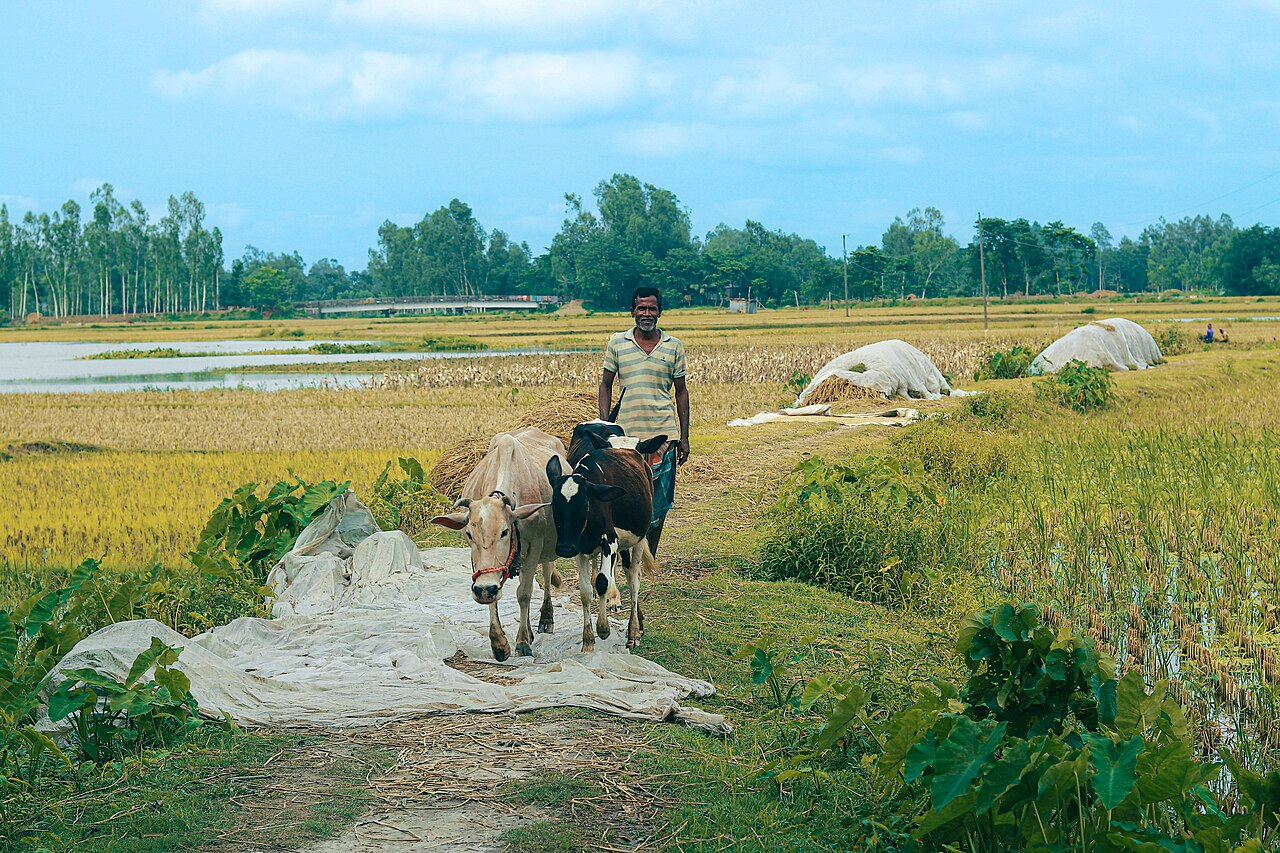
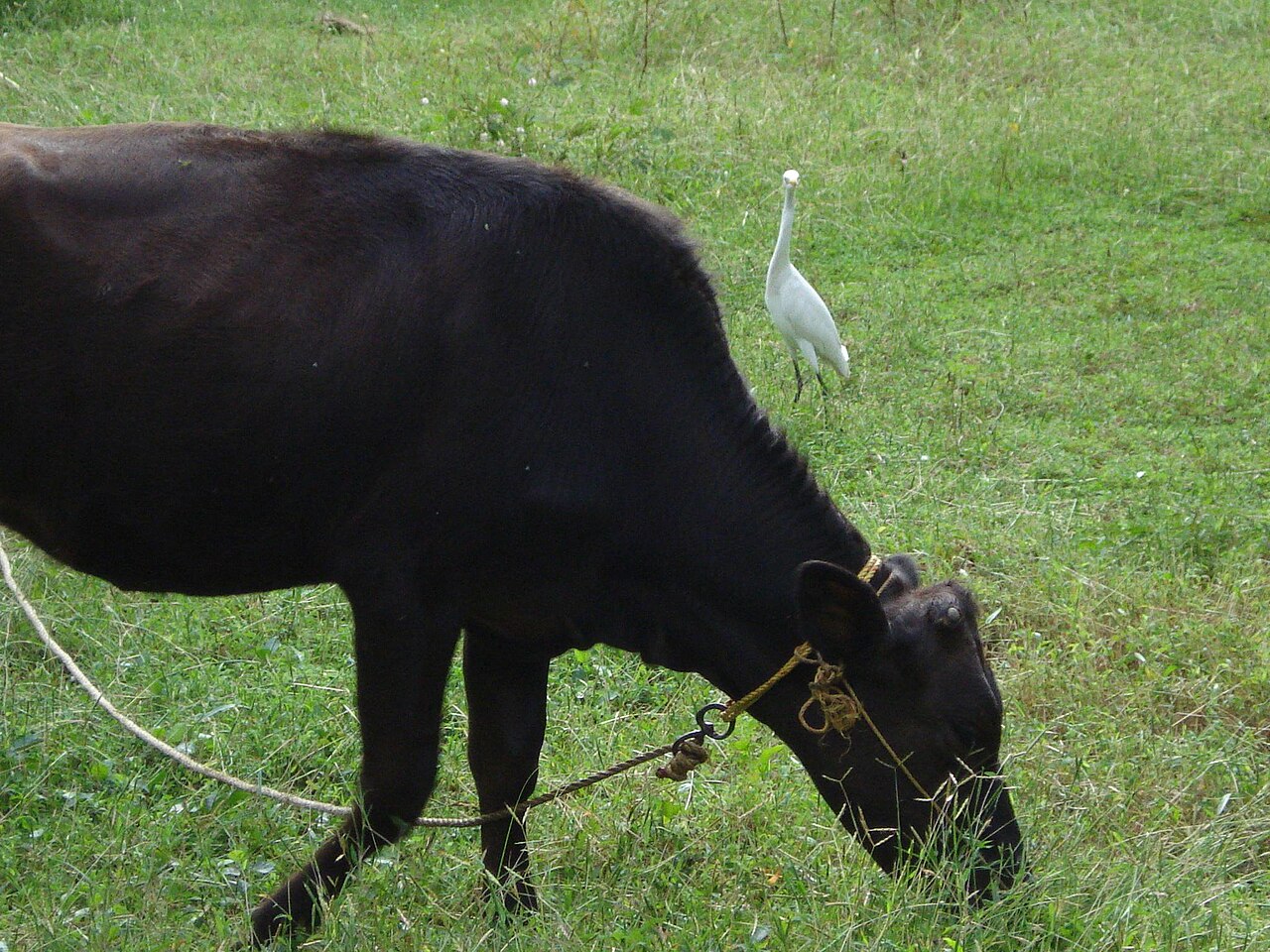
A bull of that size is far beyond the common run of Bangladeshi cattle. Banglapedia describes most of the country's cattle as non-descript indigenous zebu-type animals. Recognised local types include the Pabna cattle of the Pabna and Sirajganj area, the Red Chittagong, the White Munshiganj and the North Bengal Grey. To improve local stock, exotic breeds such as the Holstein-Friesian and the Sahiwal were introduced and crossed with indigenous cattle, mainly for milk. The Jagonews24 report did not name Manik's breed, and none is given here.
Cattle in Bangladesh serve many purposes. Banglapedia lists draught power and cartage, milk and meat, dung used as manure, fuel and a material for biogas, and hides and skins for clothing, bags and shoes. The Eid-ul-Azha market is, for many small farmers, the single biggest chance in the year to sell a grown animal.
What Manik ate: bananas, chickpeas and bran
The foods Hamida Akter listed are all used as cattle feed, and Feedipedia, the animal-feed database run by INRAE, CIRAD, AFZ and the UN Food and Agriculture Organization (FAO), describes each of them.
Banana fruits, its datasheet says, are a suitable source of energy for ruminants, with a net energy value close to that of barley, but they are low in crude protein (about 5 to 6 per cent of dry matter), in fibre and in minerals. For that reason Feedipedia advises that bananas be fed together with grass or another roughage, a protein supplement and a mineral mix. It cites an older reference as saying bananas may make up to 50 to 75 per cent of a cattle diet. Green bananas contain tannins, mostly in the peel, which make them astringent and less palatable; ripening reduces them.
Chickpea seeds contain about 19 to 25 per cent crude protein and are rich in starch, with desi types holding about 35 per cent starch in dry matter. Feeding trials summarised by Feedipedia found that in lactating cows chickpeas could replace soybean meal and maize up to half of the concentrate, and that in heifers weight gain was best when chickpeas made up 25 to 49 per cent of the concentrate.
Wheat bran, the by-product of milling wheat into flour, averages about 17 per cent crude protein and is high in fibre and phosphorus. Feedipedia gives maximum recommended inclusion rates of 25 per cent in beef cattle and 20 per cent in dairy cows, and notes that bran has a slightly laxative effect. These figures describe the feeds in general; how much any one animal should be given is a matter for a veterinary or livestock officer.
Eid-ul-Azha in 2026 and the custom of sharing meat
The National Moon Sighting Committee, meeting at the Baitul Mukarram National Mosque in Dhaka, announced after the Zilhaj moon was sighted that Eid-ul-Azha would be celebrated in Bangladesh on Thursday 28 May 2026, the 10th of Zilhaj, the state news agency BSS reported on 18 May. Manik was sold and moved to Kushtia in the last days before that Eid.
Eid-ul-Azha, known in Bangladesh as Kurbanir Eid, commemorates the Prophet Ibrahim's willingness to sacrifice his son Ismail, in whose place an animal was sacrificed, according to Banglapedia. Sacrifice begins after the Eid prayer on the 10th of Zilhaj and may continue on the following two or, by some opinions, three days, which is why an animal can be slaughtered on the third day of Eid, as the foundation planned. A cow, a buffalo or a camel may be sacrificed on behalf of up to seven people, a goat or a sheep for one.
Banglapedia describes the custom of dividing the meat into three parts: one kept by the owner, one given to relatives and the rest distributed among the poor. The hide may be used or given away, and the hide or the money from its sale is usually given to the poor, to poor madrasa students or to orphanages; selling any part of one's own sacrificial animal for personal gain is not permitted. A foundation cooking a whole animal for orphans and the destitute, as the Kumarkhali foundation said it would, follows the charitable side of that custom.
Sacrificial animals in 2026: the official count
Hamida Akter's difficulty came in a year when the government said the country had far more animals than it needed for the sacrifice. At a briefing on 3 May 2026, the Fisheries and Livestock Minister presented Department of Livestock Services (DLS) estimates showing 1,23,33,840 animals fit for sacrifice against a projected demand of 1,01,06,334, leaving a likely surplus of about 22,27,506. The animals available were:
- cattle and buffaloes: 56,95,878;
- goats and sheep: 66,32,307;
- other species such as camels and dumba (fat-tailed sheep): 5,655.
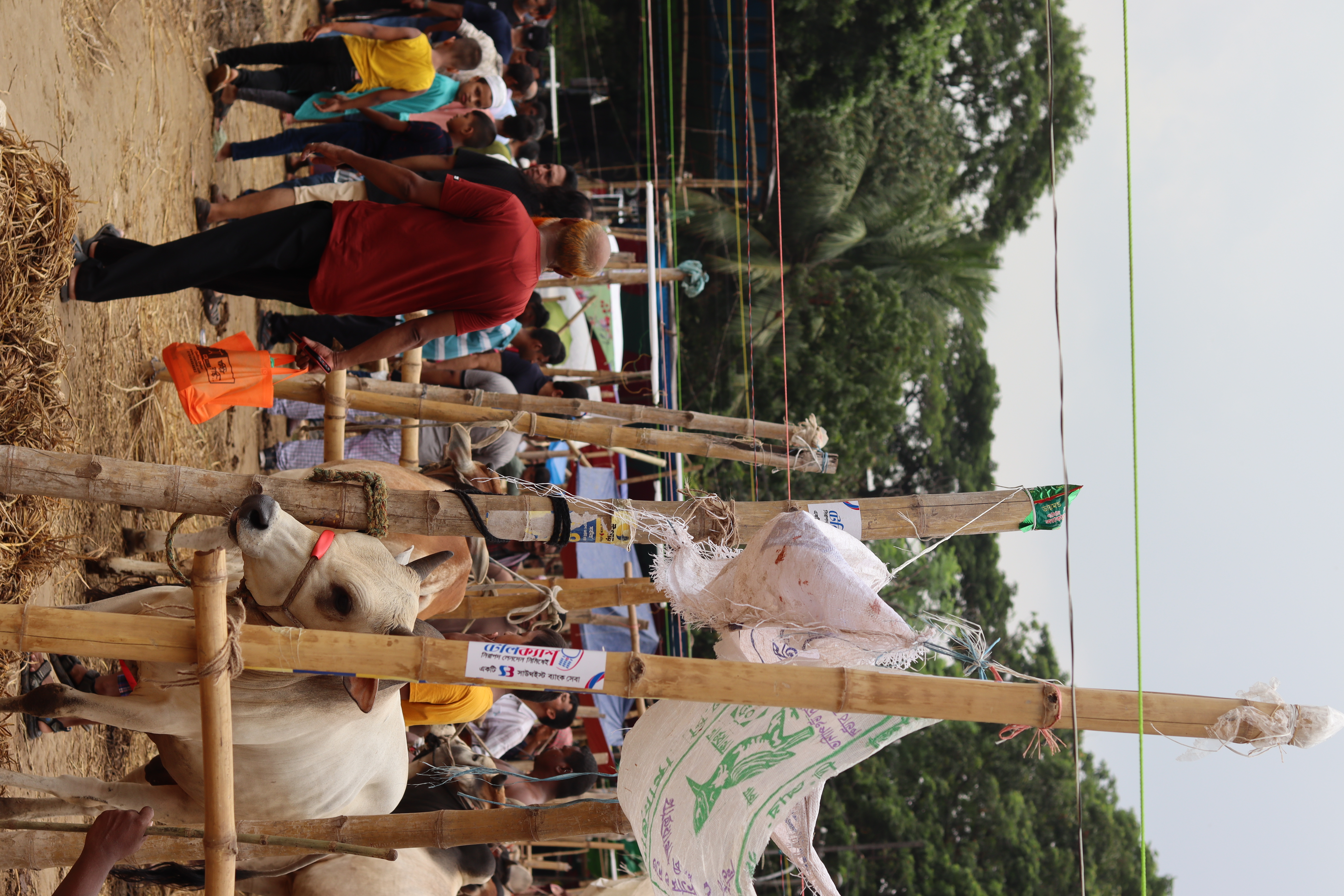
The Business Standard's report of the briefing said more than 3,600 animal markets would be held across the country, 27 of them in Dhaka under the two city corporations; that animals could be sold online that year without any rent or charge; that 20 veterinary medical teams would be on duty at the Dhaka markets; that livestock markets in border areas would stay closed to protect local farmers; and that the government would act strictly against extortion from trucks carrying animals.
The figures for the previous Eid, the one at which Manik first went unsold, were also given at the briefing, according to UNB: 1,24,47,337 animals had been available in 2025, 91,36,734 were sacrificed and about 33.10 lakh were left over. Two years earlier, in 2024, the DLS had counted 1,29,80,367 sacrificial animals, all of them from domestic farms, Prothom Alo reported on 21 May 2024; cattle and buffaloes that year had risen by about 5.16 lakh, or 10.67 per cent, over 2023.
Kushtia lies in Khulna Division, where the DLS expected a comfortable surplus in 2026. The Dhaka Tribune reported on 11 May that farmers and breeders in the division had prepared nearly 14.47 lakh animals against a demand of about 10.79 lakh, a surplus of an estimated 367,360. The division's DLS director told the paper that because supply exceeded demand, prices were expected to remain stable and might even fall slightly, while farmers quoted in the same report said rising fodder costs were adding pressure on them.
The livestock sector behind the Eid market
The sacrifice market rests on a large livestock sector. The DLS fact sheet Livestock Economy at a Glance (2024-2025), prepared by the department's planning section from Bangladesh Bureau of Statistics data, put the country's cattle population in 2024-25 at 251.71 lakh, up from 237.85 lakh in 2015-16, with 15.32 lakh buffaloes, 272.91 lakh goats and 39.81 lakh sheep.
The same sheet gave meat production in 2024-25 as 89.54 lakh metric tonnes against a demand of 77.92 lakh tonnes, calculated at 120 grams per person per day, and milk production as 155.38 lakh tonnes against a demand of 162.33 lakh tonnes. On provisional figures at constant prices, livestock contributed 1.81 per cent of gross domestic product and 16.54 per cent of agricultural GDP, and the department put the share of the country's employment depending on the sector at 20 per cent directly and 50 per cent partly.
From Delduar to Kumarkhali
Delduar, where Manik was raised, is one of the twelve upazilas of Tangail District in Dhaka Division. Banglapedia gives its area as 184.54 square kilometres and its population at the 2011 census as 207,278. The Dhaleshwari, Lauhajang and Elangjani rivers flow through it, and its main crops are paddy, jute, mustard, sugarcane, potato and wheat. Agriculture was the main source of income for 47.91 per cent of households, and Banglapedia lists 60 dairy farms, 285 poultry farms and 22 fisheries in the upazila. Among its landmarks is the Atia Jame Mosque, about four hundred years old.
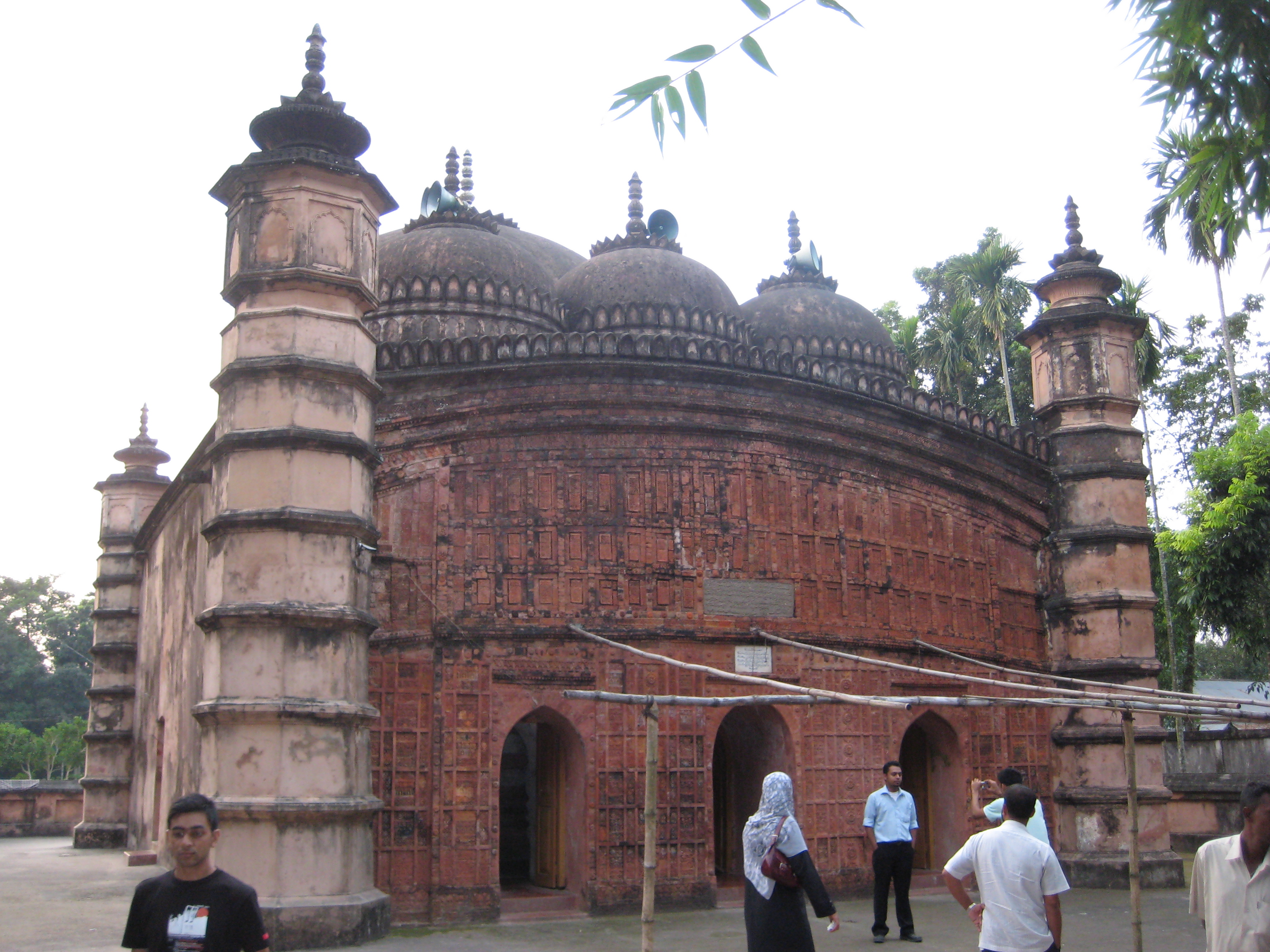
Kumarkhali, where the bull ended its journey, is in Kushtia District, which was formed in 1947 from areas that had belonged to Nadia District. Banglapedia gives the upazila's area as 258.18 square kilometres and its population in 2011 as 328,457. It is bounded by the Padma to the north, and the Garai and Kaliganga also flow through it. Its main crops are paddy, wheat, jute, sugarcane and maize. The upazila is known for Rabindranath Tagore's Kuthibari at Shilaidaha, the tomb of the Baul Lalon Shah and the homestead of the novelist Mir Mosharraf Hossain, and for its weaving industry.
Nandalalpur, the union in which the foundation's farm stands, is one of Kumarkhali's eleven unions. Banglapedia records its area as 6,214 acres and its population as 16,630 men and 17,032 women.
Photo: Jubair1985 / Wikimedia Commons (CC BY-SA 4.0)
Sources: Jagonews24, Bangladesh Sangbad Sangstha (BSS), The Business Standard, UNB, Dhaka Times, Dhaka Tribune, Prothom Alo, Department of Livestock Services (Livestock Economy at a Glance 2024-2025), Feedipedia (INRAE, CIRAD, AFZ and FAO), Banglapedia, Wikipedia
Comments
(0)