
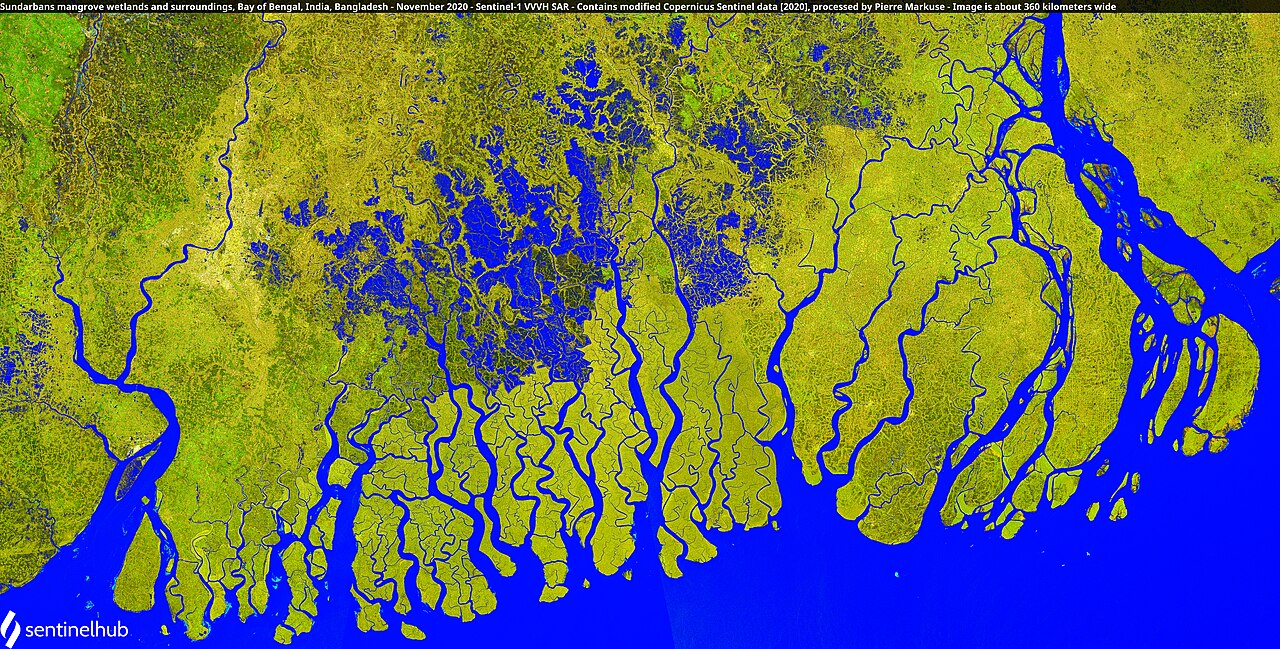
The West Bengal government has sought financial and technical help from the World Bank and the Asian Development Bank (ADB) to protect the Indian part of the Sundarbans, the world's largest mangrove forest, from climate change, and both lenders have agreed in principle, Ei Samay reports.
Citing sources, the paper says the plan has two parts. For the 'Upper Sundarban Delta Project', a loan of Rs 1,350 crore is being sought from the ADB. Under the 'Lower Sundarban Shore Project', World Bank support would protect vulnerable islands along the sea and estuaries; the bank has agreed in principle to lend for the Rs 4,100 crore project, with 70 percent available as a loan and the state covering the other 30 percent.
The projects will also support alternative livelihoods, especially fish farming and the fish-based economy. With the shore project in view, the state plans to expand the mangroves that act as a natural shield, plant new mangroves and build defences to keep salt water out of farmland and settlements.
Experts say the Sundarbans' biggest problems are rising sea levels and river embankments breached by severe cyclones.
Photo: Pierre Markuse / Wikimedia Commons (CC BY 2.0)
Source: Ei Samay


Comments
(0)