
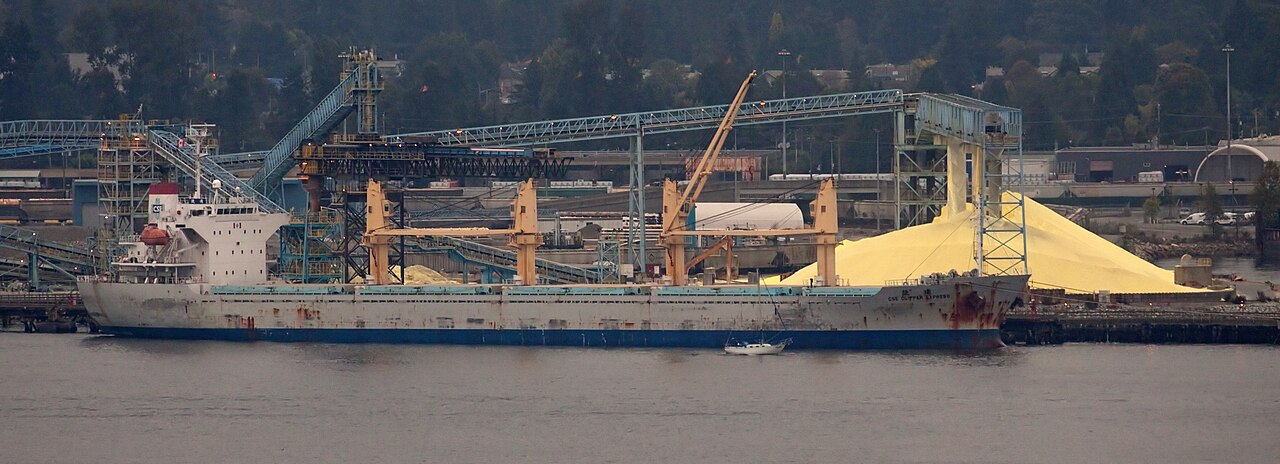
Global sulphur prices slipped last week as phosphate fertiliser makers pushed back against record raw-material costs, but the market remains in a severe supply squeeze, Global Agriculture reports.
Ex-works sulphur in Shandong, China, averaged 7,453.5 yuan a tonne (about $1,110) in the week to 18 September, down 7.2%, according to Shanghai Metals Market. The Middle East FOB average held at $855 a tonne, Indonesia's CIF price fell $20 to about $1,005, and the South Asia CFR average eased from $1,075 to $1,050. The China benchmark, about 7,752 yuan on 22 September, was down nearly 16% on the month but still roughly triple its level a year ago, below June's record of about 11,084 yuan.
The fall reflects weak buying, not new supply: MAP and DAP margins are deeply negative and autumn fertiliser buying is late. Shipments through the Strait of Hormuz fell back to near zero after hostilities resumed in mid-July, according to IFPRI, and world exports of elemental sulphur dropped by a third in the first half, from 13.5 million to 9 million tonnes. Russia extended its sulphur export ban to the end of 2026, India suspended sulphur exports and China halted sulphuric acid exports in May.
About 4 tonnes of sulphur go into every 10 tonnes of DAP or MAP, and phosphate fertiliser prices rose about 30% after the war began and have stayed there since mid-May, even as urea and ammonia fell back. Mosaic has cut operating rates at its Florida and Louisiana plants by about half, China's elemental sulphur imports fell 58% in the first half, and producers in Egypt, Brazil and India are reported to be cutting output.
Governments are absorbing part of the shock: the European Commission lets member states cover up to 70% of farmers' extra fuel and fertiliser costs, Brazil's industry has sought emergency subsidies, and India's fertiliser subsidy bill may exceed 3 trillion rupees against 1.71 trillion budgeted.
Photo: Tony Hisgett / Wikimedia Commons (CC BY 2.0)
Source: Global Agriculture
Comments
(0)