

My well-wishers urge me to write down the story of my past life. But Sarat Chandra Chattopadhyay made it clear long ago, directly or indirectly, that you cannot plough rice fields with goats, nor does having a pen mean the writing will come. In the first part of his novel 'Srikanta' he puts it like this:
"...But saying it is not the same as telling it. Travelling is one thing, describing it is another. Anyone with two legs can travel, but having two hands does not mean one can write! That is very hard. Besides, my trouble is that God did not give me even a wisp of imagination or poetry... Someone God has so afflicted cannot create poetry. All he can do is tell the truth plainly. So that is what I shall do."
I was born in a village but grew up in the thana headquarters where my father worked. My school years were spent in Daudkandi, Gouripur and Debidwar. On school holidays, and especially at Eid al-Adha, we went from Daudkandi or Gouripur to our village home, sometimes by launch and sometimes by boat. By launch we walked on from Kalipur, or broke the journey for a night at my grandmother's father's house in Lalpur; by boat we set off before dawn and reached home in the afternoon.
My mother rose very early to cook, hilsa fish or beef, with roasted chillies and an onion. Eating contentedly in the covered boat and sitting on the prow watching the scenery on both banks filled the heart: "The river breaks one bank and builds the other; that is the river's game." The rocking of the boat in the waves, birds flying behind the launch without touching the water, the creaking of the oil press drifting from the oil-presser's house, the smell of oil cake, village wives walking in a line to bathe in the river with pitchers on their hips, children playing in the water: all of this was a world of wonder to this boy.
A village called Sugandhi
My village has a rather fancy name: 'Sugandhi', meaning fragrant. In full, it lies in Satnal union, Matlab thana, Cumilla district (now Chandpur). Satnal was a famous steamer ghat of the British era; the Rocket steamer called there on its way to Goalundo. The dak bungalow and wireless station I saw there as a child showed how important Satnal was.
I have racked my brain over why my village came to be called Sugandhi, or how other places got names such as Uchitpur, Hatashpur and Nishchintapur, but to no avail. Only in Imdadul Haq Milon's novel 'Kotha Theke Ase Se Alo' did I find that two villages in Bikrampur, Sonadighi and Lakshmidighi, were named not for having ponds (dighi) but because two rice varieties called Sonadigha and Lakshmidigha were grown there widely.
It reminded me that the name of the Toyota car comes from its owner's name, Toyoda, which means 'fertile rice'. Honda, in Japanese, means 'the original rice field'. Two world-famous car brands named after rice. Imagine that.
The Meghna flows just west of Sugandhi, so perhaps I can say, "I am a boy of the Meghna's bank, a boatman of the Meghna." I was born on 12 September 1949. The village then, with its several kandi or paras (hamlets), probably had about a hundred households. Apart from land ownership, the difference between the well-off and the poor was tin roofs versus thatch, or a hurricane lantern versus an oil lamp.
Because the village lay in a low area, water entered almost every homestead at the start of the monsoon. Each house became an island. There was no way out except by boat; even visiting my maternal grandfather's house in the same village needed a boat. The picture is different now. Most of the village lies outside the Meghna-Dhonagoda embankment. There is electricity, quite a few brick buildings have gone up, and people from several households have gone abroad. Instead of boats, engine-driven rickshaws are now the main transport in every season.
Grandmother Rupjan
I never saw my maternal grandfather, Abdur Rahim Sarkar, but my grandmother Rupjan died aged over ninety. I used to tease her by calling her Rupban (she really was beautiful), as in the tale of Rahim Badshah and Rupban. The two-storey tin house and the sitting room with its long veranda showed that Rahim Sarkar had once been well known in the area.
When we left Sugandhi, I would notice my grandmother walking along the riverbank wiping her eyes until our boat was out of sight. She would serve rice mixed with foxtail millet, with jute leaves and eggs, and say, "Here, eat." What a wonderful taste that food had: a full stomach and endless joy. It put any five-star hotel to shame.
The poet Jasimuddin writes in his poem 'Mamar Bari' (Uncle's House):
"Come, boys, come, girls, with garlands round your necks, let us go to uncle's house... On stormy days in uncle's land the joy of gathering mangoes, climbing branches of ripe black plums to stain our faces... ripe dates swaying in laden date palms..."
My uncle's house did not have such a variety of trees, lotus ponds or red water lilies. There were just a few mango and coconut trees on the pond bank. Inside the compound there was a dondul tree and a date palm. Now and then the clatter of two handlooms weaving lungis and saris drifted from that house.
The date palm sap collector
In the bone-chilling cold of the months of Poush and Magh, the collection of sap from date palms stirred and amazed my young mind. In the afternoon a thin, frail old man would come with his dhoti tucked up. A pot hung behind his waist on a wooden hook, and around his neck hung a bag with a hammer, a sickle-like knife, a chisel and rope.
He climbed the tree and tied himself to the date palm with the rope. Then, stretched upright, he trimmed the bark, cut a channel for the sap to flow and set the pot in place. All night the sap dripped into it. I watched each of his engineering steps in wonder. The scene reminded me of a circus act.
Very early the next morning, in thick fog and with hardly any warm clothes on, he brought down the pot full of sap in front of us. I would wait eagerly from midnight to drink that raw sap.
I heard that while my grandfather was alive, tobacco and water were kept in the long-verandaed sitting room for tired travellers. I myself saw village arbitration sessions held there regularly and heard the gurgle of the hookah. The village elders sat in judgement; the "young lads" were nowhere near the "courtroom".
In the mornings, boys and girls came in groups to this sitting room to read the Qaida, Ampara and the Quran. When someone completed the Quran, their family sent puffed rice with molasses, flattened rice, popped rice or other food. Needless to say, tempted by these, I too sometimes joined the chorus of Janab Junab Ali Qari Saheb: "Alif zabar a, be zabar ba..."
Uncles, aunts and a long walk
Whenever I went to Sugandhi, my constant companion for games, trips to the market and chatting was Oli mama, a few years older but like a friend. My eldest uncle, Mujibur Rahman, worked at the Narayanganj dockyard and was a man of serious temperament. For him, life was pointless without rice with milk every day.
Ever-smiling Jobu khala smothered me with affection. Whenever we could, Oli mama and I walked eight miles to her in-laws' village, Boro Haldia. My uncle Didar Box was a primary school teacher: tall, slim, very fair and always smiling. We would eat fish from the pond, chicken from the coop, and rice with milk mashed with ente kola (big-seeded bananas) before returning to Sugandhi.
Some of the lovely things about Sugandhi then must be mentioned. First, there was an abandoned homestead covered in trees, with a green field in front where young men played gollachhut, ha-du-du and even football. In the afternoons a proper uproar would break out across the area. The abandoned homestead was also used for breeding livestock.
Passing it at night, the whooshing of branches swaying in the wind stirred fears of ghosts in my boyish mind. So I would close my eyes and run for it, reciting loudly, "La ilaha illa anta subhanaka inni kuntu minaz-zalimin."
Second, a small canal ran from the Meghna in the west through the heart of the village. Though neglected, it at least offered water hyacinth for cattle feed and a chance to catch some fish.
Third, the bushes here and there held many fruit plants, including the 'betum' fruit.
What has changed
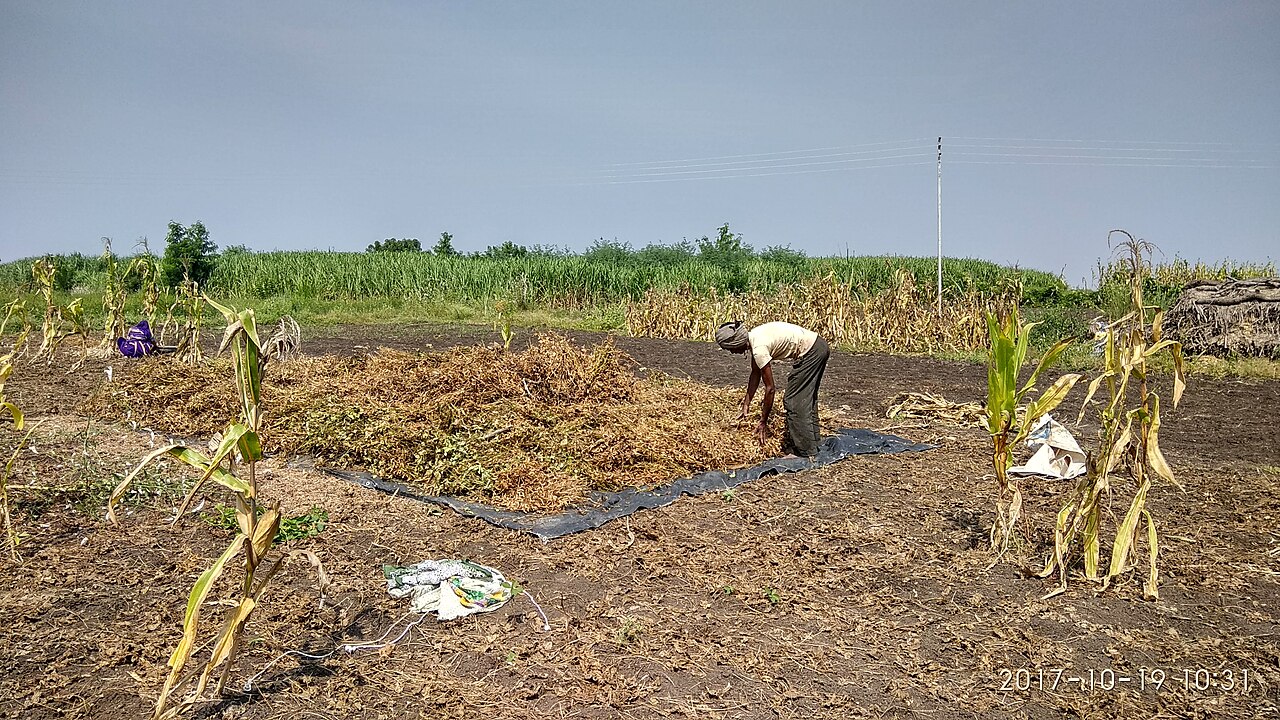
Now, of course, all of it is being filled in to build houses. As across the country, in Sugandhi too it is oxygen out, carbon dioxide in. The walking village now rings with rickshaw bells. In growing and threshing crops, the plough bullock and human labour have given way to the triumph of machines.
I feel like saying: give back that Sugandhi, when "crickets called from every bush, and sitting alone on a dark veranda watching the trees tremble would set even a poet's heart fluttering."
(To be continued)
The writer is an economist and former vice-chancellor of Jahangirnagar University.
Source: Jagonews24. First published in Bengali on The Agro News.
Comments
(0)