
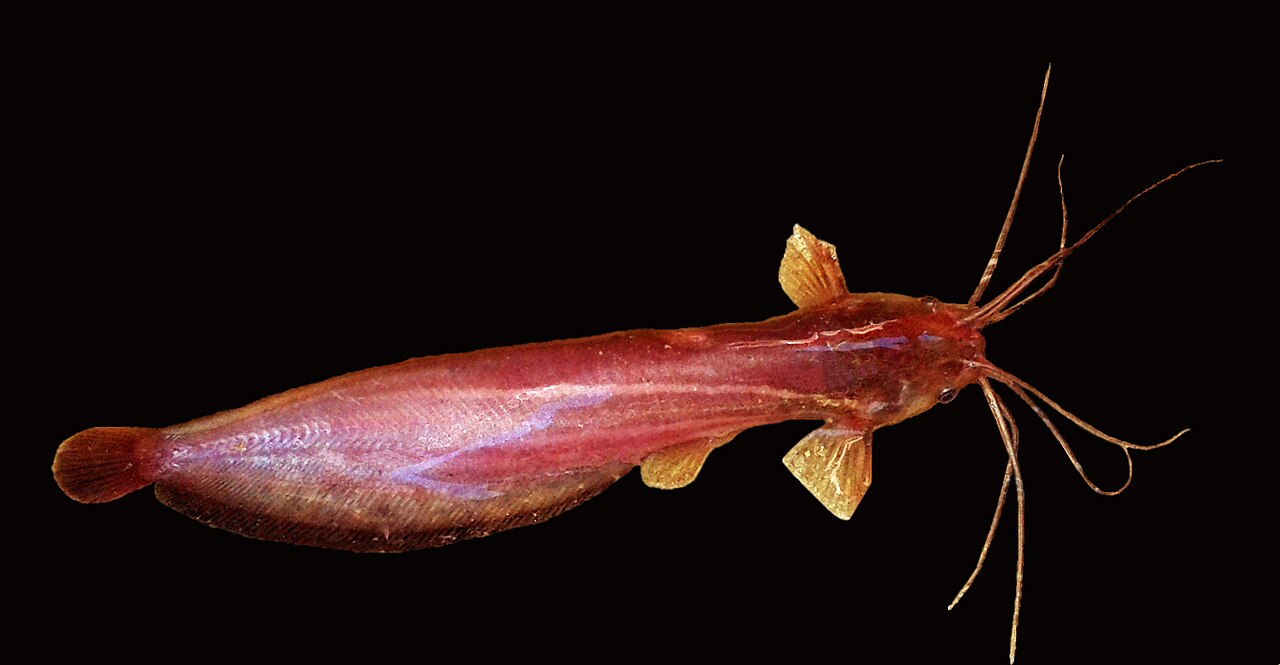
In the dry season, dig into the cracked mud at the bottom of a dried-up pond and you may pull out a live fish: the shing, or stinging catfish. How it survives for months in waterless soil is the subject of an article by Mahmud Newaz in Bigganchinta.
The key is a long tubular air sac, the respiratory sac, running from beneath the head towards the tail. Most fish take oxygen from water through their gills alone, but the shing can also breathe air directly with this organ, so it copes when a pond runs out of oxygen or the water turns foul. Its relative the magur has a similar air-breathing organ, the arborescent organ.
As small canals and beels dry out in early summer, the shing burrows into the mud, sometimes nearly an arm's length deep. Scientists call this aestivation, a kind of summer dormancy. Its heart rate drops, its metabolism slows and it lives on stored fat, going without food for weeks. With the first rain it stirs again.
A thick coat of sticky mucus keeps water in its body even in dry soil, some blood proteins stop its cells drying out, and its kidneys cut water loss almost to nothing. Waste is stored not as toxic ammonia but as relatively safe urea. By digging its two pectoral fins into the ground and wriggling like a snake, the shing can even cross land from one pond to the next, which is why villagers call it a walking fish.
A venomous spine at the base of its fins is its last defence; the sting burns for a long time, so villagers handle the fish with care. Farmers are used to live shing turning up when they plough. With irregular rain and longer droughts, the writer says, such hardy species are drawing fresh interest from researchers, who are studying its proteins and enzymes.
The article was published in Bigganchinta; its writer, Mahmud Newaz, is a former student of Dhaka University, and his source is FishBase.
Photo: Dibya Dutta / Wikimedia Commons (CC BY-SA 4.0)
Source: Bigganchinta



Comments
(0)