
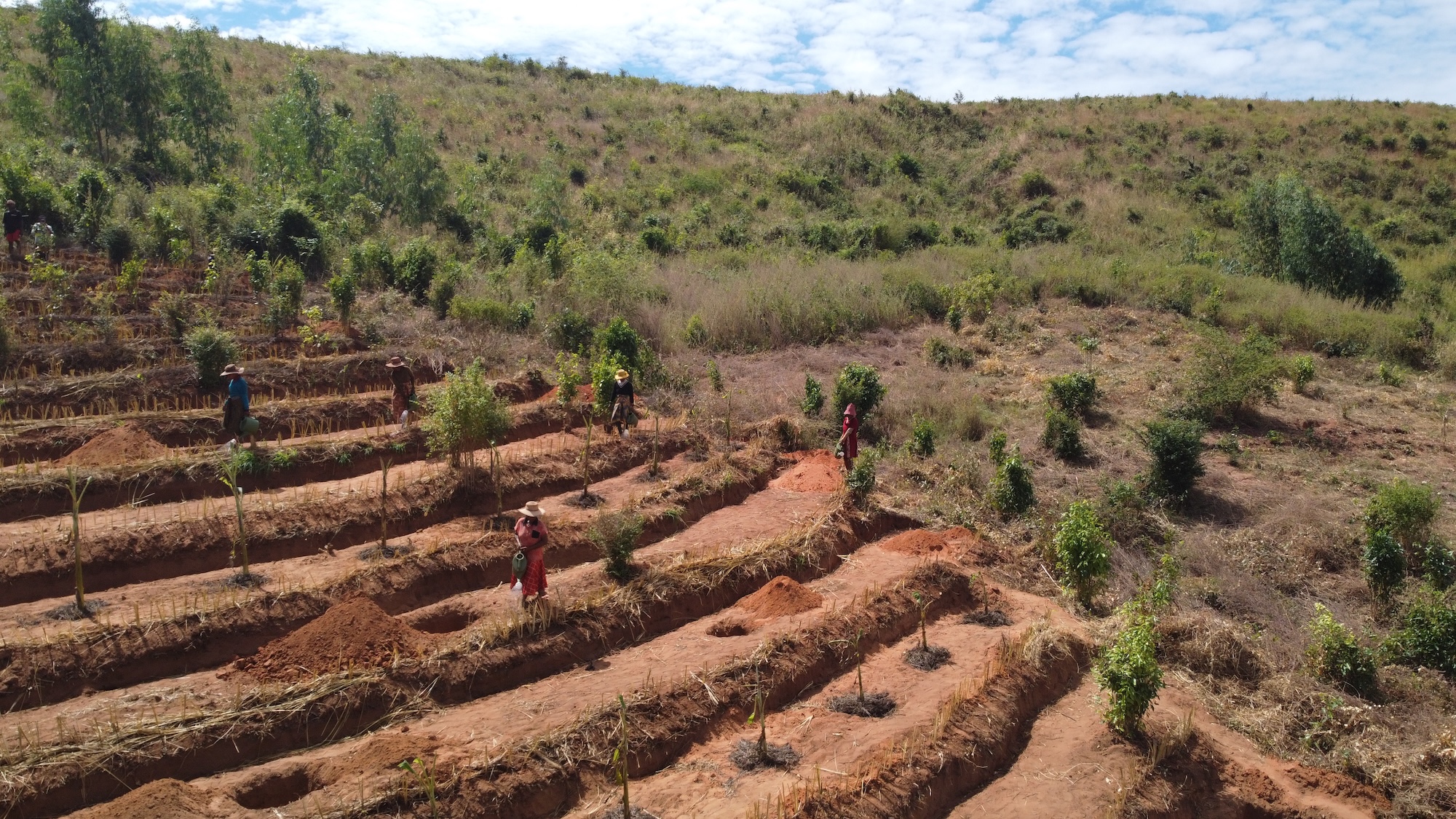
Forest and landscape restoration is a cost-effective response to food insecurity, biodiversity loss, climate change and other development problems, FAO says in The State of the World's Forests 2026, published on Monday at the opening of its Committee on Forestry. Scaling it up, the report warns, will take more investment, inclusive governance and sustained political commitment.
Forests cover 4.14 billion hectares, about 32 percent of the Earth's land, store 714 gigatonnes of carbon and host up to 80 percent of terrestrial biodiversity; nearly a third of the world's people depend on forests and trees for food security and livelihoods. Yet an estimated 489 million hectares of forest were lost to deforestation between 1990 and 2025, more than 460 million hectares are degraded, and 1.56 billion hectares of land in total are degraded. Around 127 million hectares of forest burn every year.
The report argues that doing nothing costs more. Failing to restore degraded ecosystems costs an estimated $878 billion to $6.3 trillion a year, 2 to 8.3 percent of annual GDP, while restoring more than 1 billion hectares could bring $1.8 trillion a year in benefits such as healthier soils and better water regulation. Under favourable conditions restoration returns up to $30 for every $1 invested.
Governments in 91 countries and areas have pledged more than 190 million hectares for forest restoration, but only 206.5 million hectares of forest are currently under restoration. Among the 18 case studies are the Great Green Wall for the Sahara and the Sahel, China's Three North Programme and the Trinational Atlantic Forest Pact of Argentina, Brazil and Paraguay.
The report sets out four pathways: putting people's rights and knowledge at the centre, planning restoration at landscape scale to balance conservation, production and livelihoods, aligning public and private finance with long-term outcomes, and coherent policy and law. "The window for action is narrowing," Director-General QU Dongyu wrote in the foreword.
Photo: ©FAO
Source: FAO Newsroom

Comments
(0)