
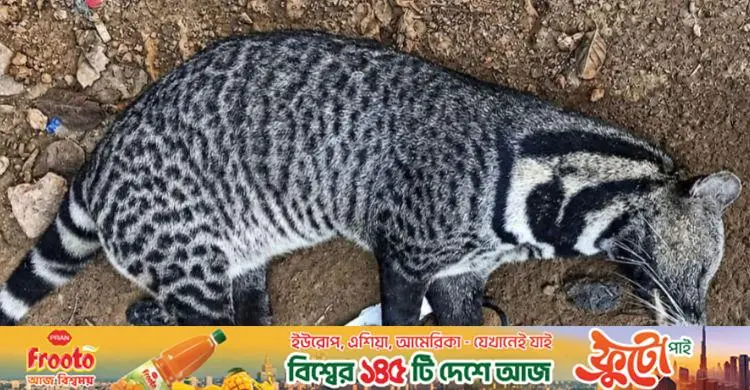
As dusk falls and the surroundings grow quiet, a scent like pulao sometimes drifts through the air. There is no cooking nearby; the source of the sweet smell is an animal, the gandhagokul, or small Indian civet, known locally as khatash, nel or bagdash. Through extreme insensitivity, ignorance and rumour, this harmless wild animal now faces a grave crisis.
Recently a so-called "tiger" scare spread around the Samu Mondol crossing in Banshchara union of Jamalpur. Unable to identify the strange-looking animal, people panicked for no reason. Eventually they trapped it in a net and beat it to death. Only after it died did it become clear that the animal at the centre of the panic was no ferocious tiger but a threatened civet that quietly serves nature.
A shy, nocturnal animal
The civet, which is on the red list of the International Union for Conservation of Nature (IUCN), is mainly nocturnal and extremely shy. Although it lives close to people, it is by nature fearful of them and avoids them. The sweet, pulao-like scent comes from secretions of special glands in its body, which it uses to mark its territory.
A silent worker for farms and forests
According to wildlife and environment experts, the civet is a great friend of nature. By eating rats and harmful insects that damage farmers' crops, it helps keep the environment in balance. Most importantly, seeds of banyan and other wild fruits that pass through its digestive tract germinate fully. Its role in creating new forest naturally is therefore unmatched.
There is some hope: in parts of Bera upazila in Pabna, awareness has kept civets moving around relatively freely. People there have lived alongside them for a long time without attacking them.
Refraining from killing any animal indiscriminately is essential to protect the ecosystem. On noticing an unfamiliar or wild animal near homes, a responsible citizen should not panic but inform the Forest Department or the national emergency service 999 at once. Ignoring rumours and building public awareness to protect the civet and all other defenceless wildlife is now a need of the hour.
The writer, Sabbir Hossain, is a student at Ta'mirul Millat Kamil Madrasa.
Source: Jagonews24. First published in Bengali on The Agro News.


Comments
(0)