
Muhammad Shafiqur Rahman
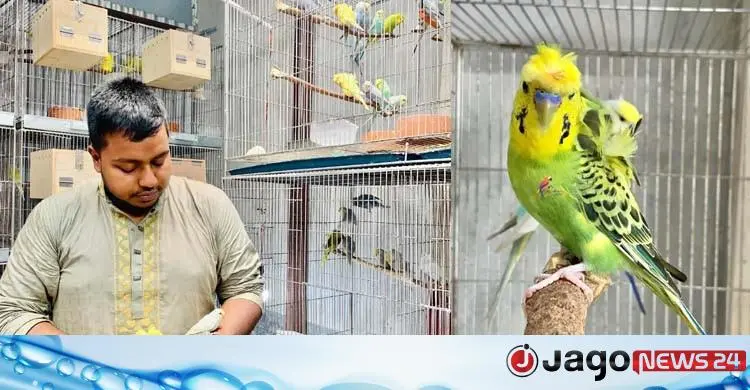
Md Sifat Khan is a young lawyer, but in his heart he nurtures a special love for budgerigars. After completing his LLB (Honours) and master's, he is now a trainee under a senior advocate at the Munshiganj District and Sessions Judge Court. His family consists of his parents, two sisters and his wife, and it was within that loving family circle that his bird-keeping journey began.
How it started
It began almost like a childhood story. On a shopping trip with his mother to Kaptan Bazar in Dhaka, he was fascinated by the small, colourful birds in a shop. When he pleaded, his mother bought him two pairs of budgerigars, and so began an affectionate chapter with the birds. Watching videos on social media, he learned that these little birds lay eggs, raise chicks and multiply through breeding, and that knowledge inspired him to build his own small aviary.
While many people keep larger birds, Sifat chose budgerigars. "Budgerigars are small, social and colourful birds," he said. "They are affordable for everyone. Classic budgerigars are very cheap and they breed a lot. That is why I chose budgerigars."
He learned bird-keeping mainly from social media. Not only did he learn himself, he also trained his wife, a cousin and a hafez from a neighbouring village, and many of them now breed birds successfully.
Sifat Aviary
His farm is set up in the store room of his house, with windows, an exhaust fan, white tin and net doors to give the birds a suitable environment. It is called Sifat Aviary. There are about 56 cages, 35 of which hold pairs. There are about 130 birds in total, 35–40 of them chicks. On average, one pair produces 12–13 chicks a year.
The birds include 11 species or mutations, such as Lutino Japanese, Yellow DF, Albino, White DF, Creamino (red- and black-eyed), Classic Japanese, TCB Yellow, Rainbow Japanese and Normal Rainbow. Prices vary too: pairs sell from Tk 1,000 for classics up to Tk 20,000 for Rainbow Japanese.
Challenges and care
The path has its challenges. Keeping budgerigars is not as easy as it looks, said Md Sifat Khan. The biggest challenge, in his view, is keeping the breeding pots clean, because when many chicks hatch at once the pots get dirty quickly, and taking out each pot every day to tend the chicks becomes very hard work.
To solve this he now uses breeding boxes instead of pots, so the birds have a safe and comfortable environment. Another common but serious problem is green droppings, which can be a sign of illness, so he checks every bird's droppings carefully each day to catch problems early and deal with them quickly.
To those wanting to buy birds he says: "Taking birds is fine, but not just by looking at photos or videos. You must visit the farm, because birds are often affected by mites. I want everyone to see the farm and the bird's parents before buying."
To keep his budgerigars healthy and lively, Sifat Khan follows a routine. In his view, fresh seed mix should be given at least once a week so the birds always have fresh, nutritious food. The water must be changed every morning and afternoon, because stale water can breed bacteria. Soft food twice a week and greens every three days boost the birds' immunity and improve breeding. The farm needs good ventilation so it does not become damp or polluted, and the cage trays should be cleaned once a week so the birds' home stays healthy and comfortable.
Income and plans
His average monthly income from the farm is Tk 20,000–30,000, and his total earnings so far are about Tk 3 lakh. "Social media is now a major sales channel," he said. "If I don't get the right price, I raise the bird in a flying cage so that it can be sold at a good price later."
He also describes the fun side of budgerigars: "When I give them water for bathing and mix in some greens, it is wonderful to see their excitement. Sitting in the room watching them bathe is a real joy." Besides his family, several helpers have contributed to his success: Saifur Rahman Milton, Sakil, Galib and Mostafizur Rahman Rakib. Above all, his wife has always stood by him, which he considers his greatest reward.
Many people who learned from Sifat Khan and followed his guidance now keep budgerigars successfully, notably Nazmul, Hafez Arman and Iyasin Khan. All of them started under Sifat's guidance and are doing well; through regular breeding, care and marketing they have become known as small entrepreneurs in their areas. According to Sifat, they are making steady progress and each of their average monthly incomes is expected to grow steadily soon.
His advice to new entrepreneurs: "Always visit an experienced farm. Learn about breeding and start with disease-free birds." On his future plans he said: "I want to sell birds abroad through legal channels. I also want the new generation to stay away from bad habits and learn to love animals. By keeping one or two pairs of budgerigars, they will learn compassion and care."
Source: Jagonews24. First published in Bengali on The Agro News.

Comments
(0)