
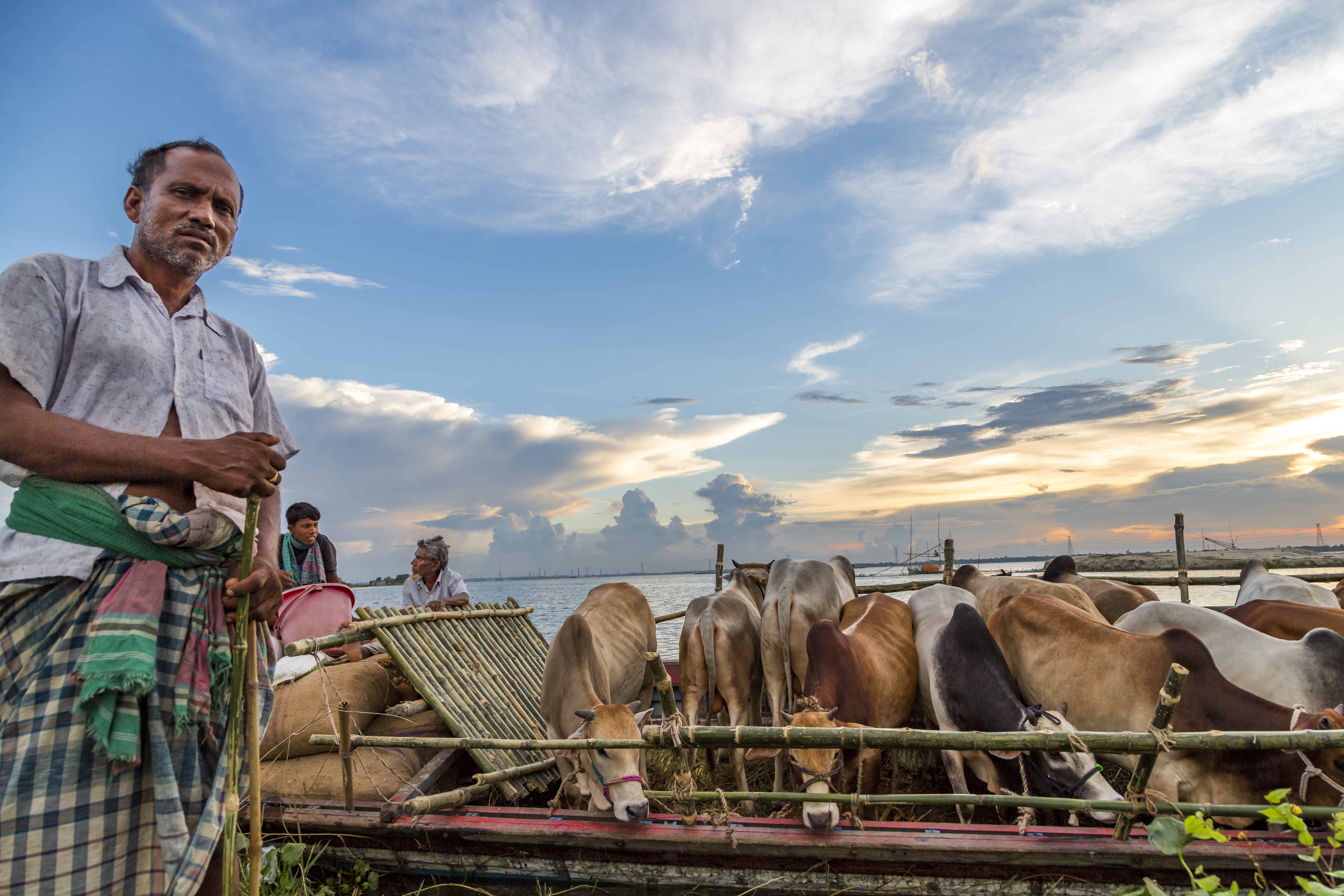
A cattle trader from Shahjadpur in Sirajganj alleged that 36 cattle he was bringing by trawler along the Shitalakshya river to the Navana cattle market in Siddhirganj, Narayanganj, were forcibly unloaded at a cattle market at the No. 1 ferry ghat (kheyaghat) in Bandar upazila around noon on Saturday 23 May 2026, Jagonews24 reported that evening. The trader said the people who stopped the trawler beat those on board and that one of his animals had its leg broken. The leaseholder of the Bandar market said some people had unloaded the cattle but that they had been released and nobody had been beaten, and the officer-in-charge of Bandar police station said police were at the scene but had not yet confirmed that the trader was beaten.
The incident came in the last week before Eid-ul-Azha, when cattle from the country's surplus districts move by road, rail and river to the markets around Dhaka and Narayanganj. The National Moon Sighting Committee had announced on 18 May that Eid-ul-Azha would be celebrated in Bangladesh on 28 May 2026.
The trader's account
According to the Jagonews24 report, the trader, named in the report as Md Doyal, had loaded 36 cattle at Shahjadpur in Sirajganj and was taking them by trawler along the Shitalakshya to the Navana market in Siddhirganj. The report said, as information it had gathered, that before the trawler passed the No. 1 ferry ghat section of Bandar upazila an organised group stopped it, beat the trader and everyone else on board, and forced the cattle off at the ferry ghat market. The beating was disputed by the market's leaseholder and had not been confirmed by the police when the report was published.
The trader told Jago News: "I was going to the Navana market in Siddhirganj with 36 cattle. On the way, several people forcibly stopped our trawler and unloaded the cattle at their market. One of our cattle's legs was broken. We are poor people; please protect us."
The report did not name anyone accused of stopping the trawler, did not give the number of people involved, and did not say whether a written complaint or a case had been filed with the police by the time it was published.
What the leaseholder, the police and a local leader said
Three others gave their accounts to Jagonews24 on the same day, and their versions differed from the trader's on the main points.
- Pappu Ahmed, described in the report as the leaseholder of the ferry ghat cattle market in Bandar upazila, said some people had unloaded the cattle, but the cattle had been released and the trader had left with them. Nobody had been beaten, he said.
- Golam Moktar Ashrafuddin, officer-in-charge (OC) of Bandar police station, said he was aware of the matter and that police from the station were at the scene, but it had not yet been confirmed that the trader was beaten.
- A local leader told the paper he had heard the news and was going to the scene, but he had not yet been able to confirm who had stopped the cattle, because nobody could explain the matter clearly.
The report carried no comment from the Bandar upazila administration, the Narayanganj City Corporation, which leases the temporary cattle markets inside the city, or the district livestock office. It did not say whether the cattle reached the Navana market afterwards, beyond the leaseholder's statement that the trader had left with them.
Navana, Siddhirganj and Narayanganj's Eid cattle markets
Siddhirganj, where the trader was heading, lies on the western bank of the Shitalakshya within the Narayanganj City Corporation. According to Banglapedia, Narayanganj municipality was upgraded to a city corporation on 5 May 2011, combining Narayanganj town, the Siddhirganj municipal area and the Kadam Rasul municipality. The nine wards of the former Siddhirganj municipality became wards 1 to 9 of the city corporation, the nine wards of Narayanganj municipality became wards 10 to 18, and the nine wards of Kadam Rasul municipality in Bandar upazila became wards 19 to 27. In the 2011 census, the Siddhirganj municipality covered 22.71 square kilometres and had 256,760 people.
Each year the city corporation leases out temporary cattle markets for Eid-ul-Azha. Press Narayanganj reported on 14 May 2026 that the corporation had leased 22 temporary markets that year: the tenders were opened on 13 May at the Nagar Bhaban, and the city corporation's administrator announced the highest bidders one by one. The highest bid, Tk 46 lakh, was for a vacant field of the Ibrahim Textile Mills at Godnail in ward 8, and the lowest, Tk 3 lakh 30 thousand, was for a vacant plot in ward 24. The list included the No. 1 field at Navana City in ward 7, leased for Tk 7 lakh 50 thousand. Under the lease the holders could bring in and sell animals for three days before Eid, and the administrator said a lease would be cancelled if there was any disorder or breach of the rules at a market.
The same pattern was reported a year earlier. Jugantor wrote on 23 May 2025 that the city corporation had approved nine temporary sacrificial-animal markets in different wards of Siddhirganj for the three days before Eid that year, among them a vacant plot at Kashem Para next to Navana in ward 7. The Jagonews24 report of 23 May 2026 did not say whether the market at the Bandar ferry ghat was among the city corporation's leased markets or was leased by another authority; it described Pappu Ahmed only as the leaseholder of the ferry ghat cattle market of Bandar upazila.
The Shitalakshya and Bandar upazila
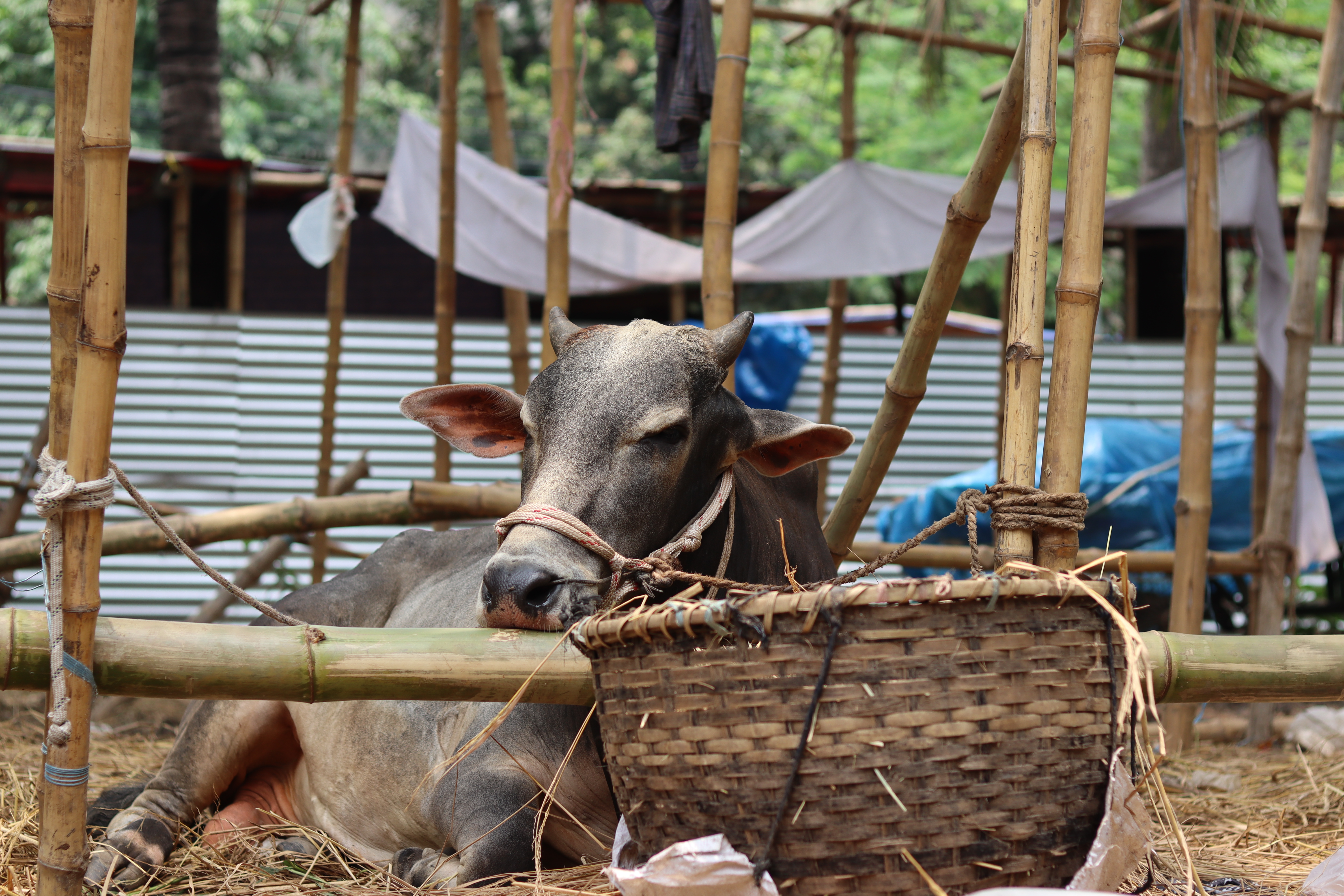
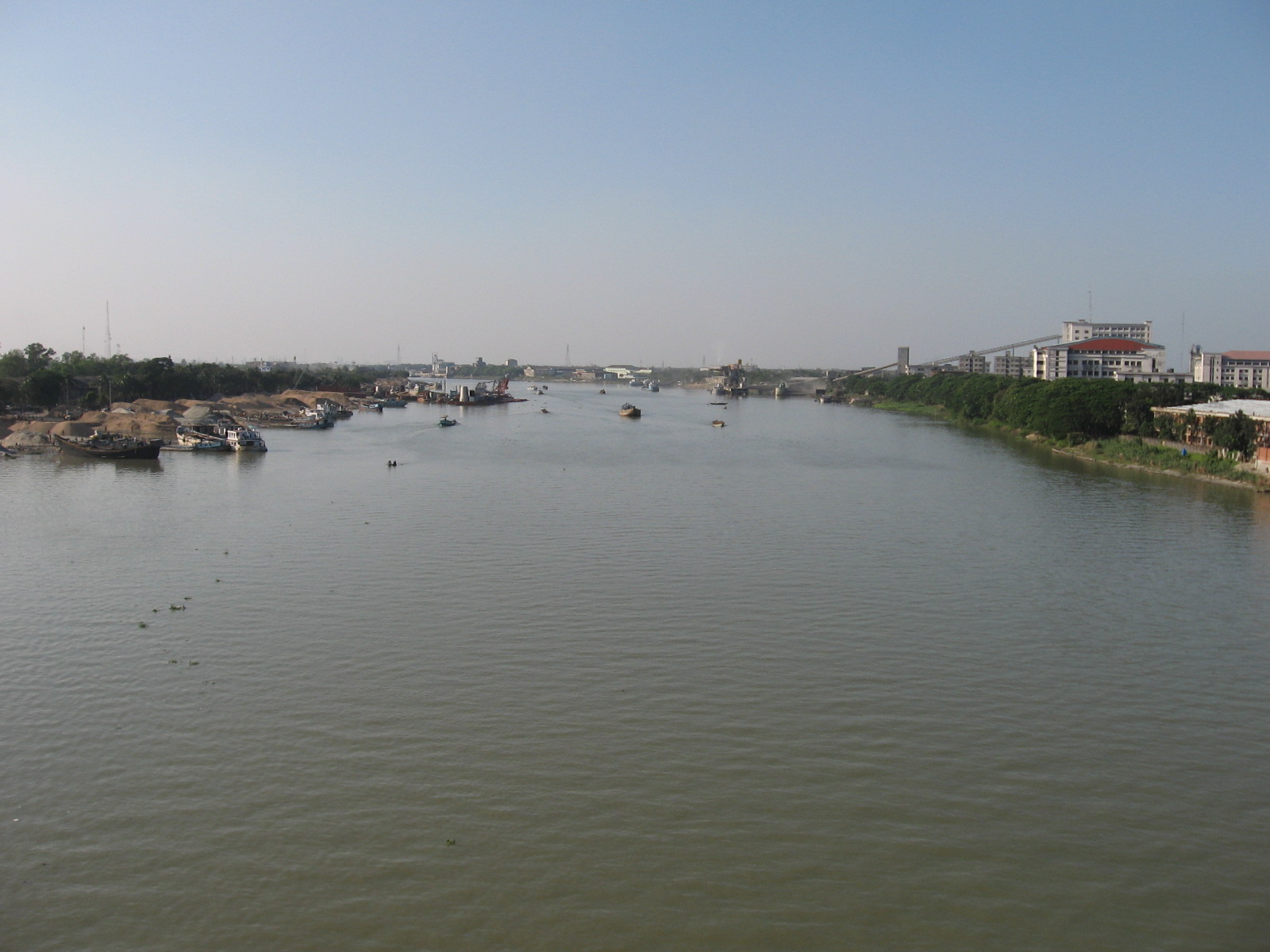
The river on which the trawler was travelling is one of the main waterways of the Dhaka region. Banglapedia describes the Shitalakshya as a course of the Old Brahmaputra: the older river splits into two courses at Toke in Gazipur district, and one of them, the Banar, flows south-west and is renamed the Shitalakshya at Lakpur. It then flows east of Narayanganj town and falls into the Dhaleshwari near Kalagachhiya. The river is about 110 kilometres long, about 300 metres wide near Narayanganj and about 100 metres in its upper reach, and it is navigable throughout the year. Its highest discharge, 2,600 cubic metres per second, has been measured at Demra.
The muslin industry once flourished along the Shitalakshya, and heavy industries, including the Adamjee jute mills, stand on its banks today, Banglapedia says. There are thermal power stations at Palash, north of Ghorashal, and one at Siddhirganj, and the important river port of Narayanganj is on its bank. The river is under tidal influence for about five months of the year.
Bandar upazila lies across the river, on the eastern bank opposite Narayanganj town. According to Banglapedia, it covers 54.39 square kilometres and is bounded by Sonargaon upazila on the north and east, Munshiganj Sadar upazila on the south, and Narayanganj Sadar upazila and the Shitalakshya on the west. It had 312,841 people in the 2011 census. Bandar thana was formed in 1964 and became an upazila in 1993. Its main crops are potato, paddy, jute, mustard and wheat, and Banglapedia lists 123 dairies and 141 poultry farms in the upazila. Its landmarks include the Bandar Shahi Mosque, built in 1481, and the Sonakanda Fort.
Bandar is the smallest of the five upazilas of Narayanganj district. The district covers 684.37 square kilometres and had 2,948,217 people in the 2011 census; its main rivers are the Shitalakshya, the Meghna, the Old Brahmaputra, the Buriganga, the Balu and the Dhaleshwari. Narayanganj became a sub-division in 1882 and a district in 1984.
Shahjadpur and Sirajganj, where the cattle came from
The 36 cattle had come from Shahjadpur, an upazila in Sirajganj district on the western side of the Jamuna. Banglapedia gives its area as 324.15 square kilometres and its population as 561,076; its rivers include the Jamuna, the Karatoya, the Hurasagar, the Baral and the Gohala. Shahjadpur thana was formed in 1845. Agriculture is the main source of income for 42.73 per cent of households, and the main crops are paddy, mustard, pulses, wheat, jute, sugarcane, chilli and vegetables. The upazila is also known for the revenue office (kachari bari) of the poet Rabindranath Tagore.
Sirajganj is one of the districts that send surplus sacrificial animals to the rest of the country. The state news agency BSS reported on 14 May 2026, citing the district livestock office, that 617,723 animals were ready for sacrifice in Sirajganj that year against a local demand of 293,676, leaving about 324,000 animals to be supplied to markets in other parts of the country. They comprised 199,924 cattle, 365,850 goats and 47,724 sheep, and production was highest in Shahjadpur, Ullapara and Sadar upazilas. The district livestock officer told BSS that medical teams had been kept ready at 37 permanent and temporary markets in the district. Farmers told the agency they had fattened their animals on oil cake, bran and green grass without harmful drugs or hormones.
Eid-ul-Azha 2026: animals, markets and security
The National Moon Sighting Committee met on the evening of 18 May 2026 in the Islamic Foundation's meeting room at the National Mosque, Baitul Mukarram, and announced that the moon of Zilhaj had been seen. Zilhaj 1447 Hijri would therefore be counted from 19 May and Eid-ul-Azha would be celebrated on 28 May, Jugantor reported. Saudi Arabia had announced 27 May for the festival.
At a press conference at the Secretariat on 3 May 2026, the Minister of Fisheries and Livestock said 1 crore 23 lakh 33 thousand 840 animals would be available for sacrifice that year, against a demand of 1 crore 1 lakh 6 thousand 334, Prothom Alo reported. He said more than 22 lakh animals would be surplus, so there was no fear of a shortage. The supply comprised 56 lakh 95 thousand 878 cattle and buffaloes, 66 lakh 32 thousand 307 goats and sheep, and 5,655 animals of other species. He said more than 3,600 markets would be held across the country, 27 of them in Dhaka (16 in the Dhaka North and 11 in the Dhaka South City Corporation), with 20 veterinary medical teams at the capital's markets. He also said the government would take a strict stand against extortion from trucks carrying sacrificial animals and that law enforcers, some in plain clothes, would be on duty at all times to protect markets, buyers and sellers. Animals would again be sold online, without any toll or hasil.
After a law-and-order meeting at the Secretariat on 12 May 2026, the Home Minister told reporters that 4,259 cattle markets had been leased across the country, with 15 in the Dhaka North and 11 in the Dhaka South City Corporation, Jugantor reported. Markets were to have adequate lighting and CCTV cameras, banks were to set up booths and machines to detect counterfeit notes, and Ansar members would be deployed at markets as leaseholders required. He warned that any extortion from vehicles carrying animals on roads and waterways would be dealt with firmly; law enforcers would use body-worn cameras and plain-clothes surveillance, and special measures would be taken to stop harassment in the transport of passengers and animals by ferry and launch. A special monitoring cell at Police Headquarters would work round the clock for seven days before and seven days after Eid, and hotlines including the fire service (102) and BIWTA (16113) would remain open.
Forced unloading: a complaint heard at earlier Eids
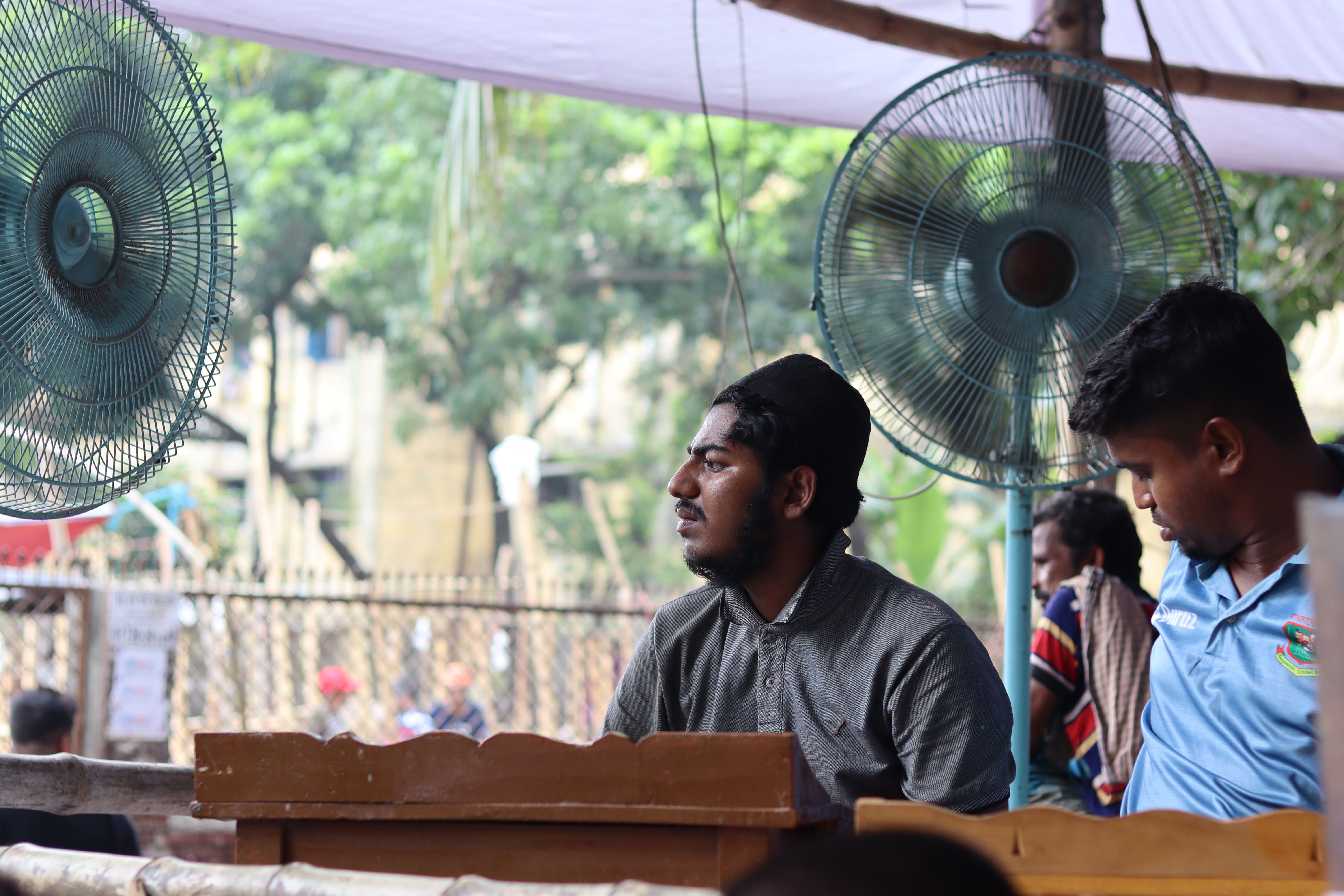
The complaint at Bandar was not a new kind of complaint. Before Eid-ul-Azha in June 2023, DW Bangla reported that cattle traders feared being forced to unload at particular markets even more than they feared extortion on the way. Traders told DW that men from roadside markets stopped cattle trucks on the highways and pushed them to sell at their markets, and the report said the same happened on the waterways, where leaseholders' men patrolled the rivers in trawlers, stopped boats loaded with cattle and took them to their markets. Traders said cattle sometimes fell from vehicles and broke their legs in the process, and that when they could not reach the market of their choice they had to ask higher prices to cover the loss.
A police headquarters spokesman told DW at the time that no leaseholder or leaseholder's men could forcibly take any truck to a market. Traders had been advised to put a banner on the front of their vehicles naming the market they were going to, and to call the national emergency number 999 for immediate help if anyone stopped them by force; highway police and river police were also on duty, he said.
Waterways remained an important route in 2026. Shomoyer Alo reported on 21 May 2026 that sacrificial animals had begun arriving in Dhaka by river and road: trucks from about 21 south-western districts were crossing on the Daulatdia-Paturia ferry route, and trawlers and boats were bringing animals to Sadarghat. The same report said that under the Dhaka city corporations' rules the capital's markets would run for five days, a leaseholder could take a hasil of 5 per cent of the sale price and nothing more from a seller, and about 100 officials had been given magistrates' powers to act against irregularities.
What the animal welfare law says
The treatment of animals in transport and at markets is covered by the Animal Welfare Act 2019 (Act No. 12 of 2019, dated 10 July 2019). Section 5 lets the government make rules for the rearing, transport and slaughter of animals by notification in the official gazette. Section 6(1) lists acts that count as unnecessary cruelty to an animal, among them making an animal overwork or beating it unnecessarily, and tying, confining or carrying an animal in a way that does not let it stand, sit or lie down naturally. The government may declare other acts to be unnecessary cruelty by gazette notification. Section 6(3) makes committing or helping to commit such cruelty an offence, subject to the exceptions in section 6(4), and section 16 sets the penalty for it: up to six months' simple imprisonment, a fine of up to Tk 10,000, or both.
The Jagonews24 report did not say how the animal's leg was broken, and no police, administrative or veterinary finding on the trader's allegation had been reported when it was published on 23 May 2026.
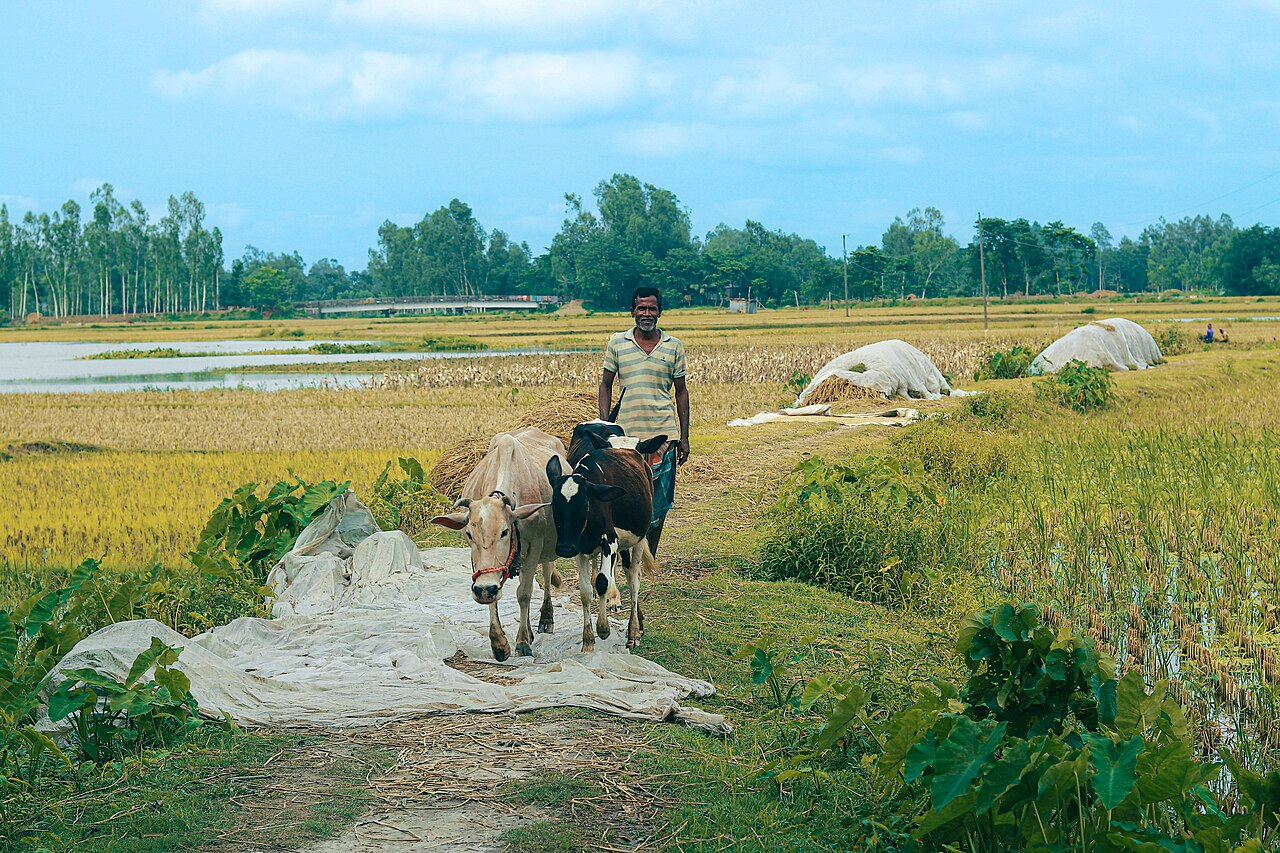
Photo: Masumcity / Wikimedia Commons (CC BY-SA 4.0). The top picture shows a cattle trader beside a boat loaded with cows for Eid-ul-Azha on the Turag river in Dhaka in August 2017, as background.
Sources: Jagonews24 (23 May 2026), Press Narayanganj (14 May 2026), Jugantor (23 May 2025, 12 May 2026 and 18 May 2026), Prothom Alo (3 May 2026), Bangladesh Sangbad Sangstha (14 May 2026), Shomoyer Alo (21 May 2026), DW Bangla (23 June 2023), Banglapedia, Animal Welfare Act 2019 (bdlaws, Legislative and Parliamentary Affairs Division)
Comments
(0)