
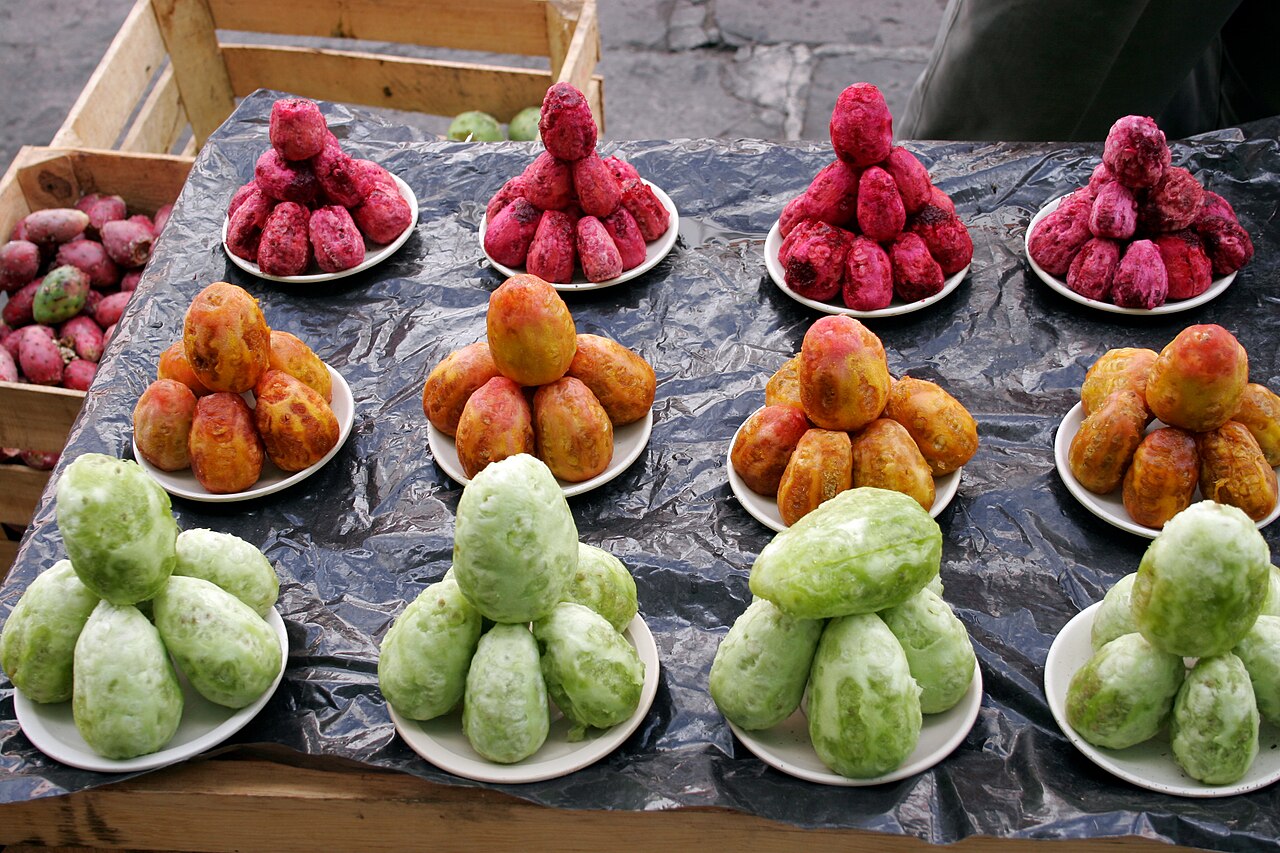
Samkelisiwe Chunda, an environmental scientist turned farmer, runs Sibayeni Metrofarming in Sibayeni village in Mpumalanga's Nkomazi municipality, South Africa, on about 25 hectares, 16 of them under prickly pear, Food For Mzansi reported. Her plan is to use the whole plant: fresh fruit, juices, teas, seed oil and a biodegradable hydrogel of her own design, PEAR-H2O, meant to help farms use water more efficiently.
Chunda holds a BSc and honours in environmental science, a project management diploma and an MBA in climate-smart agriculture, and is working towards a PhD on the economics of agrivoltaics, farming under solar panels, in South Africa. She worked for the South African National Biodiversity Institute, the Gauteng agriculture department and, from 2006 to 2016, the City of Tshwane before turning to farming.
She started on family land in 2013, paying for it from her salary, and later put her pension into infrastructure. The business was registered in 2018 as Sustainable AgriTech Systems, trading as Sibayeni Metrofarming, on about one hectare of greenhouse tunnels growing spinach, lettuce, tomatoes, mint and herbs, before adding rabbits. It now also has indigenous fruit, bees and hydroponics, and is researching renewable energy, water-smart technology and food processing.
Fresh produce goes to Food Lover's Market, the Johannesburg International Fresh Produce Market and the Tshwane Market, while industrial, cosmetic and medicinal buyers take other products. "We are not only producing fresh prickly pears; we are exploring ways to unlock the value of the entire plant," she said. The farm employs 16 people, five permanent and 11 seasonal.
Her pitch won third place overall in the Agricultural Development Agency (Agda) awards, with a R24,000 prize package. She faces high capital and infrastructure costs, expensive processing equipment and unpredictable weather, and answers them with climate-resilient crops, partnerships and water-efficient practices. Next she wants a full processing plant, larger PEAR-H2O production, agrivoltaic systems and a demonstration centre for emerging farmers.
"Start with what you have, and do not wait for perfect conditions. Farming is a business," is her advice to young farmers, who she says must know their markets and costs and embrace technology and value addition.
Reporting by Lisakanya Venna for Food For Mzansi.
Photo: Tomás Castelazo / Wikimedia Commons (CC BY-SA 2.5)
Source: Food for Mzansi

Comments
(0)