
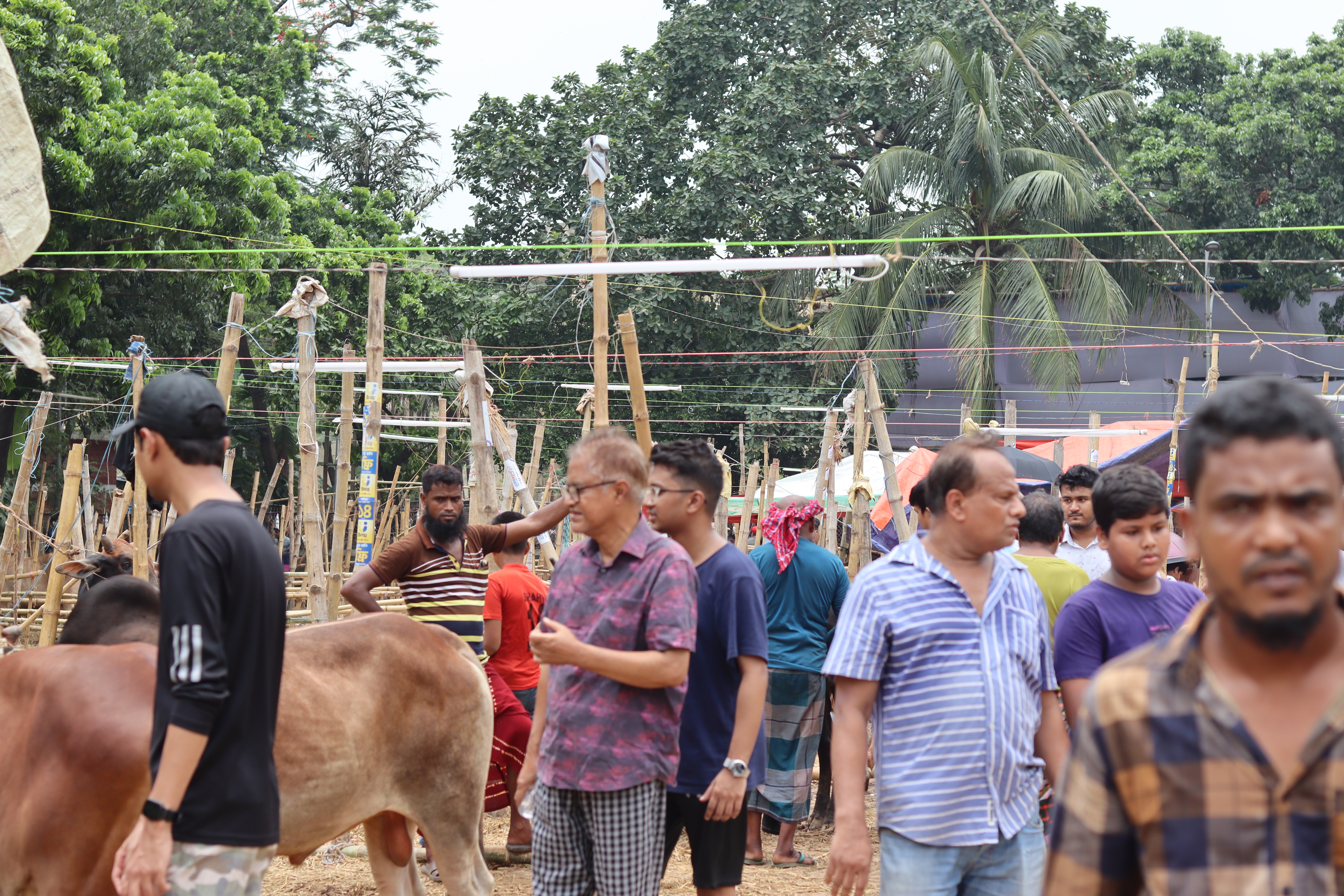
On the morning of Eid-ul-Adha, Thursday 28 May 2026, many traders who had brought cattle from districts across Bangladesh to the Kajla and Shonir Akhra markets in Dhaka's Jatrabari were loading unsold cows back onto lorries. Even after offering losses, they had not been able to sell them all, and they were heading back to their villages. Jagonews24 visited the markets that day and reported their accounts.
Md Mamun, a trader who had brought 80 cows from Dinajpur, said he had sold 32 over four or five days at a loss of Tk 2,000 to Tk 5,000 a head. The other 48 went unsold, and he planned to hire lorries to take them back to Dinajpur. Traders from Bhola, Kishoreganj and Munshiganj described much the same experience.
An empty market on Eid morning
It was a quarter to 11 on Eid day. Mamun was on the phone telling his companions to eat quickly and come back, so that he could go and eat himself. He had had nothing to eat all morning and had not slept the night before. He said he would eat something decent, sleep, and then head home with his cattle.
The Jagonews24 reporter found the Kajla and Shonir Akhra grounds almost deserted. A few wholesalers and herders remained, some asleep and some dozing where they sat, with sacks of bran, straw and grass beside them. Some of the cows lay down, others stood. When a buyer walked up, one trader did not even turn his head. "He won't buy a cow; he'll just offer a low price," he said.
Traders at the market said that even after buying cattle at high prices and selling them at a loss, they could not satisfy buyers, who wanted cows for next to nothing. It seemed, they said, as if a cow had no value at all. Asked why buyers were offering so little, they said they did not know the reason, but it looked as though people had less money and fewer were giving Qurbani than before, which could be keeping prices down.
Kajla and Shonir Akhra lie within Jatrabari police station in the capital. According to Banglapedia, Jatrabari thana was formed in 2007 and covers 13.19 square kilometres, bordered by Gandaria and Sutrapur to the west, Kadamtali and Shyampur to the south and Demra to the east. Its main market is Jatrabari Bazar, and the Saidabad bus terminal is its main transport hub. According to a Business Standard (Bangla) report of 21 May 2026, one of Dhaka South City Corporation's 11 temporary cattle markets that year was set up on the unused section of road from Kajla Bridge to the water pump at Matuail Mridhabari.
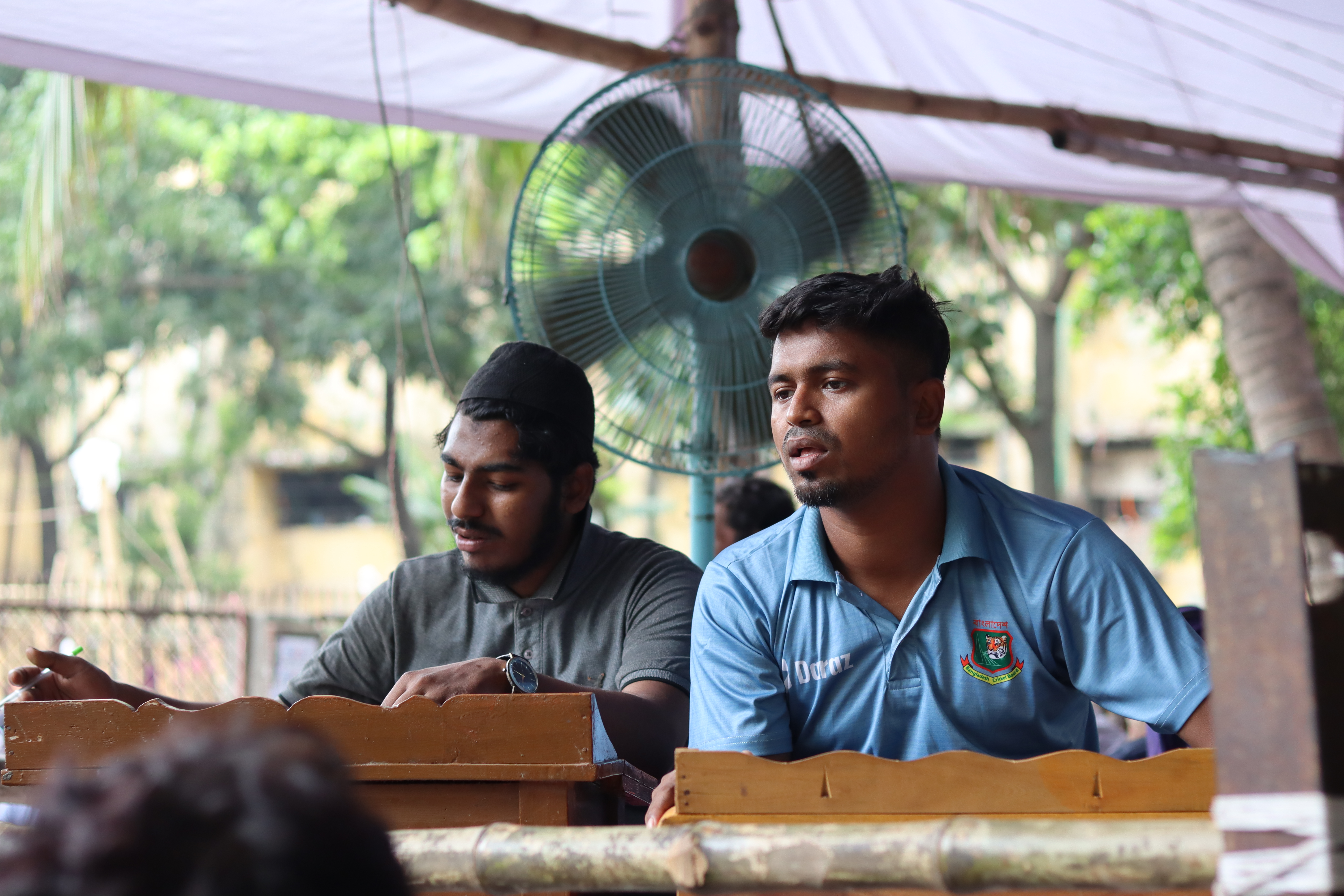
A Dinajpur trader's accounts
"I brought 80 cows to the market on 21 May," Mamun told Jagonews24, "with 11 people to look after them. Eating, bathing, even using the toilet costs money. Here it is all expense and no profit. I couldn't sell a single cow on Tuesday, Wednesday or this morning, Eid day. Before that I had sold 32."
He also set out what it had cost to bring them. "I brought them in four lorries, 20 cows each, at Tk 20,000 a lorry. After standing all this time the cows are tired, so on the way back they'll have to lie down. Only 16 can go on each lorry, so I'll need three lorries. But I can't find lorries for hire properly."
Pointing to a black bull lying in the row, Mamun said: "I bought this one at a Dinajpur market for Tk 1.4 lakh. Here the highest offer was Tk 80,000. How can I sell at such a low price? So I'm taking it back to the village, even at a loss."
Mamun's home district, Dinajpur, is in Rangpur division. Banglapedia gives its area as 3,444.30 square kilometres, with India's West Bengal on its western side; its notable rivers include the Jamuna, Tulsiganga, Punarbhaba and Atrai. The district has 13 upazilas, and agriculture is the main source of income for 63.90 per cent of its people, followed by commerce at 12.89 per cent.
Traders from Bhola, Kishoreganj and Munshiganj
Next to Mamun, Sanowar from Munshiganj was loading unsold cows onto a lorry. He had bought 10 cows wholesale in Kurigram, but not one had sold, so he was taking them to his home in Munshiganj. "Buyers didn't even make an offer," he told Jagonews24. "Since we couldn't sell them, we're taking the cows to our village home."
A trader from Karimganj in Kishoreganj told Jagonews24: "I brought 19 and sold nine. I'm taking the other 10 home. These cows still have only two teeth, so they'll grow bigger and fetch a better price. The loss is done. Lorry hire is Tk 2,000 per cow, and now it costs money to take them back too."
Md Hasan had brought 30 cows from Bhola. He sold 19 but not the other 11, and went home with them. "On the way here we waited for hours at the Ilisha ferry ghat in terrible conditions to cross," he told Jagonews24. "Then in Dhaka there was the rain. I brought sand in a lorry myself to fill the ground and make space for the cows. The sand was Tk 3,000 and the tarpaulin Tk 5,000. Four of us herders came, and with food and everything the loss is heavy: Tk 3,000 to Tk 10,000 per cow."
Hasan's district, Bhola, is in Barishal division. According to Banglapedia it covers 3,403.48 square kilometres, with the Bay of Bengal to the south, the Meghna river and Shahbazpur channel to the east and the Tentulia river to the west. It has seven upazilas, and 63.64 per cent of its people depend mainly on agriculture. The Ilisha ferry ghat Hasan mentioned is on the Meghna. A Dhaka Tribune report of 16 July 2025 noted that when the Meghna rose above the danger level, the low-water landing station at the Ilisha ferry terminal went under water at high tide, leaving only the high-water ramp in use and slowing the loading and unloading of vehicles.

Prices slide in Dhaka's markets in the last two days
Jagonews24 reported that traders had got good prices for cattle in the first days of the capital's markets that year, but the final stretch was bitterly disappointing for sellers. Many traders and farmers sold at a loss after failing to get the prices they wanted, and many went home with unsold animals. Buyers, on the other hand, were pleased to be able to buy the animals they wanted at much lower prices because of the late slump.
Other newspapers had described the same pattern over the two days before Eid. Bangla Tribune reported at midday on Wednesday 27 May that with Eid approaching, bad weather and continuous rain had kept buyers away from the capital's cattle markets, leaving traders fearing losses. Thousands of cattle filled the Dholaikhal market that day, but relatively few customers came. Many traders stretched tarpaulins over their animals to keep off the rain, and some stayed awake all night guarding them. A trader from Faridpur told the paper that cattle were having to be sold for Tk 40,000 to Tk 50,000 less than the previous day's price. Traders also pointed to higher costs of transport, feed and labour.
Desh Rupantor reported on the night of 27 May that prices had collapsed in Dhaka's cattle markets on the eve of Eid. With far fewer buyers than on earlier days, many large and medium-sized cattle remained unsold. Figures from the toll collection counter at the Hazaribagh cattle market showed buyers paying about 20 per cent less than the day before. A volunteer at the market told the paper that a cow that had been selling for about Tk 2.2 lakh on Tuesday was now fetching Tk 1.7 to 1.8 lakh. Traders blamed two days of continuous rain and bad weather for the fall.
A surplus of 22 lakh animals: the official estimate
Ahead of Eid, on 3 May 2026, the Minister of Fisheries and Livestock said the country had 1 crore 23 lakh 33 thousand 840 animals fit for Qurbani against an estimated demand of 1 crore 1 lakh 6 thousand 334, leaving a surplus of 22 lakh 27 thousand 506. The animals available were 56 lakh 95 thousand 878 cattle and buffalo, 66 lakh 32 thousand 307 goats and sheep, and 5 thousand 655 others, including camels and dumba sheep. The minister said there was no fear of any shortage of sacrificial animals that year.
According to The Business Standard (Bangla), it was also announced that day that more than 3,600 cattle markets would operate across the country, that 20 veterinary medical teams would work round the clock at Dhaka's markets, that extortion on livestock transport would be stopped, and that the border would be closely watched to keep out animals and protect domestic farmers. Online sales of animals were to carry no additional charges. A later Business Standard report, on 21 May, said Dhaka would have 24 markets: 11 temporary markets in Dhaka South City, 12 in Dhaka North City and the permanent market at Gabtoli, each running for five days.
The previous year had followed a similar pattern. Bangla Tribune reported on 3 May that supply had also exceeded demand at Eid-ul-Adha in 2025: about 91 lakh 36 thousand 734 animals were sacrificed, while more than 33 lakh were left unsold.
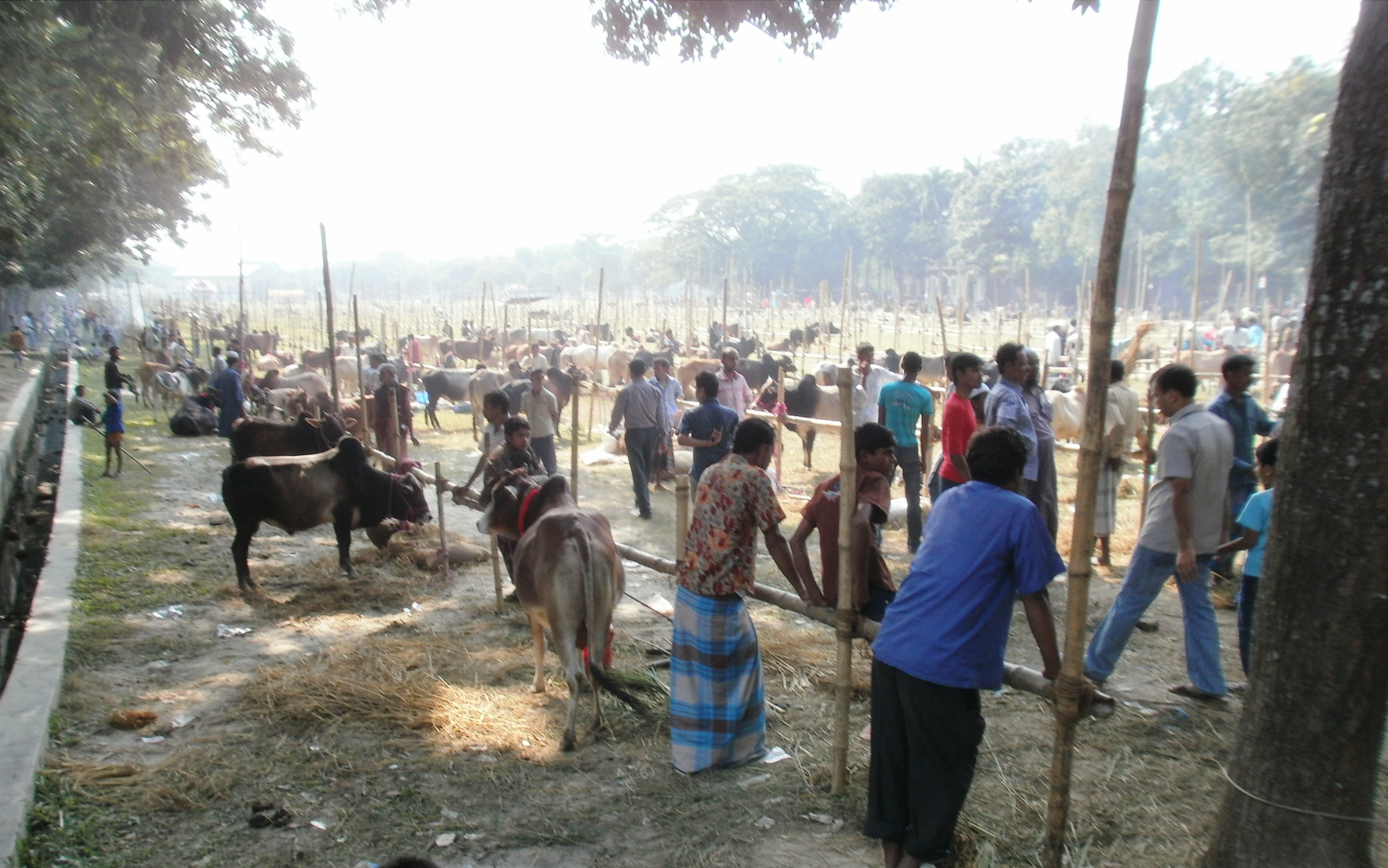
Surplus cattle from the north come to Dhaka
Two of the traders at Shonir Akhra had brought cattle from Rangpur division: Mamun from Dinajpur and Sanowar from Kurigram. According to a bdnews24.com report of 17 May 2026, the Rangpur divisional livestock office estimated that about 20 lakh 23 thousand animals had been prepared for Qurbani across the division's eight districts, with more than 5 lakh 56 thousand expected to be left over after local demand was met.
By the same estimate, Dinajpur district had 4 lakh 26 thousand 523 animals ready against demand for 2 lakh 73 thousand 262, a surplus of 1 lakh 53 thousand 261. Kurigram had 3 lakh 36 thousand 919 ready against demand for 2 lakh 61 thousand 246, a surplus of 75 thousand 673. Rangpur district had 3 lakh 66 thousand 591 ready, with a surplus of 1 lakh 39 thousand 592. Much of this surplus is carried by traders to the markets of Dhaka and other large cities.
The report said that despite the plentiful supply, farmers were worried about finding buyers. They were hoping that more buyers would come to the markets in the last days before Eid and that they would get fair prices. They were also worried about cattle entering illegally from India, and leaders of the Rangpur Dairy Farmers' Association had asked the government to take strict action to stop cattle smuggling.
Other districts also reported surpluses before Eid. BSS reported on 17 May that Jashore had 1 lakh 17 thousand 997 animals ready against demand for 1 lakh 3 thousand 128. The district livestock officer there said prices fall when all the farmers bring their animals to market at the same time. Another BSS report, on 5 May, said Patuakhali had 1 lakh 37 thousand 918 animals ready against demand for 1 lakh 22 thousand 633.
Fewer sacrifices, higher prices
The traders' sense that buyers had less money in their pockets was echoed in a Prothom Alo report published on the morning of Eid. Analysing nine years of Department of Livestock Services data, it showed that the number of animals sacrificed falls in times of political unrest, economic crisis or pandemic. Sacrifices peaked at 1 crore 6 lakh in 2019; in 2020, the first year of the Covid-19 pandemic, the number was 11 lakh 64 thousand lower than the year before. At Eid-ul-Adha in 2025 it had fallen to 91 lakh 36 thousand.
Citing the Department of Agricultural Marketing, Prothom Alo reported that beef cost an average of Tk 275 a kilogram in 2014. According to the Trading Corporation of Bangladesh (TCB), beef was selling in Dhaka for Tk 780 to Tk 850 a kilogram before Eid and goat meat for Tk 1,200 to Tk 1,300. The report said that after India stopped cattle from crossing the border in 2015, many farms were set up in Bangladesh, but domestic production had not been enough to keep prices stable.
Md Shahjaman Khan, acting director general of the Department of Livestock Services, told Prothom Alo: "Qurbani depends on people's economic situation." A professor at Bangladesh Agricultural University quoted in the report questioned the official surplus figures, arguing that if supply were really ample, prices should fall. He also said some farmers risked being unable to sell their animals because they could not recover their production costs. A farming family in Wazirpur, Barishal, told the paper it had stopped giving Qurbani three years earlier, because even one share of a sacrificial animal now cost around Tk 20,000.
The livestock sector at a glance
According to "Livestock Economy at a Glance (2023-2024)", prepared by the planning section of the Department of Livestock Services (DLS), Bangladesh had 250.13 lakh cattle, 15.24 lakh buffalo, 271.17 lakh goats and 39.03 lakh sheep in the 2023-24 fiscal year, a total of 575.57 lakh ruminants. In 2014-15 the cattle population had been 236.36 lakh.
By the same account, the country produced 92.25 lakh metric tonnes of meat in 2023-24, against a demand of 76.21 lakh tonnes calculated at 120 grams per person per day. Livestock contributed 1.80 per cent of gross domestic product at constant prices and 16.33 per cent of agricultural GDP. The department puts the sector's share of direct employment at 20 per cent and of partial employment at 50 per cent.
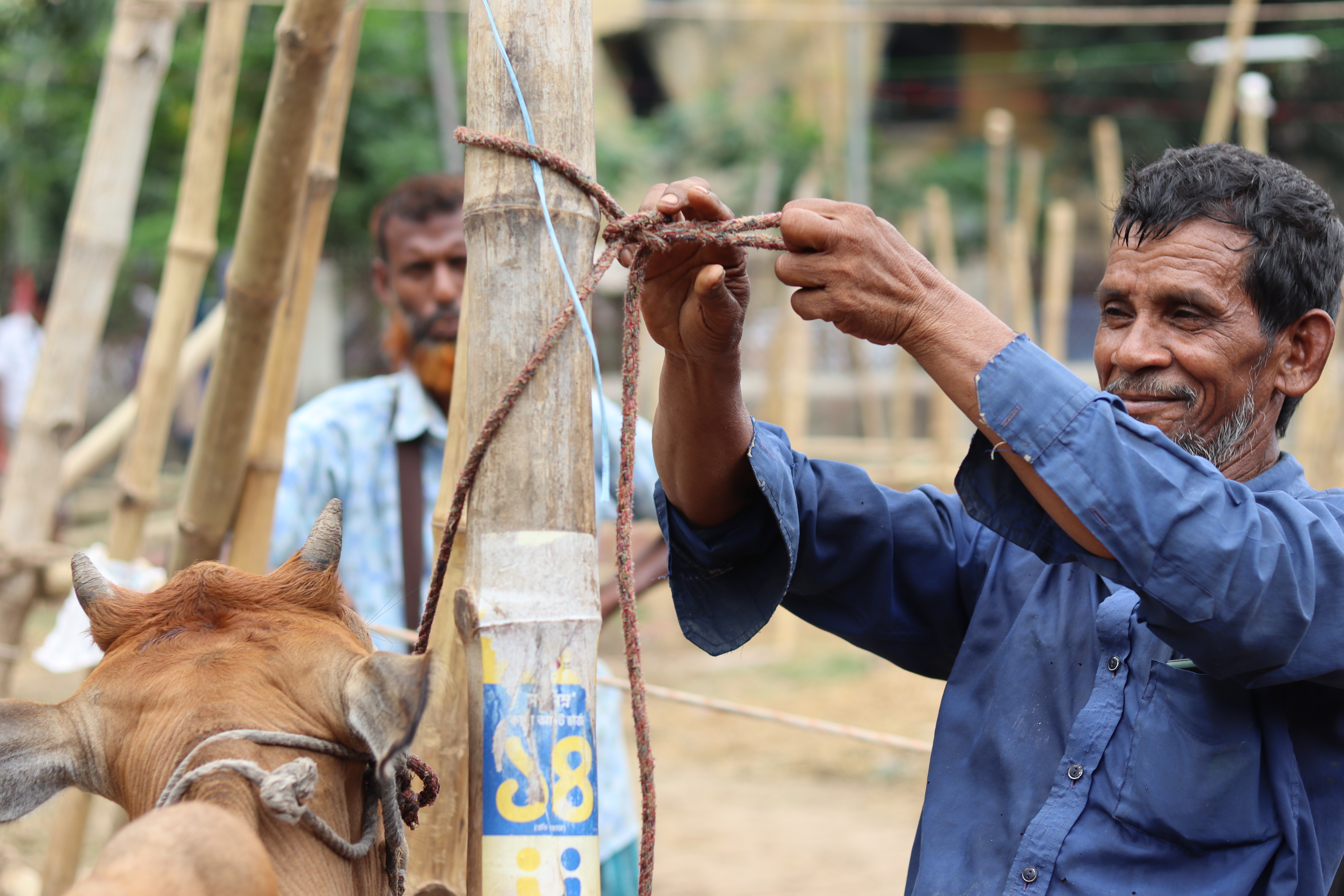
"Two-teeth" cattle and the age for Qurbani
The Karimganj trader described his unsold cattle as having "two teeth", a common way of describing a young animal's age at Bangladesh's cattle markets. A Bangla Tribune report of 25 May 2026 explained that under Islamic rules, cattle and buffalo offered for Qurbani must be at least two years old, goats and sheep one year, and camels five years.
According to the report, the lower front teeth give a good idea of an animal's age. When a cow is about two years old, its two middle milk teeth fall out and two permanent teeth come in; by two and a half to three years it has four permanent teeth. That is why a "two-teeth" cow at the market means a young animal that has just reached the minimum age for sacrifice. The trader's hope was that his cattle would grow bigger and fetch a better price later.
The report advised buyers to look beyond the teeth as well: whether the animal is healthy and active, whether its eyes are bright, whether its skin shows disease or wounds, and whether it limps. When in doubt, buyers were advised to seek help from the livestock department's medical teams present at many markets.
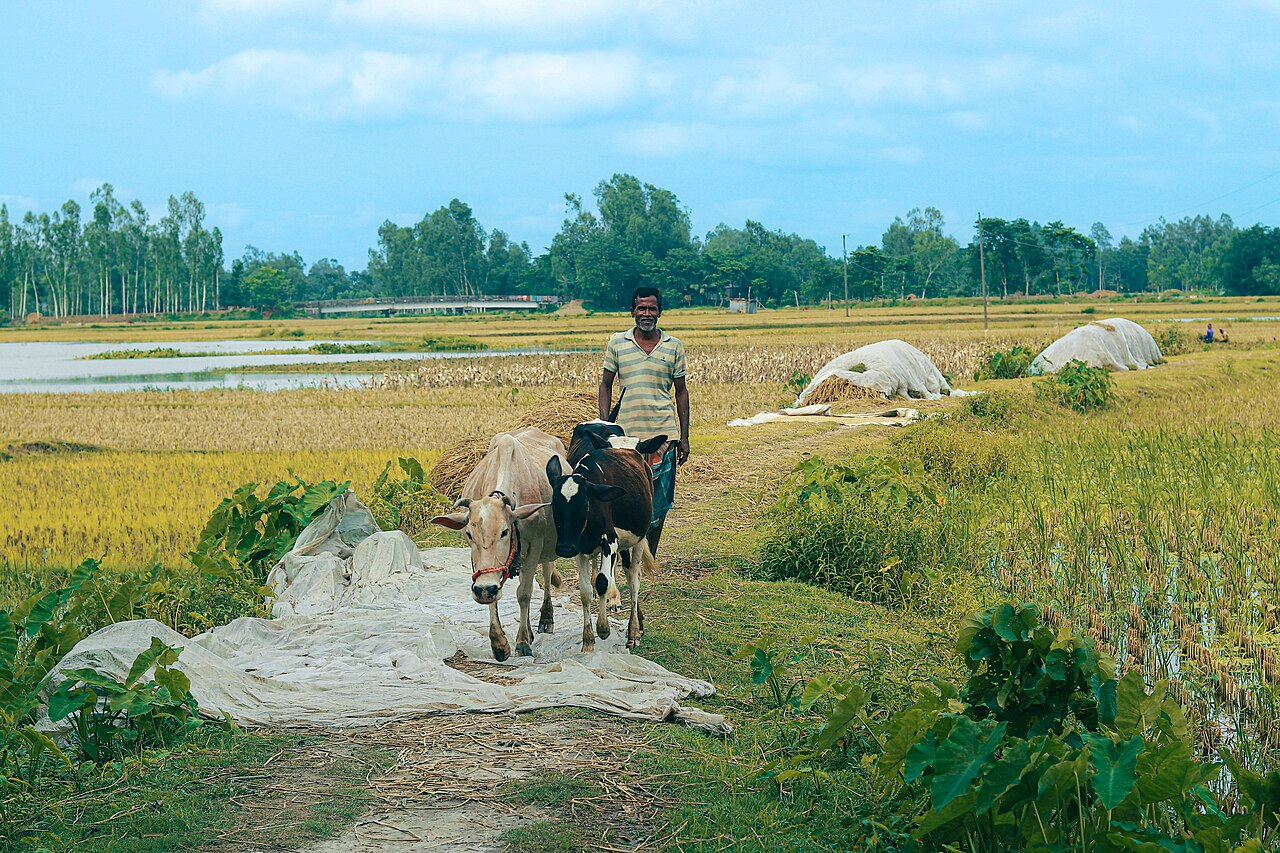
Photo: Wasiul Bahar / Wikimedia Commons (CC BY-SA 4.0)
Sources: Jagonews24, Prothom Alo, Bangla Tribune, Desh Rupantor, The Business Standard (Bangla), bdnews24.com, BSS, Department of Livestock Services (Livestock Economy at a Glance 2023-2024), Banglapedia, Dhaka Tribune
Comments
(0)