
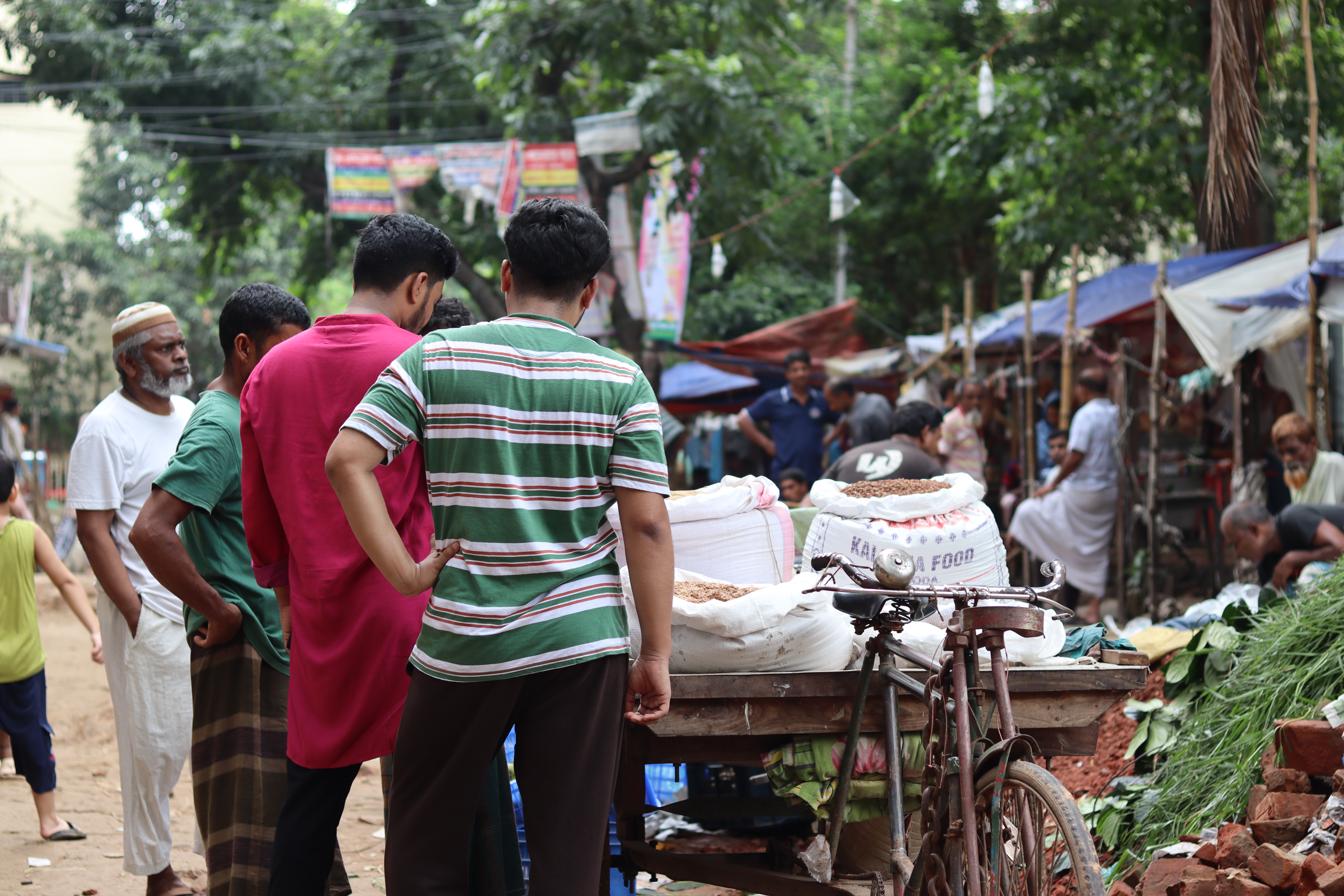
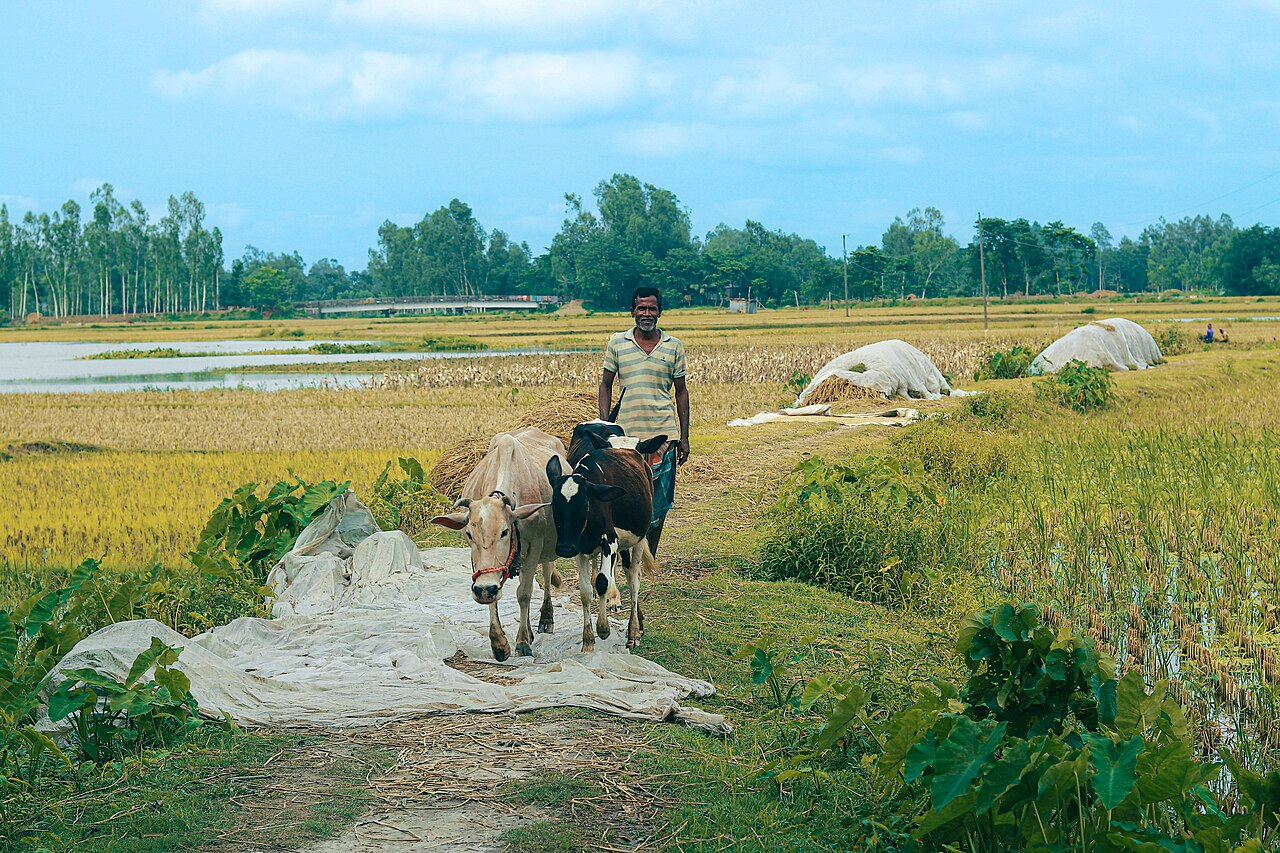
Trade in sacrificial animals began to pick up in the border district of Sherpur in the days before Eid-ul-Azha in May 2026, with buyers going round cattle markets, farms and village households to choose their animals. But local farmers told Jagonews24, which reported from the district on 23 May 2026, that they were worried they would suffer losses if Indian cattle came in across the border.
District police said police, the Border Guard Bangladesh (BGB) and other law enforcement agencies were working jointly at the border to stop Indian cattle from entering. The district livestock department said the supply of animals in Sherpur that year was well above local demand, and that a veterinary medical team was working at every permanent market.
Farmers' costs and prices at Sherpur's markets
Jagonews24 spoke to farmers at four markets: the Nauhata municipal cattle and buffalo market in Sherpur, the Abdus Samad cattle market, the market at the Nalitabari bypass crossing and the Jhenaigati Sadar Bazar market. The farmers said they had raised their cattle all year in the hope of good prices, but that prices that season were lower than in other years. If Indian cattle got in, they said, they would face outright losses.
According to the farmers, the prices of rice polish (kura), khesari, paddy, maize and concentrate feed mixed with bran were all high. Fresh green grass was not easy to find in Sherpur, they said, and straw was expensive. On top of that, labour wages, electricity bills, treatment costs and other expenses had all gone up, so making a profit that year was difficult.
Khesari is the grass pea (Lathyrus sativus), a legume grown in Asia and East Africa both for people and as livestock feed; it is valued as a hardy crop that gives a reliable yield in dry years. Bran is the outer layer of a cereal grain removed during milling, a by-product of refining brown rice into white rice or wheat into flour, and it is widely fed to cattle in Bangladesh.
At the Jhenaigati Sadar market, farmer Abdul Kader Mia from Kangsha told Jagonews24 that everything cost more that year. He said bran was selling at Tk 65 a kilogram, a sack of rice polish at Tk 1,500 and a bundle of straw at Tk 7.50 to Tk 8, with the cost of labour on top. "And buyers at the market are quoting completely unreasonable prices," he said.
Farmer Hossain Mia, who had come to the Nalitabari bypass market, said: "From food to clothing, the price of everything has gone up. Nobody objects to that anywhere; the only objection comes when we ask a fair price for cattle. We will not make a profit this time, and if Indian cattle come it will be ruin. Our farmers will suffer huge losses. So our request to the government is that cattle from across the border must not come in by any means."
Kangsha, the farmer's home area, is one of the seven unions of Jhenaigati upazila, according to Banglapedia, the national encyclopedia of Bangladesh; the others are Gauripur, Jhenaigati, Dhanshail, Nalkura, Malijhikanda and Hatibandha. Banglapedia lists the Jhenaigati, Dhanshail and Tinani hats as the upazila's notable markets.
Supply, demand and markets in Sherpur
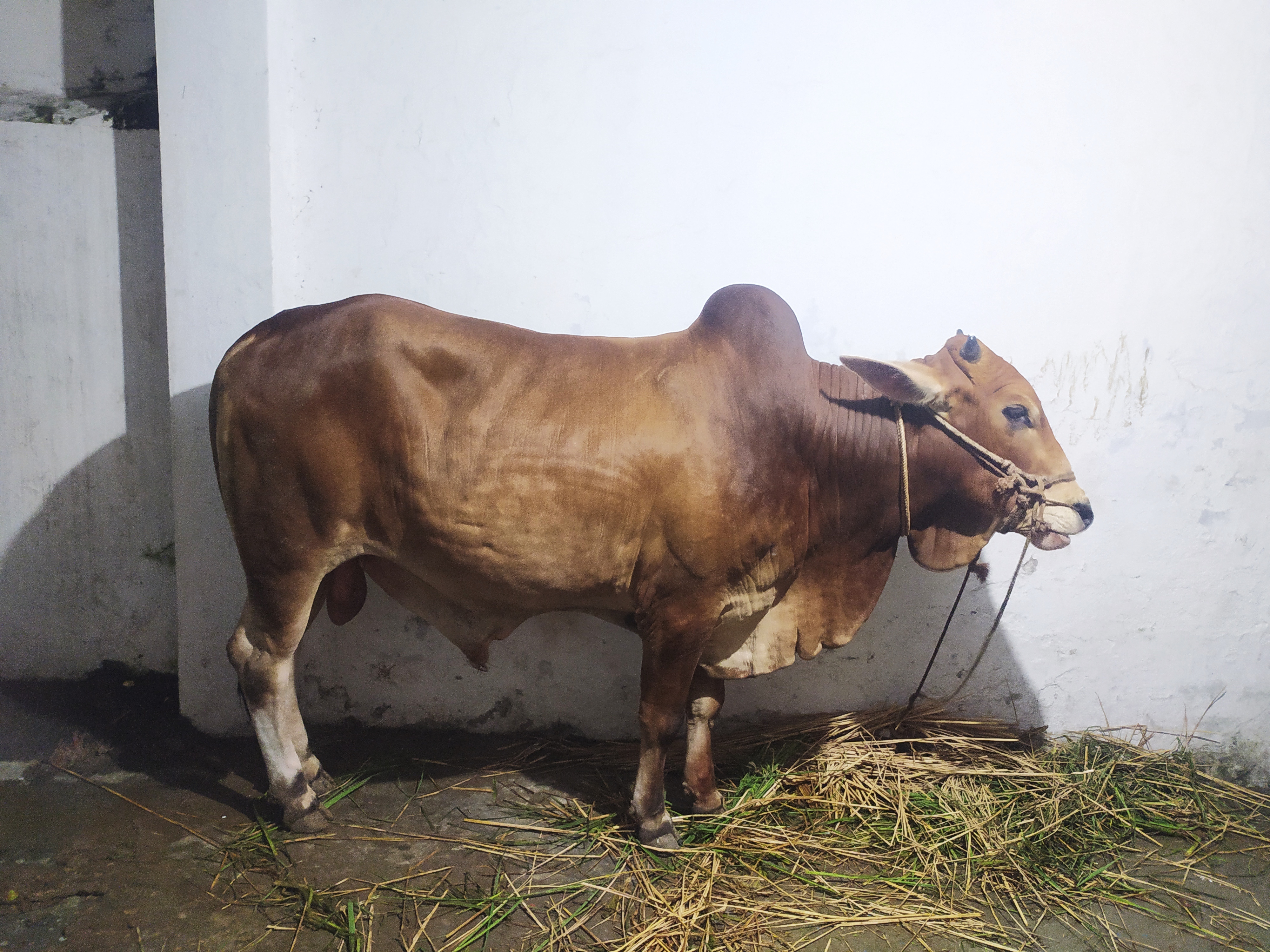
Dr Rezuanul Haque Bhuiyan, head of the district livestock department, told Jagonews24 that 20 permanent markets were being held in the district that year, and that the department's medical team was working at each of them. He said the district needed 62,000 animals for sacrifice and had a supply of about 93,000.
The previous year's figures from the same department give a sense of the scale of farming in the district. Bangladesh Sangbad Sangstha (BSS), the national news agency, reported on 28 May 2025 that about 13,762 farmers, large and small, were raising animals across Sherpur's five upazilas, and that many families also kept cattle, buffaloes and goats on their own. For Eid-ul-Azha 2025 the department counted about 1,11,000 animals fit for sacrifice against a district demand of 85,763, which left a surplus of 24,523 after local needs were met.
That year, BSS reported, Sherpur's farmers raised Brahman, Sahiwal, Holstein, Friesian and local cattle among other breeds, fattening them on fresh green grass, straw, bran and oilcake. In the three upazilas along the border, farmers were raising local cattle in natural conditions on field grass and the creepers and leaves of the hills. They told BSS that because the hills had plenty of grass and leaves, these cattle needed no separate feed spending, so rearing them in the hills brought a larger profit.
The 2025 report also carried the worries that farmers voiced again in 2026. Farmers said they feared that Indian cattle entering by smuggling routes, failure to get fair prices and a rise in feed prices could reduce their profit. A farmer in Sadar upazila asked the authorities to step up surveillance so that Indian cattle could not enter through the Sherpur border, and another said that if he did not get a fair price in the end, many small and large farmers like him would be harmed.
In the same BSS report, Additional Superintendent of Police Md Mizanur Rahman Bhuiyan said intelligence surveillance had been increased in the border area so that Indian cattle could not illegally enter through any part of the Sherpur border, and that police in plain clothes would keep special watch at the markets to prevent counterfeit notes. An additional district livestock officer said veterinary surgeons were advising and helping farmers before Eid, and that the office was keeping a close eye to make sure no farmer fattened cattle by artificial means.
The watch on the Sherpur border
Additional Superintendent of Police Mizanur Rahman Bhuiyan told Jagonews24 in May 2026 that district police and other law enforcement agencies were working in coordination with the BGB to stop the smuggling of cattle and other goods at the border. He said the law enforcement agencies were determined to keep cattle smuggling across the border at zero.
A week before the report, the BGB announced a seizure on the same frontier. The Daily Shomoyer Alo reported on 15 May 2026 that members of the BGB's Karnajhora border outpost had seized four Indian cattle at Hariakona on the Sreebardi upazila border on the afternoon of 14 May, acting on a tip-off. According to the BGB, the cattle were worth about Tk 2.5 lakh, and the people involved fled when they sensed the BGB's presence. Early on 15 May, a BGB patrol seized Indian cosmetics worth about Tk 10 lakh, with a battery-powered van, in the Mejpara area of Singabaruna union. The outpost's in-charge, Naib Subedar Saidur Rahman, confirmed both seizures.
BGB units elsewhere along the border said they had raised their guard in the same weeks. The Daily Jugantor reported on 8 May 2026 that the BGB had issued an alert along the 180-kilometre border of Panchagarh district, stepping up surveillance and searching suspect people and vehicles at checkposts. The commander of the Panchagarh-18 BGB battalion, Lt Col Abdullah Mohammad Kayes, said that under instructions from headquarters the BGB was always on alert to prevent push-ins, illegal entry, drug smuggling, cattle smuggling, human trafficking and every other kind of border crime.
On 21 May 2026 the daily Protidiner Bangladesh reported that the BGB was on its highest alert along the border under a "zero tolerance" policy against illegal cattle entry. Extra members had been deployed and checkposts set up in eight high-risk border districts: Chapainawabganj, Kushtia, Jashore, Satkhira, Lalmonirhat, Kurigram, Bandarban and Cox's Bazar. To stop smuggling in the dark, the paper reported, drones, searchlights and thermal devices were being used, alongside joint operations with the local administration, police and intelligence agencies.
The government's stand on border markets and imports
The government set out its position on the Eid trade at a briefing at the Ministry of Fisheries and Livestock on 3 May 2026, as The Business Standard and the Dhaka Tribune reported that day. The minister, Mohammad Aminur Rashid, said a policy decision had been taken that year to close cattle markets in border areas in order to protect local farmers. "In the past, local farmers suffered losses because foreign animals came in through some markets close to the border. To stop this, steps have been taken not to hold markets in border areas," he said.
At the same briefing the minister said more than 3,600 cattle markets would be held across the country, including 27 in Dhaka: 16 in the Dhaka North City Corporation area and 11 in Dhaka South. Twenty veterinary medical teams would work round the clock at the Dhaka markets. He said the government would take a strict line against extortion from trucks carrying sacrificial animals, that law enforcement agencies, in plain clothes where needed, would keep markets, buyers and sellers safe, that animals could again be sold online with no toll or market fee charged on online purchases, and that professional and seasonal butchers were being trained so that hides were not spoiled.
Speaking to reporters on 14 May 2026, the minister said there would be no need to import animals from abroad that year, and that strict instructions had been issued to law enforcement agencies to prevent the illegal entry of livestock through the border, according to the Dhaka Tribune. People in border areas had also been warned to make sure no animals were smuggled into the country. Speaking at Jahangirnagar University the same day, as the Daily Shomoyer Alo reported, he said the government was very alert to make sure cattle could not enter Bangladesh from India by smuggling routes, and that several meetings had been held with the BGB for that purpose. He said Bangladesh was now self-sufficient in meat production, that about one crore cattle, buffaloes, sheep and goats were sacrificed in the country every Eid-ul-Azha, and that local farmers could meet that demand.
The state minister for fisheries and livestock, Sultan Salauddin Tuku, told The Financial Express, which published on 15 May 2026, that border cattle markets would be shut to prevent illegal imports and protect local farmers. He said the government had directed coordinated action by law enforcement agencies, including the BGB and the Bangladesh Police, together with district administrations and livestock offices, to keep the transport of animals free of trouble, and that measures were being taken to prevent robberies of cattle-laden trucks on road, rail and waterways.
The national count for Eid-ul-Azha 2026
The Department of Livestock Services (DLS) estimated demand for sacrificial animals in 2026 at 1,01,06,334 (10,106,334) against an availability of 1,23,33,840 (12,333,840), which the minister said left a surplus of about 22,27,506 animals. The animals available were:
- Cattle and buffaloes: 56,95,878 (5,695,878)
- Goats and sheep: 66,32,307 (6,632,307)
- Other species, such as camels and dumba sheep: 5,655
For comparison, the Dhaka Tribune reported in its account of the briefing that for Eid-ul-Azha 2025 the ministry had counted 1,24,47,337 animals available with a projected surplus of 20,68,000; in the event 91,36,734 animals were sacrificed, leaving an actual surplus of about 33.10 lakh.
Divisional livestock officials gave their own figures to Protidiner Bangladesh on 21 May 2026. Mymensingh division, to which Sherpur belongs, had a demand of 4,44,588 animals against 5,61,639 animals fit for sacrifice, a surplus of 1,17,051, according to its divisional director, Monoranjan Dhar. To stop Indian animals from entering, he said, committees of people from different professions had been formed at every ward level, and he hoped smuggling could be stopped. Rajshahi division, the country's largest producer, had a demand of 24,05,089 against 43,05,628 animals prepared. Of the eight divisions, all but Dhaka and Chattogram were expected to have a surplus.
DLS Director General Md Shahzaman Khan told the paper that the country had 22 lakh 33 thousand more animals than the Eid demand and there would be no shortage. He said the government was active in stopping smuggling with the BGB, police and coast guard together with livestock officials and local people, and that "so far we have not received any report of smuggling". Veterinary teams would work at cattle markets across the country, he said, and any sick animal would be treated at once.
Costs and fears reported from other districts
Sherpur's farmers were not alone in their concerns. The Financial Express reported on 15 May 2026 that cattle farmers across Bangladesh were heading into Eid-ul-Azha with mixed expectations, as feed and transport costs had sharply raised their expenses and concerns over possible inflows of smuggled Indian cattle weighed on the sector. A farmer in Godagari upazila of Rajshahi told the paper his production costs had risen by around 25 per cent because of higher feed prices, and that transport costs had gone up by 30 to 40 per cent because of higher diesel prices and the conflict in the Middle East.
A cattle rearer in Meherpur told the same paper that rising feed prices had caused farmers the greatest suffering, and that there was also a fear local markets could be flooded with smuggled cattle from northern India. He said the illegal inflow had largely been stopped, but the risk remained ahead of Eid. The DLS director general told the paper that feed and medicine costs had risen that year, but that he expected demand for sacrificial animals to stay strong and help farmers get good prices.
In Protidiner Bangladesh, the president of the Joypurhat Dairy Farmers Association, Sadman Joy Raihan, said electricity, feed, medicine and other costs on farms had been higher that year, and that farmers would make losses if smugglers brought cattle in across the border. A farmer in Dhobaura, in Mymensingh district, told the paper that Indian cattle came in through their border almost every year, and that farmers there would be in trouble if the government failed to keep a strict watch that year because their costs had been higher.
Not every region faced the same feed bill. The Barishal divisional livestock director, Md Mahfuzul Haque, told Protidiner Bangladesh that production costs there were comparatively low because people fed their cattle fresh grass along the rivers and on open land, a contrast with Sherpur, where farmers said fresh grass was hard to find.
How Indian cattle became an issue for Bangladeshi farmers
Before 2014 Bangladesh relied heavily on cattle from India, much of it brought in informally across the border. The Dhaka Tribune reported in September 2021 that about 2.1 million cattle had entered Bangladesh informally across the border in fiscal year 2013-14. A Global Meat News report of 1 September 2015, carried by the Centre for Policy Dialogue (CPD), cited Bangladesh's National Board of Revenue as saying 2.2 million Indian cattle entered the country in 2014. A trader from Jashore district told that report that about 2,000 cattle used to cross each border point every day, and that the trade had stopped.
According to the same 2015 report, India restricted cattle supplies to Bangladesh in April 2015, and beef prices in Bangladesh then rose by more than 40 per cent. The state minister for fisheries and livestock at the time, Narayon Chandra Chanda, said the country produced 25 million head of cattle, had six million bulls ready for the festival and had a demand of roughly nine million animals including goats and sheep, and he feared a shortage of 10 to 15 per cent of sacrificial animals that year. Dr Khondaker Golam Moazzem of the CPD argued for developing formal cross-border trade channels and for scaling up investment in domestic livestock.
The Dhaka Tribune's 2021 report described how the domestic sector grew after India's restriction. The number of cattle farmers rose from 300,000 in 2015 to 698,000 by 2021, the number of fattened bulls grew from 3.34 million in 2017 to 3.86 million in 2021, and about 12 million animals, including 4.54 million cattle and buffaloes, were available for that year's Eid-ul-Azha. The same report noted the cost of feed even then, with farmers paying Tk 400 to Tk 500 for a 37-kilogram sack.
By May 2026 the minister described Bangladesh as self-sufficient in meat and able to meet the Eid demand with local animals. What farmers in border districts such as Sherpur told reporters they feared was not a shortage but cattle from across the border undercutting their prices.
Sherpur, a border district below the Meghalaya hills
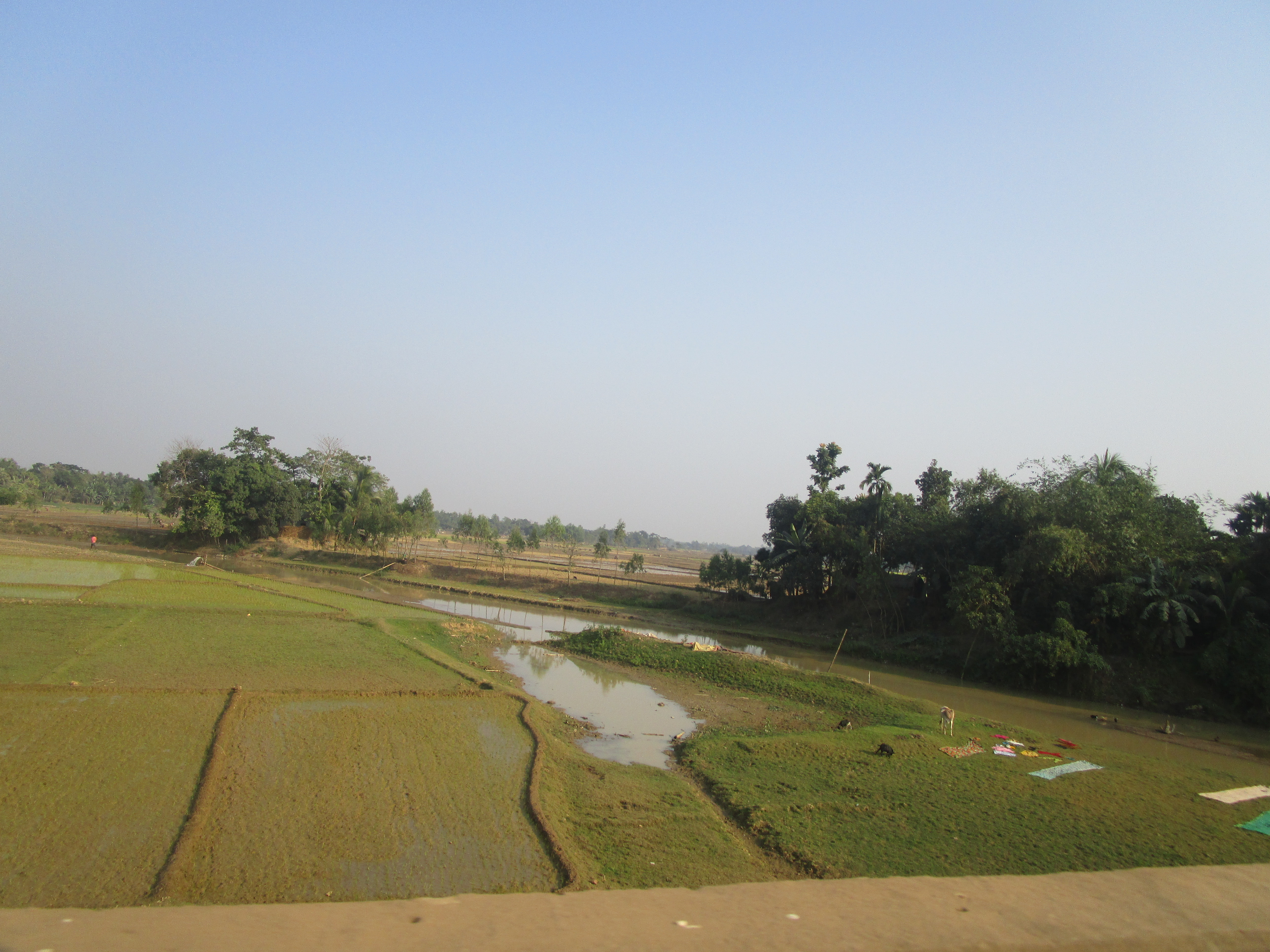
Sherpur lies in the north of Bangladesh and is part of Mymensingh Division. According to Banglapedia, it covers 1,364.67 square kilometres and is bounded by India's Meghalaya state to the north, Jamalpur district to the west and south, and Mymensingh district to the east. Its main rivers include the Old Brahmaputra, the Someshwari, the Chilakhali, the Bhogai and the Kangsa. Sherpur was a sub-division of Jamalpur district until it became a district in 1984.
The district has five upazilas: Sherpur Sadar, Nalitabari, Sreebardi, Jhenaigati and Nakla. According to the 2022 Population and Housing Census of the Bangladesh Bureau of Statistics, it had 396,149 households and a population of 1,501,853, with an ethnic population of 11,082, mainly Garo, Koch and Hajong.
Two of the upazilas named in the report sit right on the frontier. Banglapedia describes Jhenaigati as an upazila of 242.07 square kilometres bounded by Meghalaya to the north, with the Someshwari and Chilakhali among its rivers, where paddy, wheat, potato and vegetables are the main crops. Nalitabari, 327.60 square kilometres, also borders Meghalaya to the north and Haluaghat upazila to the east; its rivers include the Bhogai, Kangsa, Maljhi and Thalong, and Banglapedia lists 21 dairy farms and 41 hats and bazars there, along with the Madhutila Ecopark and a rubber dam on the Bhogai river.
Eid-ul-Azha and the qurbani
Eid-ul-Azha is the second of the two main festivals of Islam, alongside Eid-ul-Fitr. It falls on the 10th of Dhul Hijjah, the twelfth and last month of the Islamic calendar, and honours the willingness of the Prophet Ibrahim to sacrifice his son as an act of obedience to God. After the Eid prayer on the morning of the festival, a livestock animal is sacrificed; this ritual sacrifice is the qurbani, also called udhiyah. By tradition one third of the meat is eaten by the family offering the sacrifice, and the rest is given to the poor and needy.
In 2026, Bangladesh's National Moon Sighting Committee met at the Baitul Mukarram National Mosque on the evening of 18 May and announced that the Dhul Hijjah moon had been sighted, so Eid-ul-Azha would be celebrated on 28 May, the Daily Jugantor reported. Saudi Arabia had already announced that it would mark the festival on 27 May. The Sherpur report was therefore published in the last week before Eid, when the busiest days of the cattle markets were still ahead.
Photo: Wasiul Bahar / Wikimedia Commons (CC BY-SA 4.0)
Sources: Jagonews24, The Business Standard, Dhaka Tribune, The Financial Express, Protidiner Bangladesh, The Daily Shomoyer Alo, The Daily Jugantor, Bangladesh Sangbad Sangstha (BSS), Centre for Policy Dialogue (Global Meat News), Banglapedia, Bangladesh Bureau of Statistics (via Wikipedia), Wikipedia
Comments
(0)