
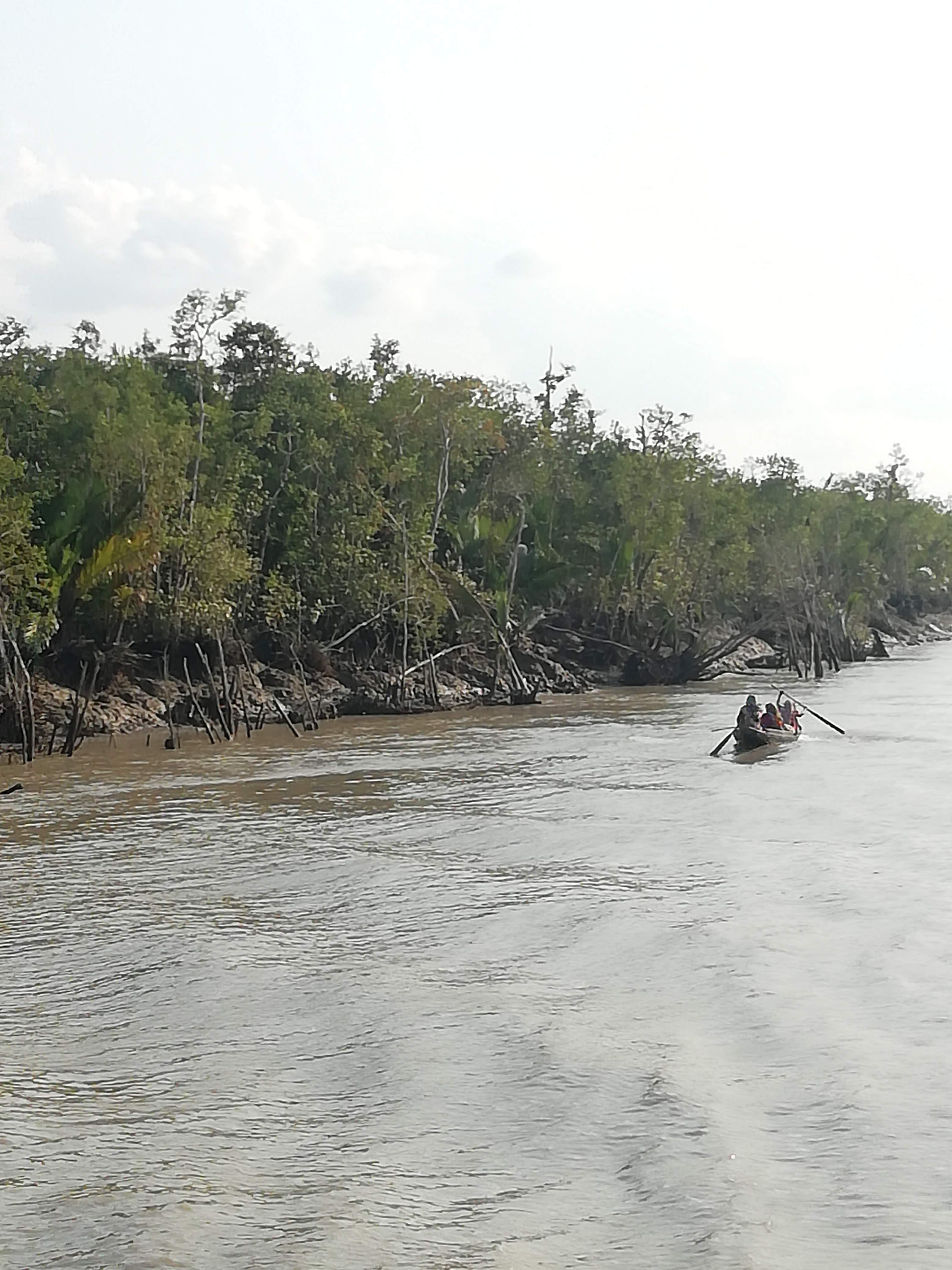
Sheikh Faridul Islam, state minister for environment, forest and climate change, said on 22 February 2026 that the work his ministry would take up quickly and carry out as priorities had already been identified. The list, he said, included planting 25 crore trees (one crore is ten million), curbing plastic pollution, and protecting the Sundarbans by suppressing banditry and stopping the use of poison to catch fish. He set out these three priorities in an exclusive interview with Jago News, published on the evening of 22 February by the paper's correspondent in Mongla upazila of Bagerhat district, five days after the new cabinet was sworn in.
The plans he described were stated intentions at the start of his term. The tree-planting action plan, he said, would be drawn up within 15 days and then sent to the Prime Minister's Office for approval. For the Sundarbans, he said he would meet the law enforcement agencies about banditry and sit with officials of all departments in Khulna, Bagerhat and Satkhira, the three districts around the forest, about poison fishing.
Three priorities in the state minister's words
On trees, Sheikh Faridul Islam linked the plan to his party's election pledge. "First, we made a commitment to the people that if the BNP got the responsibility of running the country, we would plant 25 crore trees across the country in the next five years," he said. "That means we will have to plant five crore trees every year. We will do this as a priority. Within the next 15 days we will set the tree-planting action plan. Then we will submit the action plan to the Prime Minister's Office. After final approval from there, the tree-planting programme will be carried out."
On plastic, he described single-use plastic as the cause of waterlogging in cities. "Second, plastic pollution is now a serious problem in the country. The waterlogging that is being created in Dhaka and other big cities is caused by single-use plastic. It was eliminated under the previous BNP government. Slowly it is spreading again like mushrooms. It is terribly harmful to our environment. We are planning on this too and will start work quickly."
On the Sundarbans, he said protection had fallen behind and that banditry had grown. "Third, we have fallen far behind in protecting the Sundarbans. Banditry has increased enormously. Recently five gangs have been constantly abducting fishermen and releasing them for ransom. The fishermen have become helpless. Out of fear, the fishermen do not want to go to sea. So we will hold a meeting with the law enforcement agencies."
He called fishing with poison "terribly harmful" and said: "We will sit with the officials of all departments in Khulna, Bagerhat and Satkhira districts. We will try to stop the use of poison. Poison is destroying the entire fish resource. Because of poison, there will be a shortfall in meeting our protein needs."
He ended with a general undertaking: "I will properly carry out the responsibilities of the ministries I have been given. I hope the country and the people will benefit through my work."
The state minister and his region
Sheikh Faridul Islam was the elected member of parliament for Bagerhat-3 (Mongla-Rampal) and became state minister for environment, forest and climate change when the cabinet was sworn in on 17 February 2026. Jago News reported that he also held charge of the Ministry of Law, Justice and Parliamentary Affairs and the Ministry of Religious Affairs. Bagerhat is one of the three districts, with Khulna and Satkhira, across which the Forest Department divided the Bangladesh part of the Sundarbans into zones for its most recent tiger survey, so the forest he spoke about lies in his own region.
Native species for tree planting
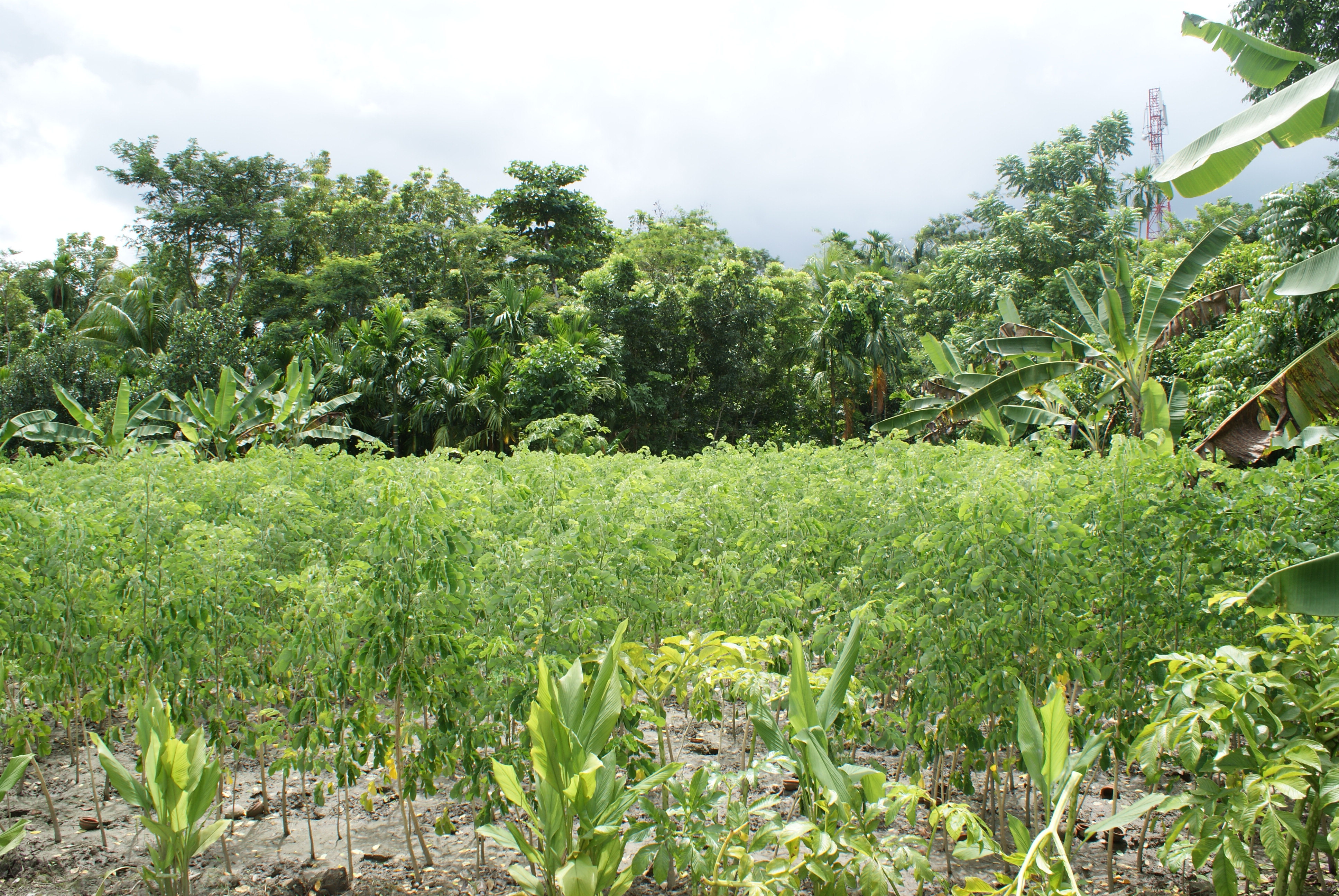
Which trees should be planted had already been settled by a government decision the year before. On Thursday, 15 May 2025, the Forest-1 Wing of the Ministry of Environment, Forest and Climate Change issued a notification banning the planting, collection and sale of eucalyptus and akashmoni (acacia) saplings, The Financial Express reported. Under the directive, government bodies, non-government organisations and individuals were to replace these species in afforestation programmes with native fruit-bearing, timber and medicinal plants. The ministry said the two species absorb large amounts of groundwater, deplete soil moisture, shed leaves that make the soil unsuitable for other plants, and give little food or shelter to native insects and birds.
The polythene ban of 2002 and what followed
The state minister's remark that single-use plastic had once been eliminated refers to the ban on polythene shopping bags. According to the World Bank, Bangladesh in 2002 became the world's first country to ban plastic shopping bags, but after some time plastic use and mismanagement increased again. A February 2025 analysis by Dialogue Earth reported that the ban was made through an amendment to the Bangladesh Environment Conservation Act, that it covered polythene bags thinner than 20 microns, applied first in Dhaka and then nationwide, and that it took effect in January 2002.
Dialogue Earth, citing an internal report of the environment ministry, said officials held 80 mobile court proceedings and filed 1,369 cases between December 2003 and February 2007. Iqbal Habib, vice president of Bangladesh Poribesh Andolon, told the publication that in 2002 and 2003 polythene bags "were nowhere to be found", but that later enforcement failed. According to the same analysis, in July 2008 the government allowed thicker bags for some uses, including 50-micron bags for sugar packaging and 35- and 55-micron bags for the fishing industry, and in August 2009 40-micron bags were authorised for tea nurseries.
Other measures followed. The World Bank notes that the Mandatory Jute Packaging Act 2010 required jute packaging for six essential goods (paddy, rice, wheat, maize, fertiliser and sugar), and that in 2020 the High Court directed the authorities to ban single-use plastic in coastal areas and in hotels and motels across the country.
In 2024 the environment ministry moved to enforce the ban again. Syeda Rizwana Hasan, then adviser to the environment ministry, said on 24 September 2024 that the ban on polythene and polypropylene bags would be enforced in supermarkets from 1 October and in all markets from 1 November 2024, with action against producers from 1 November, Dhaka Tribune reported. Enforcement proved difficult: in Dialogue Earth's February 2025 analysis, an environment ministry director said only seven polythene factories had been shut down since October 2024, and that crowds sometimes gathered to block inspections in the narrow lanes of old Dhaka.
What the plastic figures show
The most widely cited figures on plastic use in Bangladesh come from the World Bank report "Towards a Multisectoral Action Plan for Sustainable Plastic Management in Bangladesh", released in December 2021 and prepared with the Department of Environment. According to the World Bank:
- annual per capita plastic consumption in urban areas tripled from 3.0 kg in 2005 to 9.0 kg in 2020;
- Dhaka's annual per capita consumption stood at 22.25 kg, more than three times the national urban average (the press release rounded it to 22.5 kg);
- consumption of LDPE packaging such as plastic bags increased fivefold between 2005 and 2020;
- of the 977,000 tonnes of plastic consumed in 2020, only 31 percent was recycled;
- about 646 tonnes of plastic waste was collected daily in Dhaka, of which only 37.2 percent was recycled.
The World Bank said most mismanaged plastic waste was single-use plastic such as shopping bags, packs and wrappers, and that such waste clogs drains, causing urban flooding. This is the link between plastic and city waterlogging that the state minister described. The National Action Plan for Sustainable Plastic Management, described in the same report, set targets of recycling 50 percent of plastics by 2025, phasing out targeted single-use plastics by 90 percent by 2026, and reducing plastic waste generation by 30 percent by 2030 from the 2020-21 baseline.
The Sundarbans: forest, sanctuaries and people
The Sundarbans is the largest contiguous mangrove forest in the world. UNESCO, which inscribed the Bangladesh part as a World Heritage Site in 1997, describes a forest of about 10,000 square kilometres on the delta of the Ganges, Brahmaputra and Meghna, of which 60 percent lies in Bangladesh and the rest in India. The Sundarbans Reserve Forest lies between the Baleswar river in the east and the Harinbhanga in the west. The World Heritage property, 139,500 hectares, is made up of three wildlife sanctuaries that UNESCO calls the core breeding area for several endangered species, including the Royal Bengal tiger, the Ganges and Irrawaddy dolphins and the estuarine crocodile.
According to the Forest Department, as reported by Dhaka Tribune in October 2024, the Bangladesh part of the Sundarbans covers 6,017 square kilometres, of which 4,832 square kilometres is forest land and 1,185 square kilometres is water. The tiger survey announced that month, carried out from January 2023 to March 2024 with footage from more than 1,200 cameras, recorded 125 tigers, at a density of 2.64 per 100 square kilometres, up from 106 in 2015 and 114 in 2018.
UNESCO notes that the forest gives seasonal livelihoods to large numbers of people in surrounding villages, who work as woodcutters, fishermen, honey gatherers and collectors of leaves and grass, and that it acts as a shelter belt against storms, cyclones and tidal surges. It lists illegal hunting, timber extraction and agricultural encroachment among the threats to the property.
To protect breeding, the Forest Department closes the forest every year. The Business Standard reported on 1 June 2025 that fishing, crab harvesting, honey collection and tourism were halted from 1 June to 31 August. The closure used to run from 1 July to 31 August, as recommended by the Integrated Resources Management Plan; since 2022 it has begun on 1 June, in coordination with the Department of Fisheries. The same report cited the Shyamnagar Upazila Fisheries Office as saying 23,928 fishermen were registered in that upazila of Satkhira, of whom 8,324 received government assistance during the ban.
Banditry: from the 2018 declaration to new abductions
Armed gangs have long preyed on the people who work in the forest. Between May 2016 and November 2018, 328 men from 32 pirate and dacoit groups laid down their arms, with the mediation of journalist Mohsin Ul Hakim, The Business Standard reported in September 2025. On 1 November 2018, 58 members of six gangs surrendered with 58 firearms and 3,351 rounds of ammunition at Sheikh Helal Uddin Stadium in Bagerhat, and the then prime minister declared the Sundarbans free of criminal gangs, Prothom Alo reported at the time.
Reports from 2025 describe a return of the gangs. The Business Standard's September 2025 investigation said that 10 to 15 pirate gangs had resurfaced since August 2024, abducting fishermen, honey collectors and woodcutters, while noting that most of the 328 men who surrendered had stayed out of crime. The Coast Guard's West Zone told the paper it had carried out 26 operations since August 2024, recovering 37 firearms and 43 local weapons, arresting 44 pirates and their aides, and rescuing 44 fishermen. A Prothom Alo investigation in January 2025 reported that pirates who had surrendered in 2018 had returned to the forest with the support of some fish traders.
The month before the interview brought one of the larger incidents. Dhaka Tribune reported on 24 January 2026 that pirates had abducted at least 18 fishermen on the Thursday before, taking one fisherman from each boat in canals of the Mamundo and Malancha rivers. Most of those taken lived in Munshiganj union of Shyamnagar upazila in Satkhira, and many fishermen stopped fishing and returned to their villages. Fishermen identified some of the abductors as associates of the leader of a group calling itself the "Don Group". The forest ranger of the Satkhira Range of West Sundarbans said the Forest Department had been alerted and had informed the Coast Guard and other agencies. The paper listed earlier incidents: seven tourists held for ransom on 2 January, after which a group leader and eight associates were arrested; a fisherman kidnapped in November; and a visiting woman abducted and later rescued in December.
Against this background, the state minister's figure of five gangs abducting fishermen for ransom was his own account of the situation in February 2026; other reports of the preceding months gave different counts.
Poison fishing in the forest's canals
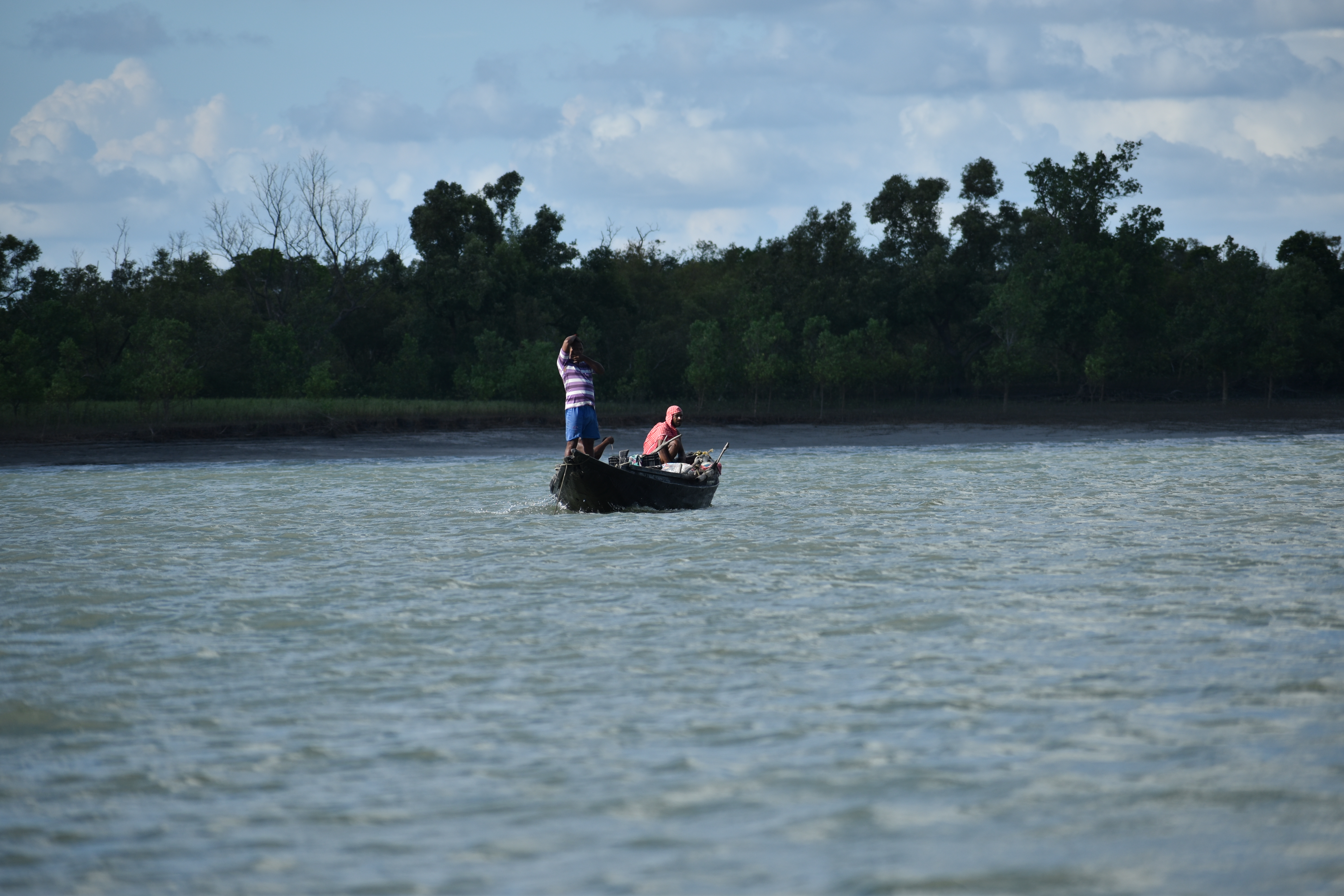
The use of pesticides to catch fish and shrimp in the Sundarbans has been reported for years. The Daily Star wrote in September 2017 that poachers said the chemicals could be bought at any pesticide shop, and that the divisional forest officer of Sundarbans East said the toxic water from poisoned canals flows into larger rivers and damages the wider aquatic ecosystem. The divisional forest officer of Sundarbans West told the paper there were 18 canals across the forest where all fishing was banned because they were important spawning grounds. The paper put the number of fish species in the Sundarbans at about three hundred.
Prothom Alo's investigation, published in English on 28 January 2025, described fishermen setting small nets across creeks at high tide and pouring pesticide into the water as the tide fell, so that fish surfaced within minutes. The paper said its reporting found fish traders known as "company mahajans" encouraging fishermen to use poison, and it reported allegations that some forest guards took bribes to let them work in sanctuary waters; a forest official, speaking anonymously, told the paper the department knew the traders but found it hard to catch them and faced staff shortages.
Mihir Kumar Doe, then forest conservator of the Khulna region, told Prothom Alo that most of the poison seized was made for killing pests on vegetables and plants, that fishermen used one kind for white fish and another for shrimp, and that some poisons cause an oxygen shortage in the water so that fish weaken and die. If birds eat the dead fish or crabs they can also die, he said, and eating such fish would harm people. According to the same report, nearly 3,200 of the 6,017 square kilometres of the Bangladesh Sundarbans is designated as sanctuary, and the conservator said more than half of the sanctuary areas are completely closed to fishermen.
The law already forbids the practice. Rule 6 of the Protection and Conservation of Fish Rules 1985, made under the Protection and Conservation of Fish Act 1950, states that no person shall destroy or attempt to destroy any fish by poisoning of water, or deplete fisheries by pollution, trade effluents or otherwise, in inland waters. The state minister's plan was to bring together the officials of all departments in Khulna, Bagerhat and Satkhira to stop it.
Photo: MAhmadS17 / Wikimedia Commons (CC BY-SA 4.0)
Sources: Jago News 24, Prothom Alo, The Business Standard, Dhaka Tribune, The Financial Express, World Bank, Dialogue Earth, UNESCO World Heritage Centre, The Daily Star, Department of Fisheries (Protection and Conservation of Fish Rules 1985)
Comments
(0)