
The Shamonda virus found in cattle in Co. Cork is not notifiable in Ireland or the European Union and carries no consequences for animal movement or trade, Ireland's Minister for Agriculture, Food and the Marine, Martin Heydon, said on 2 October, after a private laboratory reported the country's first detection.
Most infected animals have only a mild illness, the minister said; the main concern is pregnant animals, in which infection may cause pregnancy loss. There is no vaccine or treatment, and farmers and horse owners with concerns were told to contact their private vet.
Bovine samples from two farms in Co. Cork tested positive at Animal Health Laboratories in Bandon, according to the minister, and his department is engaging with the laboratory and will carry out follow-up investigations. Freya Vaughan, the laboratory's managing director, told Agriland the virus was found in samples from three animals on the two farms.
Vaughan said the laboratory's Dutch parent company, GD Group, held an emergency webinar in the summer, when it became known the virus was circulating in Europe and dairy farmers were calling about sharp drops in milk. "You can see cattle go from 25, 30 litres a day down to 5 litres a day. So that was the main signal," she said. Farmers near the Bandon laboratory had also reported diarrhoea in cattle.
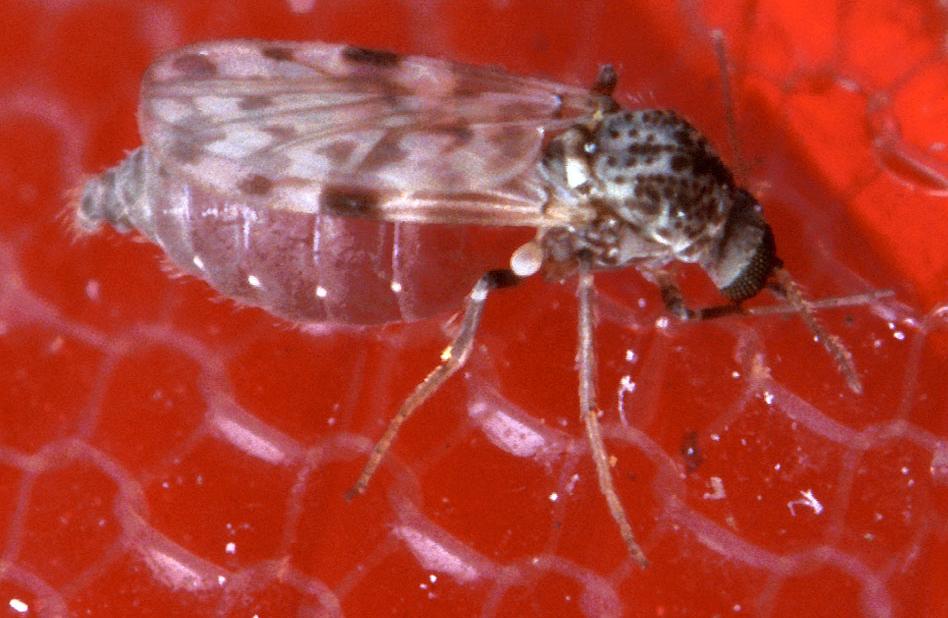
Shamonda virus, thought to be spread mainly by Culicoides biting midges, has been infecting cattle across Europe and was recently found in cattle in Jersey, according to the UK's Department for Environment, Food and Rural Affairs. It causes fever, diarrhoea, lethargy and lower milk yields, and abortions have been recorded in infected cattle.
Photo: Scott Bauer, USDA ARS / Wikimedia Commons (Public domain)
Source: Agriland

Comments
(0)