
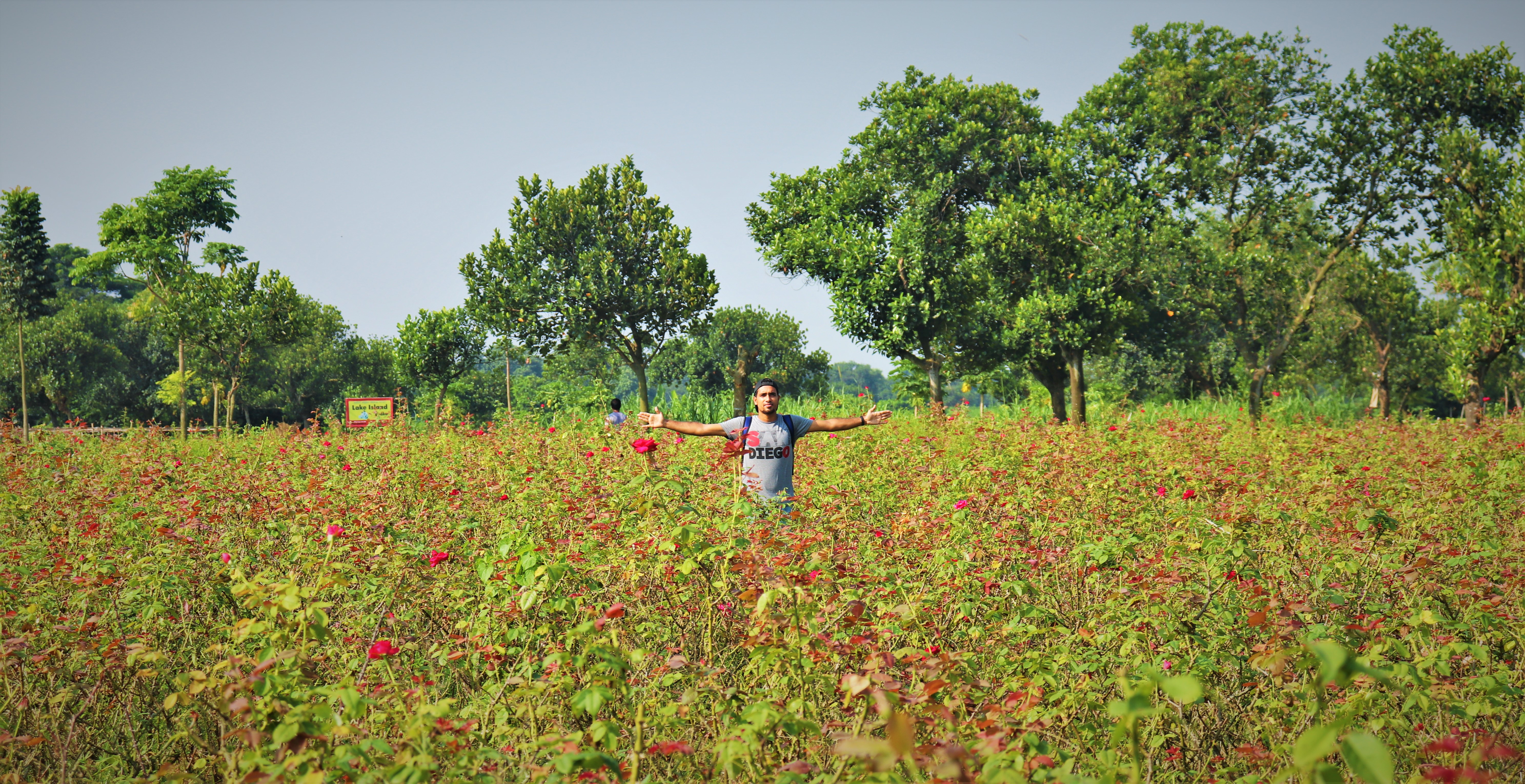
Rose growers in Birulia union of Savar upazila, on the north-western edge of Dhaka, were struggling in December 2025. In a report published on the morning of 9 December 2025, Jagonews24's Savar correspondent wrote that rose gardens in the area known as Golap Gram, the rose village, were steadily shrinking under pressure from housing projects, and that output was also falling because of a shortage of irrigation water and other problems. The Savar upazila agriculture office said it was working to raise rose yields, and its officer said the government would have to step in to stop the housing projects.
According to the report, roses had once been grown on 200 hectares in Birulia alone; by the time of the visit the area had fallen to 110 hectares. The roses had been a blessing for the area's growers, bringing in close to Tk 100 crore each season, the report said, but that income was on a downward curve.
Dry gardens and signboards on the land
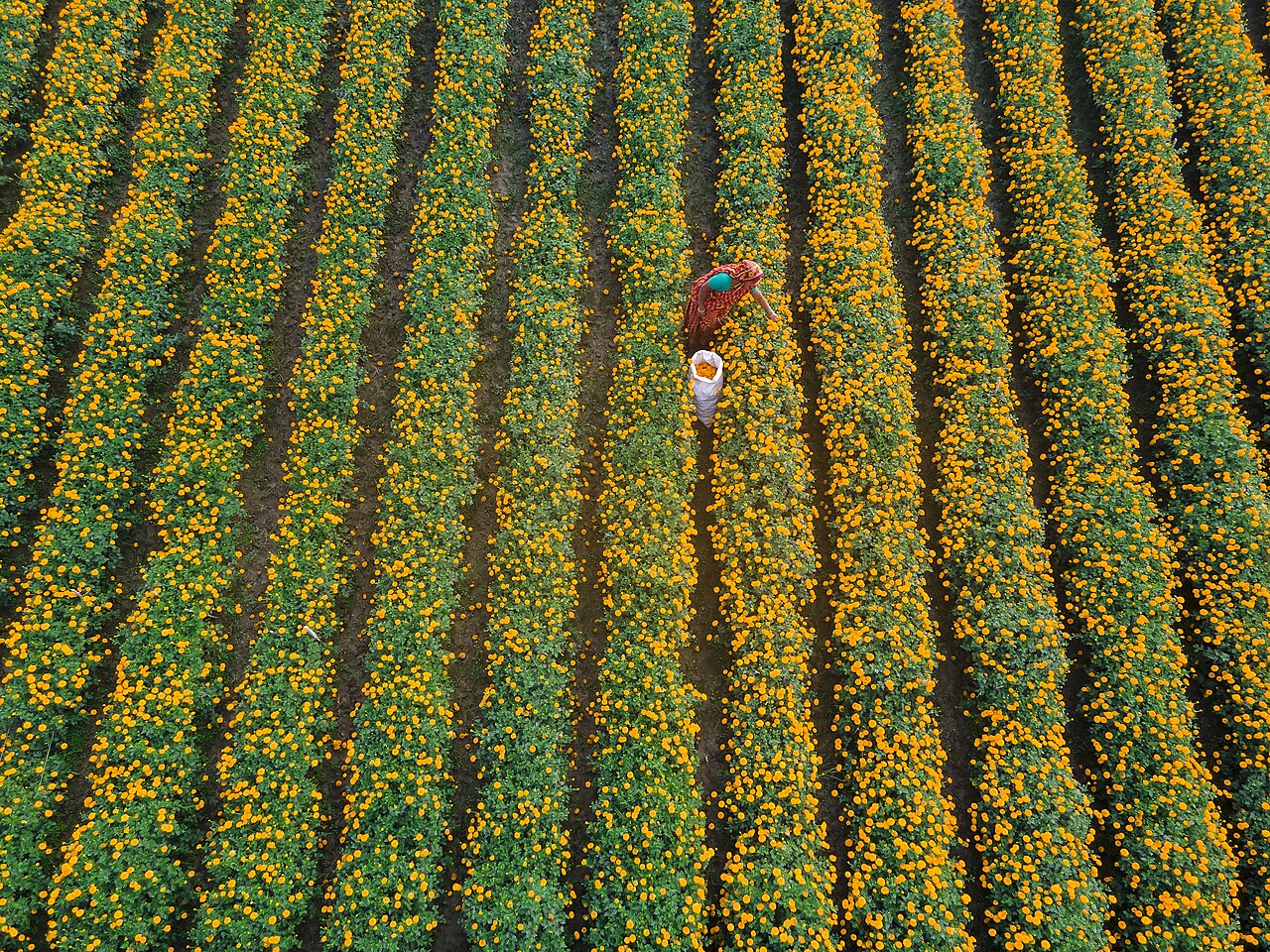
On a visit to the rose village, the correspondent found drought in the gardens that were still producing. Rose gardens were disappearing one after another, and some people were even digging away the soil of gardens that had already gone. The report linked this to housing projects, which, it said, had taken control of land in various places and put up signboards on it, and in some spots had cut away the soil and left the ground looking like a desert.
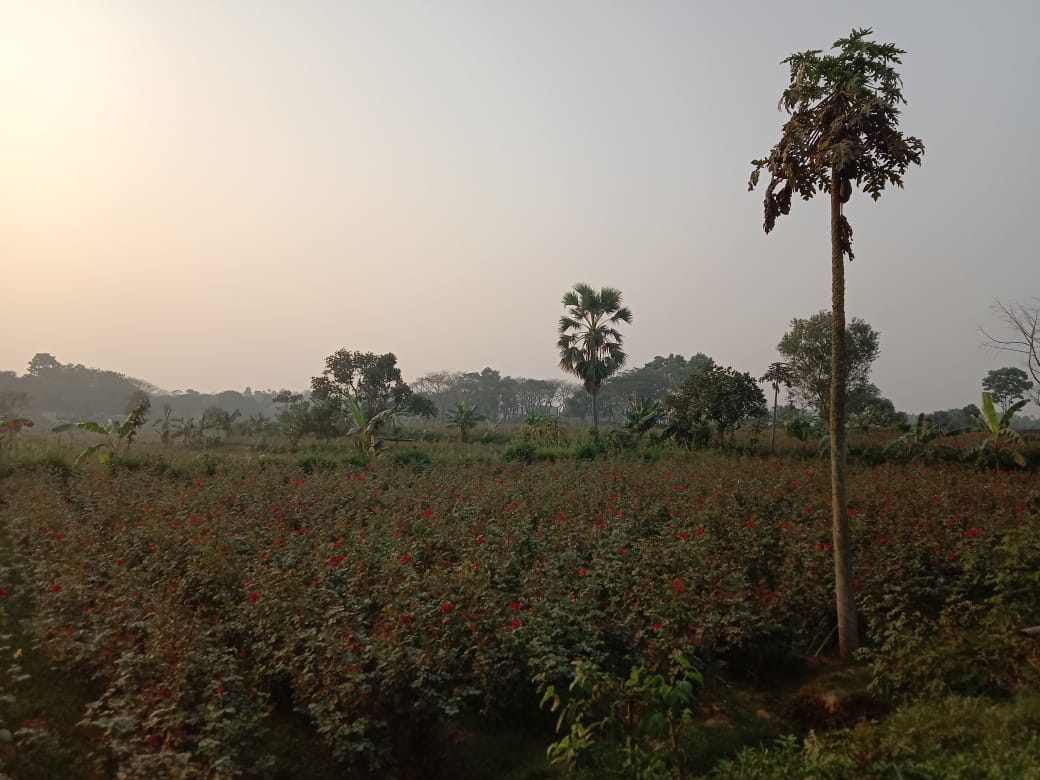
Even gardens still planted with roses had not given the yield the growers had hoped for. In some, the flowers had wilted for want of water, and the soil around the base of the plants had dried out and cracked.
Growers allege they are being pressed to sell
Several people, named in the report as Majnu, Rahim and Yasin, alleged that farmers were being forced to sell their land. According to their allegation, people from the housing companies kept a local gang that used harassment and tricks to get farmers' land into the companies' hands. They also alleged that the companies had put obstacles on the roads farmers used to reach their gardens. The report added that there were allegations that deep tube wells used for irrigation had been pulled out so that farmers could not cultivate. The report did not name any company, and it did not carry a response from one.
Other farmers who spoke to the correspondent looked frightened and asked not to be named. They said that anyone who spoke against the owners of the housing projects got caught up in all kinds of schemes against them.
Fewer gardens, fewer visitors
The rose village has long been a favourite outing for people from Dhaka. The report said that visitor numbers were falling along with production, and that those who still came were disappointed by gardens without flowers and by the state of the surroundings.
Saban Mahmud, a college student who had come from Dhaka to see the village, told the correspondent that roses of many colours had once swayed in the breeze across the wide stretch of land that now lay fallow. Because of the housing projects, he said, fertile land had been left idle.
A couple, Meherun and Ruma, spoke angrily. There had been one place near Dhaka where people could breathe a little clean air, they said, and that was now in the past. In their words, land grabbers were finishing off the gardens by cutting away the soil; such people had to be brought under the law, or the rose village could not be saved.
What the agriculture office said
Savar upazila agriculture officer Al Mamun told Jagonews24 that he too was worried about the rose village. He said his office was working to raise yields, but that the government itself would have to intervene to stop the housing projects. If action was not taken quickly, he said, the rose village would suffer great damage.
The officer's concern followed similar warnings from his office in earlier seasons, and earlier reports have given different figures for the rose area; the Jagonews24 report did not say which year its 200-hectare figure referred to. In February 2023, the Savar upazila agriculture officer of the time told the Dhaka Tribune that different varieties of rose were grown on 280 hectares in several villages of Birulia union. In other years, the officer said, flowers worth Tk 10 to 12 crore were sold over a season of seven to eight months, but after a very good yield the office had set a target of about Tk 20 crore that season. Roses were then selling at Tk 3 to 4 apiece at the gardens, a grower in Shyampur told the paper.
In 2024, Ekhon TV reported upazila agriculture office figures showing that roses and other flowers had been grown that year on 305 hectares in 14 villages of Birulia union, 230 hectares of it under roses. The upazila agriculture officer then said that agricultural land was shrinking day by day and that rose production targets were not being met as a result. Growers told the channel that flower farming had fallen because housing companies were buying up farmland, and that an unidentified disease had also cut output.
Where the rose village is
Savar upazila of Dhaka district covers 280.11 square kilometres, according to Banglapedia, the national encyclopedia published by the Asiatic Society of Bangladesh. It is bounded by Kaliakair and Gazipur Sadar upazilas to the north, Keraniganj upazila to the south, Dhamrai and Singair upazilas to the west, and the Dhaka city thanas of Mohammadpur, Adabar, Darus Salam, Shah Ali, Pallabi and Turag to the east. Its main rivers are the Dhaleshwari, the Bangshi and the Turag. Savar thana was formed in 1912 and became an upazila in 1983, and the 2011 population census counted 1,385,910 people there.
Banglapedia, drawing on the 2011 census, lists agriculture as the main source of income for 20.46 percent of Savar's people, against 28.74 percent for service and 20.55 percent for commerce, and records 57.06 percent as landless and 42.94 percent as landowners. Its main crops are paddy, jute, groundnut and vegetables. The old Biralia zamindar house is among the upazila's listed heritage sites.
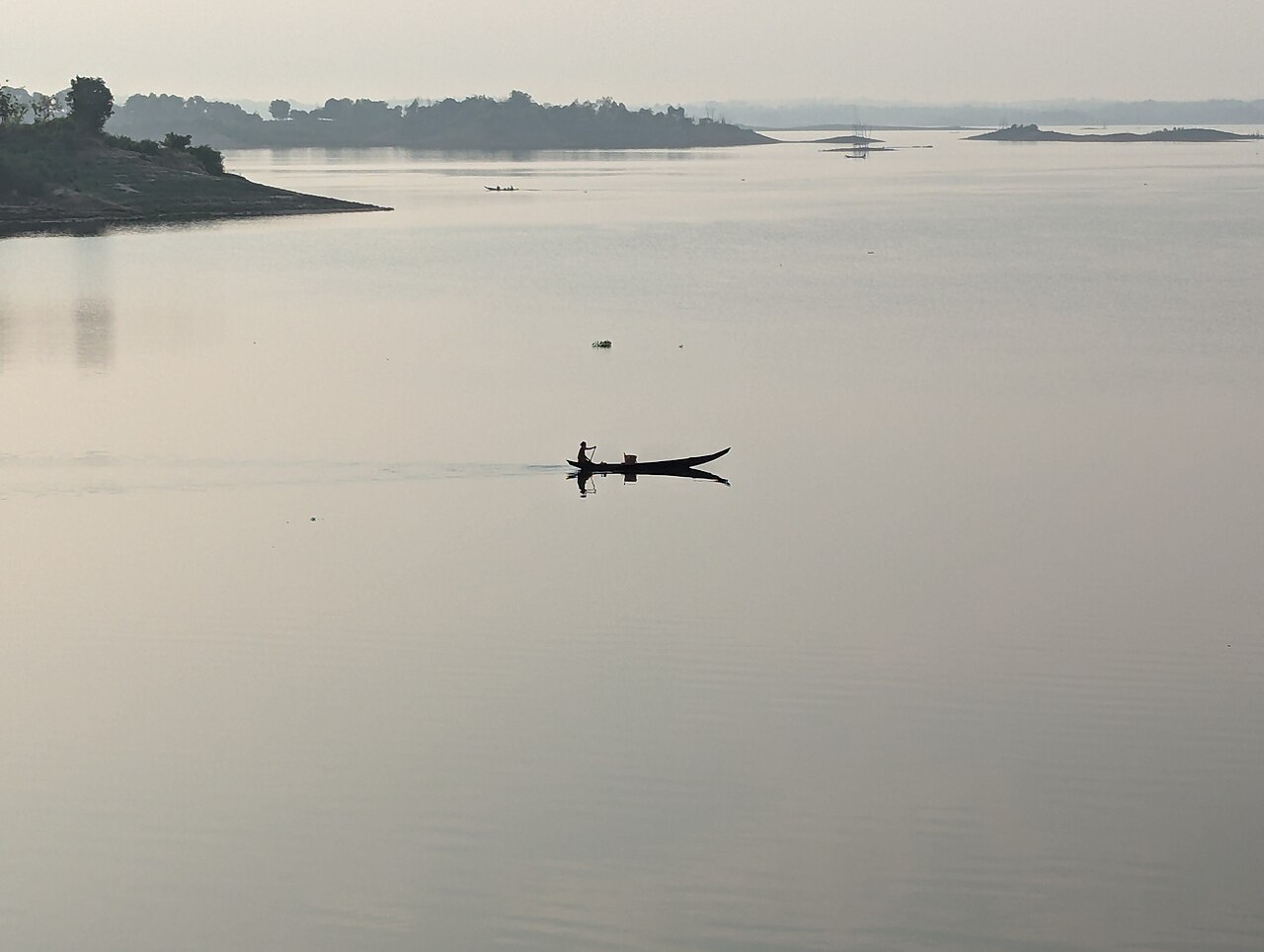
The Turag, which flows past Birulia, joins the Buriganga near Mirpur in Dhaka. Banglapedia describes it as tidal in its lower reaches and navigable by country boats throughout the year. In November 2025, the daily Kalbela reported that the rose village lay mainly in two mouzas, Kumar Khoda and Shishar Char, with a small stream known locally as the Shishachar river running through it into the Turag; growers used its water on their gardens in the dry season.
A Prothom Alo report of March 2017 described red roses across Sadullapur, Shyampur, Kamalpur and Bagnibari villages in Birulia union, where growers also planted white roses, gerbera and gladiolus. Visitors then reached the village from Gabtoli Mazar Road or Mirpur-1, taking trawlers that left Diabari Battola Ghat for Sadullapur every 30 minutes on a crossing of about half an hour; others drove along the Mirpur embankment road.
Commercial rose growing in the area is usually traced to one man. The Daily Star reported in February 2021 that a gardener who had joined the national zoo in 1979 planted ten rose seedlings, bought for Tk 350, in pots at his home in Mirpur in 1983, and in 1989 leased 20 decimals of land at Sadullapur in Savar to grow roses for sale. His flowers went to the wholesale market at Shahbagh in Dhaka. By 2021, the paper said, around 1,500 people in Sadullapur and the neighbouring villages of Shyampur, Mostapara, Birulia, Bhakurta and Bhabanipur were growing roses commercially. The pioneer told the paper then that growers needed a wholesale rose market, cold storage for flowers and government help to export.
Earlier warnings about the land
Worries about land in the rose villages were not new in 2025. In a column in The Daily Star in December 2017, the presenter of the television farm programme Hridoye Mati O Manush wrote that the Savar area suffered from land grabbers who took farmland on lease and then used it for industrial or other purposes. Farmers showed him an area enclosed with barbed wire and a plot marked with a red cloth on a bamboo pole, which they said was a warning sign. Those holding the leases said they had obtained them legally from the Land Reforms Board, while locals said only the deputy commissioner had the authority to lease such land; the deputy commissioner, the column said, was not aware of the situation. It put the flower area in Savar at around 400 hectares, more than 350 of them under roses alone.
In February 2022, the Dhaka Tribune reported that the roses of Golap Gram had been hit by an unknown virus, putting growers' livelihoods at risk. Two years later came the Ekhon TV report on shrinking farmland described above.
On 23 November 2025, about two weeks before the Jagonews24 report, Kalbela published a front-page report in which local growers alleged that a housing company, which the paper named, was turning rose gardens into plots, with signboards advertising plots for sale. Growers told the paper that deep tube wells they had sunk in the gardens had been pulled out, and locals said that about 2,000 farmers had once worked directly in rose growing and that most of them were being forced to change occupations. The paper also reported soil being dumped into the stream and nearby water bodies. Asked about the allegations, the company's chairman told Kalbela that if there were allegations, the paper should report them.
Why water matters in a rose garden
The rose belongs to the genus Rosa of the family Rosaceae, which has more than 150 species, according to Banglapedia. One species is native to Bangladesh, Rosa involucrata, which grows in marshland in Mymensingh, Sylhet and Chattogram. The Mughal emperor Babur is credited with bringing a fragrant light-pink rose called Bashra to the subcontinent. For commercial production, Banglapedia says, budding is by far the most suitable form of grafting, and world-known varieties such as Papa Meilland, Double Delight, Dutch Gold, Queen Elizabeth and Montezuma are raised in Bangladesh in this way.
The Agricultural Information Service (AIS) of the agriculture ministry describes the rose as a winter flower that is now grown all year round, and as the queen of flowers for its colour, scent and beauty. Its growing guide sets out the conditions roses need:
- Temperatures of 22 to 30 degrees Celsius, about 85 percent relative humidity and 100 to 125 centimetres of rain a year; too much heat and humidity do not suit it.
- Well-drained, fertile loam with a pH of 6.0 to 6.5, on high, open, sunny land; morning sun works better than afternoon sun.
- Planting from October to February, with budding as the main way of producing new plants for cut-flower growing.
- Pruning in October, before the flowering season, and manure at pruning and again in March, at the end of winter.
- Liquid fertiliser applied only to moist soil and followed by irrigation, because on dry soil it can be too strong and damage the plant.
Varieties grown in Bangladesh, the AIS guide says, include Mirandi, Papa Meilland, Double Delight, Tajmahal, Paradise, Blue Moon, Montezuma, Tata Centre and City of Belfast. Under ideal conditions a long-stemmed variety gives about 15 to 30 flowers per plant a year, and the yield depends mainly on the weather and the variety. Flowers are best cut early in the morning or late in the afternoon. Among pests and diseases, the guide names red spider mite and dieback as the most serious; growers facing them should ask the upazila agriculture officer which treatment to use.
For growers on dried and cracked soil, the guide's emphasis on a steady supply of water explains the losses that Jagonews24 described. One grower told Kalbela in November 2025 that a rose plant, once planted and looked after, keeps flowering for more than a decade with only fertiliser and water.
Savar's place in the country's flower trade
Banglapedia describes floriculture in Bangladesh as still in its early stage, with demand for cut flowers, mainly rose, tuberose, orchid and gladiolus, growing slowly, and limited quantities of rose and tuberose exported to the Middle East and Europe. The Bangladesh Agricultural Research Institute has opened a floriculture research centre to promote commercial flower growing.
The biggest flower area is around Godkhali in Jhikargachha upazila of Jashore, known as the country's flower capital. Jagonews24 reported on 8 December 2025, the day before its Savar report, that more than 6,000 farmers grew flowers on about 1,500 hectares in the Jashore region, that its flower market was worth more than Tk 400 crore a year, and that commercial flower growing there had begun with a tuberose crop in 1982. Roses were then selling at Tk 3 to 6 apiece at the Godkhali market, and growers hoped to sell flowers worth Tk 100 crore around the main days of the season: Victory Day, Valentine's Day and the spring festival, International Mother Language Day, Independence Day and Pohela Boishakh, along with the English New Year.
The 2017 Daily Star column put the national picture at about 6,000 hectares of flowers in 25 districts, some 20,000 flower farmers and a market of about Tk 1,000 crore. Savar's rose villages, close to the capital's buyers, sent their flowers to wholesale markets such as Shahbagh.
What the law says on soil cutting and housing projects
The removal of soil described in the report falls under the Sand Quarry and Soil Management Act, 2010 (Balumahal o Mati Byabosthapona Ain). Section 7A, added by an amendment in 2023, says that sand or soil may not be extracted from privately owned land if it is fertile agricultural land, if the extraction is for commercial purposes, if it destroys the fertile topsoil of farmland, if it harms the environment, ecology or biodiversity, or if it is done in a way that damages, shifts or collapses the land itself or neighbouring land. A person may take a limited amount of soil from his or her own land to build a home or for personal need with the permission of the upazila nirbahi officer.
Under section 15 of the same Act, breaking these provisions or extracting sand or soil without permission is punishable by up to two years in prison or a fine of Tk 50,000 to Tk 10 lakh, or both, and the dredgers, vehicles and equipment used can be confiscated. Such offences are tried by an executive magistrate's mobile court or a judicial magistrate's court.
Housing businesses are governed by the Real Estate Development and Management Act, 2010. It requires every real estate developer to register with the relevant authority before doing business, and bars a developer from advertising a project for sale, or selling or agreeing to sell any part of it, before the project has been approved. Developers must show buyers the authority's approval and the documents of land ownership, and must get their designs and projects approved under the Private Residential Project Land Development Rules, 2004 and the applicable building rules.
The Jagonews24 report did not say whether any authority had examined the soil cutting in the rose village or the approvals of the housing projects there.
Photo: ArifHossain.ED / Wikimedia Commons (CC BY-SA 4.0)
Sources: Jagonews24, Kalbela, Ekhon TV, Dhaka Tribune, The Daily Star, Prothom Alo, Banglapedia (Asiatic Society of Bangladesh), Agricultural Information Service (AIS), Sand Quarry and Soil Management Act 2010 and Real Estate Development and Management Act 2010 (bdlaws, Legislative and Parliamentary Affairs Division)
Comments
(0)