
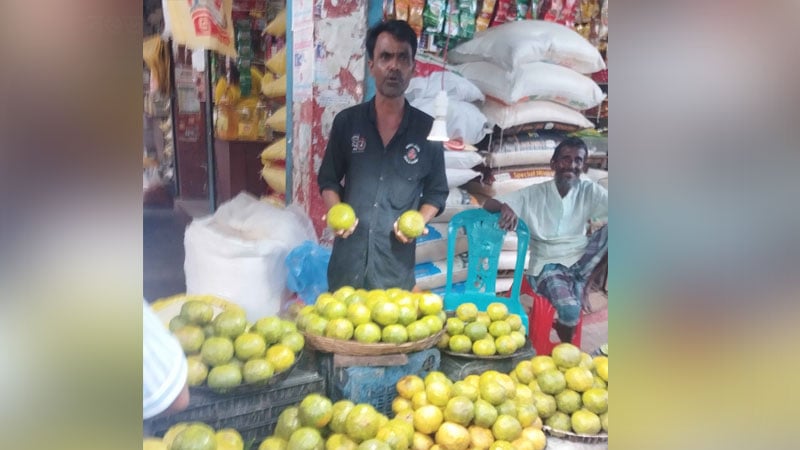
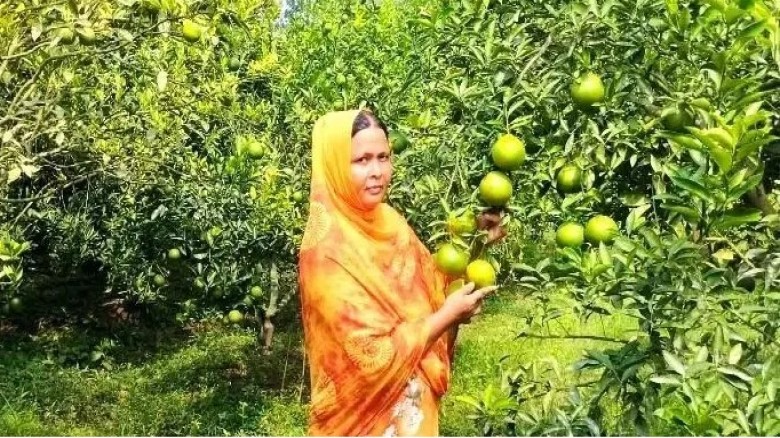
Kul (jujube) farming has increased in the coastal district of Satkhira, but yields are somewhat lower than last year. The agriculture department and kul farmers blame Cyclone Bulbul for the poorer harvest. Even so, the district has earned Tk 6 crore 76 lakh from kul this year.
Growers count the cost of Bulbul
Asgar Ali Molla, son of Aminul Islam Molla of Baukhola village in Islamkati union of Tala upazila, Satkhira, has been growing kul for five years. This year he grew the fruit on four bighas of his own land at a total cost of Tk 1 lakh. He has already sold Tk 2 lakh 20 thousand worth of kul, making a profit of Tk 1 lakh 20 thousand.
"Because it costs little and pays well, I gave up growing vegetables and started kul five years ago," he said. "I have made a good profit every year. Last year I grew kul on three bighas for Tk 75,000 and sold more than Tk 1.5 lakh worth. This year I planted one more bigha, but I could not make the profit I hoped for. Cyclone Bulbul made the blossom drop just as it was starting. I thought I could sell more than Tk 3.5 lakh worth of kul, but because the yield was low I sold only Tk 2 lakh 20 thousand."
Kabil Sheikh of Baukhola village in Tala upazila has been growing kul for 14 years. This year he grew it on 50 bighas. He has no land of his own and farms land leased from others. He spent Tk 20 lakh on the crop and hoped to sell Tk 40 to 42 lakh worth of kul, but sold only Tk 24 to 25 lakh worth.
"Kul costs little to grow and pays well," he said. "The land needs no extra care, and once the kul season is over other crops can be grown on it, which brings in extra income."
654 hectares under kul
Sheikh Hafizur Rahman, office assistant at the district Department of Agricultural Extension (DAE) office at Khamarbari, said kul was grown on 654 hectares in the district in the 2019-20 financial year: 104 hectares in Satkhira Sadar, 316 in Kalaroa upazila, 158 in Tala, 16 in Debhata, 20 in Kaliganj, 15 in Assasuni and 25 in Shyamnagar. The district produced 6,760 tonnes of kul.
Satkhira's kul goes to Dhaka, Khulna, Jashore and other places. The biggest market for the region's kul is the Khulna kancha bazar, whose traders buy the fruit from Satkhira's growers.
Arabindu Biswas, deputy director of the DAE at Khamarbari in Satkhira, said the district has 5,000 kul farmers. Cultivation has increased compared with last year, but yields have fallen. This year the district produced 6,760 tonnes of kul and earned Tk 6 crore 76 lakh from it; last year it produced 7,092 tonnes and earned Tk 7 crore 92 lakh.
He said the agriculture department gives farmers advice and support. Kul cultivation has grown in Satkhira because it brings a high return for a small outlay, but this year Cyclone Bulbul caused losses for the growers.
Source: Jagonews24. First published in Bengali on The Agro News.
Comments
(0)