
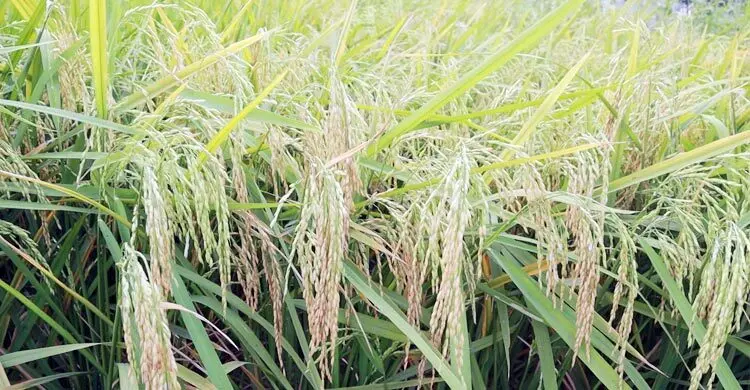
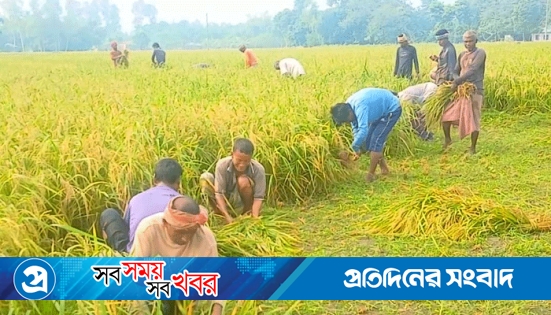
Boro is the most productive rice season, and the country's food security rests on it: about 58 per cent of total rice output comes from this season. Farming households across rural Bangladesh are now busy with the Boro harvest, cutting ripe paddy, threshing, winnowing, drying, parboiling and bringing the grain home.
In the coastal district of Satkhira, however, farmers have to change rice varieties every few years. In the saline conditions, the district's rice is hit by a range of diseases. This year, leaf blight-resistant Boro rice varieties 64 and 53 have opened up new possibilities for farmers.
Higher yields in Debhata
Farmers in Debhata upazila of Satkhira have had wide success with these varieties. They are getting 33 maunds from 33 decimals of land, bringing smiles to farmers' faces. The new varieties are yielding more than two tonnes a hectare above any rice grown here in the past.
Akram Gazi, a rice farmer in Debhata upazila sadar, told Jago News: "I have grown the Rod Miniket variety for a long time. Seeing the yield of varieties 64 and 53 this time, I have decided to grow this rice on my own land in future."
Agriculturist Md Manchhur Rahman said that, being high-yielding, the rice has a life cycle of 140 to 145 days. Because it resists disease and gives more yield, farmers are showing more interest in it than in other rice. With yields meeting their expectations, farmers feel they have got back the good days of the past.
Debhata Upazila Agriculture Officer Sharif Mohammad Titumir told Jago News: "Many farmers in the district will grow this new rice in future. People in this region will profit more than before from this high-yielding, disease-free rice. The Department of Agricultural Extension (DAE) will also play a role in spreading the new variety. In future this rice will bring smiles of relief to farmers in this region."
Source: Jagonews24. First published in Bengali on The Agro News.
Comments
(0)