
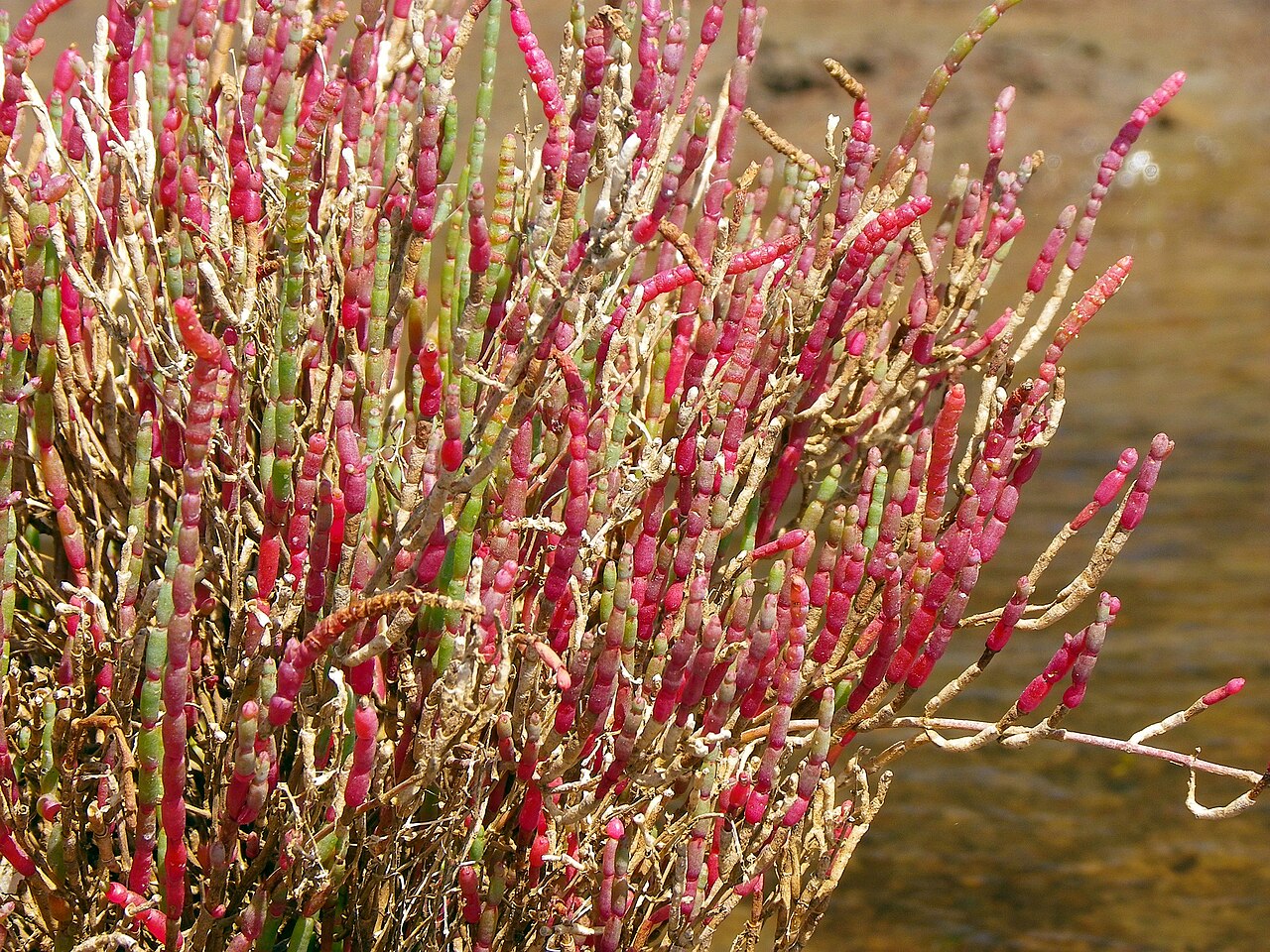
Companies that farm on salt-affected land say their biggest obstacle is not funding or technology but demand, according to research from the IVM Institute for Environmental Studies in Amsterdam summarised in a guest article for AgFunderNews.
The study interviewed 15 businesses in eight countries across North America, Europe, Asia and Australia. Some grow salt-loving halophyte plants such as salicornia and saltbush, from coastal deltas to arid interiors; others are biotech and agrochemical firms improving salt tolerance in rice and potatoes, irrigation consultancies and desalination technology providers.
The scale of the problem they address is large. The FAO estimates that elevated soil salinity already affects nearly 1.4 billion hectares, or at least 10% of global land, and drought, saltwater intrusion and intensive irrigation are expected to push it further into key farming regions.
Yet salinity rarely makes headlines. Salt build-up is gradual and often needs instruments to diagnose, unlike a heat wave or a blight a farmer can see, and one biotech working on several crop stresses called salinity its least priority. Entrepreneurs described weak awareness, steep customer acquisition costs and a chicken-and-egg problem over investing in large operations before winning major supply contracts. Funding shortfalls were not named as the main barrier.
"It all comes down to demand," one small salicornia grower told the researchers. Many operators hope to scale through partnerships with large incumbent companies rather than around them, and some voiced frustration that those doors have stayed closed. "How do we get into the boardrooms of these companies?" asked an experienced halophyte grower.
None of the 15 said they were in business mainly to make money, but they defined sustainability in very different ways. The authors warn that the lack of shared environmental metrics makes it harder to present a common case to investors, partners and policymakers.
They call for trade groups, market research, partnerships and brand strategy support alongside further agronomic research, arguing that saline agriculture is now a business ecosystem as well as a set of crop, soil and water practices. The article was written by Rich Bellis, who co-authored the IVM report with Dr. Kate Negacz; the views are the author's own.
Photo: Liese Coulter, CSIRO / Wikimedia Commons (CC BY 3.0)
Source: AgFunderNews

Comments
(0)