
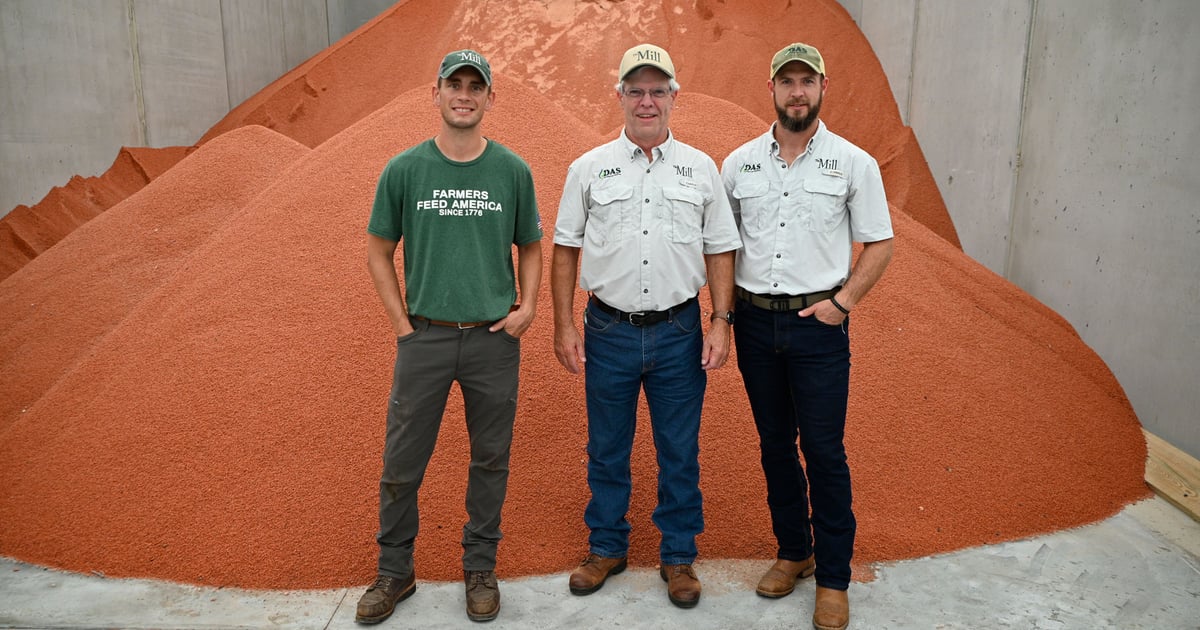
The Mill in White Hall, Maryland, has opened a 12,000-square-foot dry-mix fertilizer facility, the first of its kind in the state in at least 15 years, which it says can triple its outbound loading capacity to 70 to 100 tons an hour.
The prefabricated metal building with a fabric roof holds 2,000 tons of fertilizer, twice the old site, in bays for potash, MAP, urea, AMS and other products, and has a heated floor to cut waste. A computer-operated Doyle AutoBatch mixer pulls and blends products automatically into custom mixes. Construction began in August 2025 and weather delayed the opening from spring to this autumn; a $1 million cost-share grant from Maryland's Build Our Future Grant Pilot Program helped pay for it.
Agronomy operations manager Mark Holloway said that in a dry spring week the old 50-year-old building would almost run empty. Crop adviser and partner Ben Hushon said all of The Mill's urea is stabilised and all its phosphate polymer-coated, which lets farmers often apply a little less, and that at least two bays are kept free for new products.
The new plant cannot fix prices. Josh Linville of StoneX said nitrogen, phosphate and potash all missed their usual summer lows, with nitrogen pushed up by worries over Russian exports and shipping through the Strait of Hormuz and European output hit by gas costs. Sulfur, needed to make MAP and DAP, is above $1,000 against a 10-year average of $170, according to Mosaic's Sarah Fedorchuk.
Longer-term relief could come from KeyState Nitrogen's planned $2 billion plant in Clearfield County, Pennsylvania, to make 1 million tons of nitrogen fertilizer a year from 2030 or 2031, and Michigan Potash & Salt's $1.2 billion potash project, backed by an $80 million USDA grant. Neither has broken ground.
Until then, agronomist Eric Rosenbaum of Rosetree Consulting advises post-harvest soil tests, subfield yield zones and crop-removal scripts that use this year's yield data to set next year's rates. The report is by Chris Torres, editor of American Agriculturist.
Source: Farm Progress
Comments
(0)