
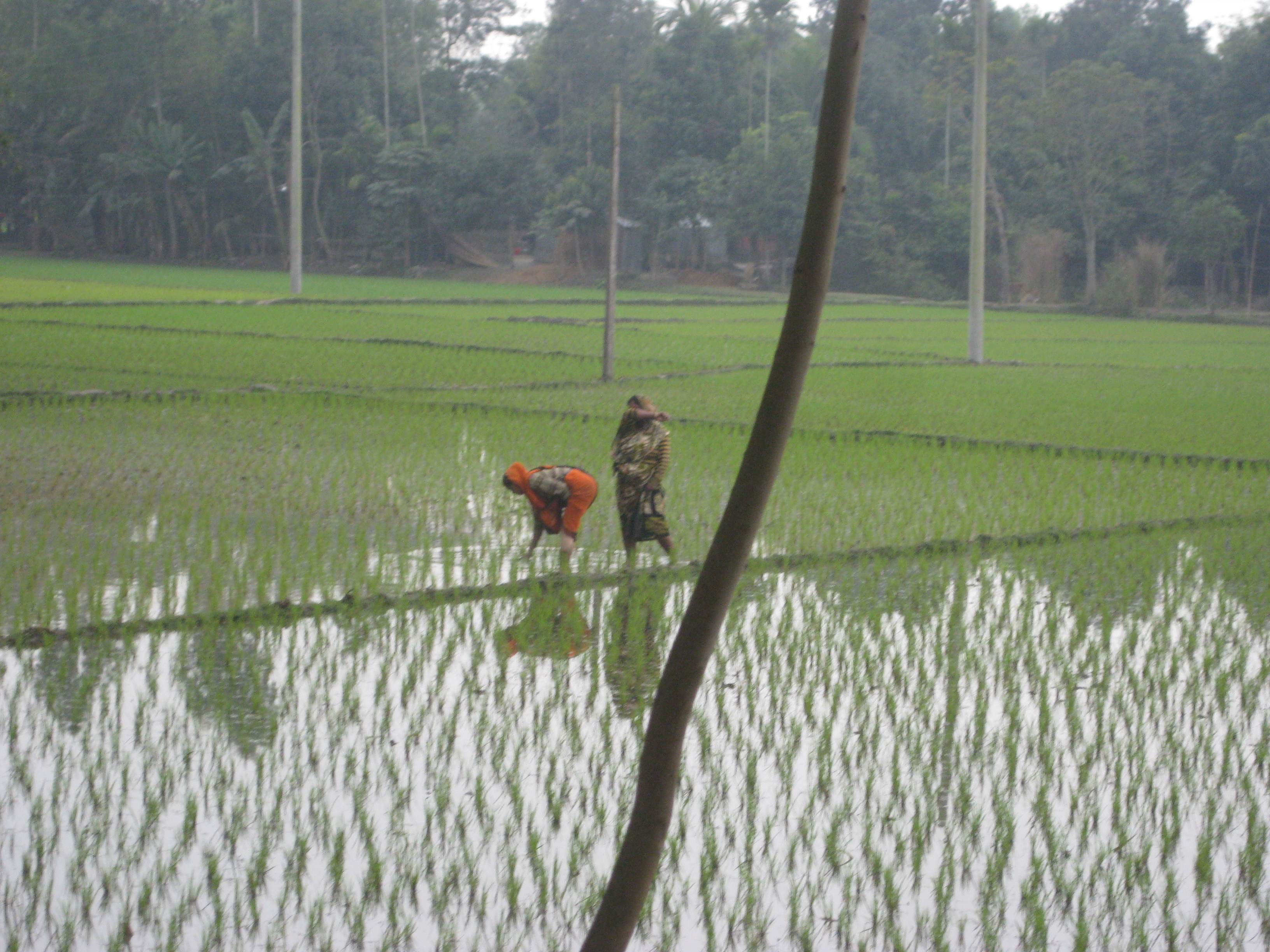
In February 2026, four farmers who run electric irrigation pumps in the Mohishbandi area of Rasulpur union, Sadullapur upazila, Gaibandha, said the power connections to all four pumps had been cut without any reason and without notice. According to a Jagonews24 report published on 23 February 2026, the disconnection put boro rice on more than 100 bighas of land, farmed by about 50 farmers, in doubt at the very start of the season. The pumps were connected through the Sadullapur zonal office of Rangpur Palli Bidyut Samity-1, the rural electricity cooperative that serves the area. When the reporter called the office's deputy general manager, he ended the call, saying he was busy, so the report carried no explanation from the power office.
Farmers caught between transplanting and puddling
The Jagonews24 correspondent who visited the fields of Mohishbandi village found boro growers lamenting their situation. With the pumps silent, the report said, the farmers were spending their days in despair, unsure how they would carry the crop through the dry months.
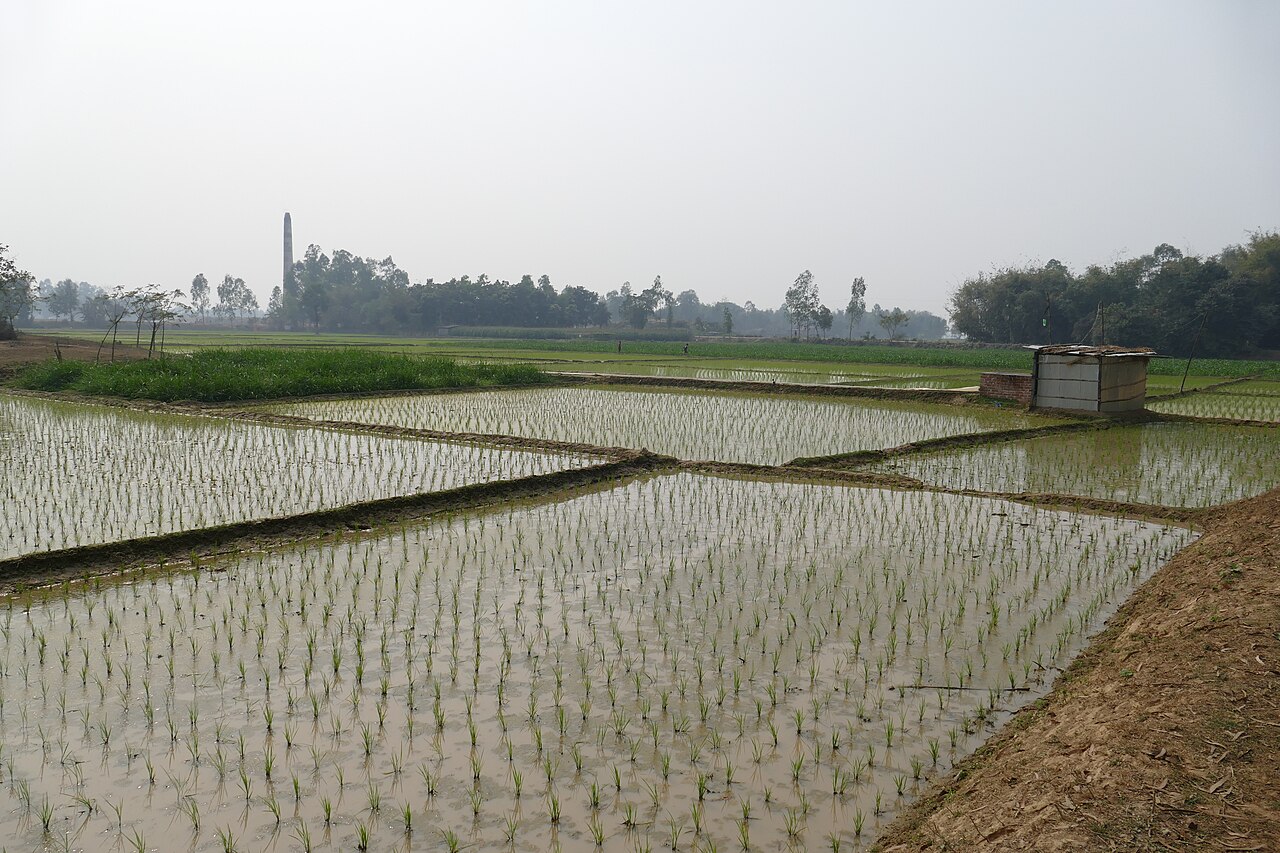
The four pumps belonged to Abu Taher Akanda, Liakat Akanda, Ayub Ali and Azim Uddin. The report described them as regular customers of the Sadullapur zonal office in the Mohishbandi area, connected under the tariff category LT-B. For nearly 24 years ("two yug" in the Bengali phrase, a yug being twelve years), they had used these connections to irrigate the land of ordinary farmers for the boro crop. This year, as every year, the farmers had started boro cultivation: some had already transplanted their seedlings, while others were still preparing their plots.
Then, as the customers told it, officials of the Sadullapur zonal office cut the power to all four pumps at once without informing them. The report said boro cultivation on more than 100 bighas was being seriously hampered as a result.
Farmer Aynal Akanda told the newspaper that he had first used the pump water only to transplant his seedlings. Then, he said, people from the power office suddenly cut the line to the motor on the Thursday before the report, 19 February. "Now I am worried about how I will grow the crop," he said.
Another farmer, Bablu Mia, said he had recently got ready to transplant seedlings. Without water, he said, he could not soak his land and work it into mud, so he was anxious about the whole season.
The pump owners' claim and the power office's silence
The four pump owners said the connections had been cut without any notice or prior warning. Because they could no longer irrigate the farmers' land, they said, angry farmers had begun to demand compensation from them. Because the owners' connections watered their neighbours' plots as well as their own, the cut left both the owners and the farmers who relied on them without a way to carry on.
The report did not give any reason for the disconnection from the power cooperative's side. It did not say whether there were unpaid bills, a technical fault, a dispute over the connections or some other cause. The statement that the lines were cut "without reason" and "without notice" is therefore the account of the pump owners and farmers, as Jagonews24 reported it.
Jagonews24 said it contacted Nurul Shamsul Huda, deputy general manager (DGM) of the Sadullapur zonal office of Rangpur Palli Bidyut Samity-1. He cut the call, citing his busy schedule. No further response from the office appeared in the report.
Rangpur Palli Bidyut Samity-1 is one of the rural electricity cooperatives under the Bangladesh Rural Electrification Board. According to the cooperative's own government portal, its field offices include zonal offices at Pirgachha, Sundarganj, Sadullapur and Pirganj, along with sub-zonal offices at Bhendabari, Boiratihat, Baldipukur and Majumdarhat, so its area stretches across parts of Rangpur and Gaibandha districts.
Sadullapur and Rasulpur union
Sadullapur is one of the seven upazilas of Gaibandha district in Rangpur division. Banglapedia, the national encyclopedia published by the Asiatic Society of Bangladesh, gives its area as 230.12 square kilometres. It borders Sundarganj and Mithapukur upazilas to the north, Palashbari and Gaibandha Sadar to the south, Gaibandha Sadar and Sundarganj to the east, and Pirganj upazila of Rangpur district to the west. Sadullapur thana was formed in 1913 and became an upazila in 1984.
The upazila has 11 unions. Rasulpur, the union where the four pumps stand, covers 5,332 acres according to Banglapedia's table of unions, which takes its population figures from the 2001 census: 11,754 men and 12,577 women lived there then. The whole upazila had 287,426 people in the 2011 census.
The main river is the Ghaghat, and Sat Beel is a notable wetland. Banglapedia describes the Ghaghat as a former distributary of the Tista that rises at Jaldhaka in Nilphamari district, winds past Gaibandha town and joins the Brahmaputra a few kilometres north of Fulchhari Ghat. Its total length is 236 kilometres, and for most of its course it is a sluggish, weed-choked stream, which helps explain why farmers in the area depend on groundwater pumped from tubewells rather than on river water in the dry season.
Farming is the backbone of the local economy. Banglapedia lists agriculture as the main source of income for 68.56 percent of households in Sadullapur, and names paddy, jute, maize, turmeric, potato, banana and vegetables as its main crops, with rice, paddy, banana, turmeric and potato among the goods it sends out. It also records that all the unions of the upazila are within the rural electrification network.
Gaibandha district as a whole covers 2,114.77 square kilometres and is crossed or bordered by the Brahmaputra, Jamuna, Tista, Karatoya, Bangali and Ghaghat rivers, according to Banglapedia. Its population was 2,379,255 in the 2011 census.
Why water matters at this stage of boro
Boro is Bangladesh's dry-season rice. Its seedlings are raised in seedbeds in winter and transplanted into the main fields in the dry months, when there is little rain, so the crop is grown with irrigation. Banglapedia notes that shallow and deep tubewells are used widely to irrigate land during the dry period from November to March, and that high-yielding rice varieties, which make up most of the boro crop, are very sensitive to drought and need frequent irrigation.
The two farmers quoted in the report were at the most water-hungry point of the season. Aynal Akanda had transplanted and needed water to keep his young plants growing. Bablu Mia had not yet been able to prepare his plot. In lowland rice, the field is normally flooded and "puddled": the soil is soaked and churned into soft mud before the seedlings are set in. The International Rice Research Institute (IRRI) explains in its Rice Knowledge Bank that lowland fields are usually puddled to form a compacted hard pan below the surface that reduces water loss, and that puddled soil also gives a soft bed for transplanting.
Puddling itself takes a lot of water. IRRI says wet land preparation can consume up to a third of the total water needed to grow a crop of irrigated rice. Its guidance puts the typical seasonal water input for irrigated rice in Asia at around 1,300 to 1,500 millimetres, and says that on average it takes 1,432 litres of water to produce one kilogram of rice in an irrigated lowland system. Rice, IRRI adds, is extremely sensitive to water shortage because of its semi-aquatic ancestry.
That is why a cut in the middle of February matters so much. A farmer who cannot soak and puddle his land cannot transplant. A farmer who has already transplanted needs a steady supply so that the young crop does not dry out. In both cases, the shallow tubewell or pump that the four owners ran was the farmers' only practical source of water.
Boro across the Rangpur region in February 2026
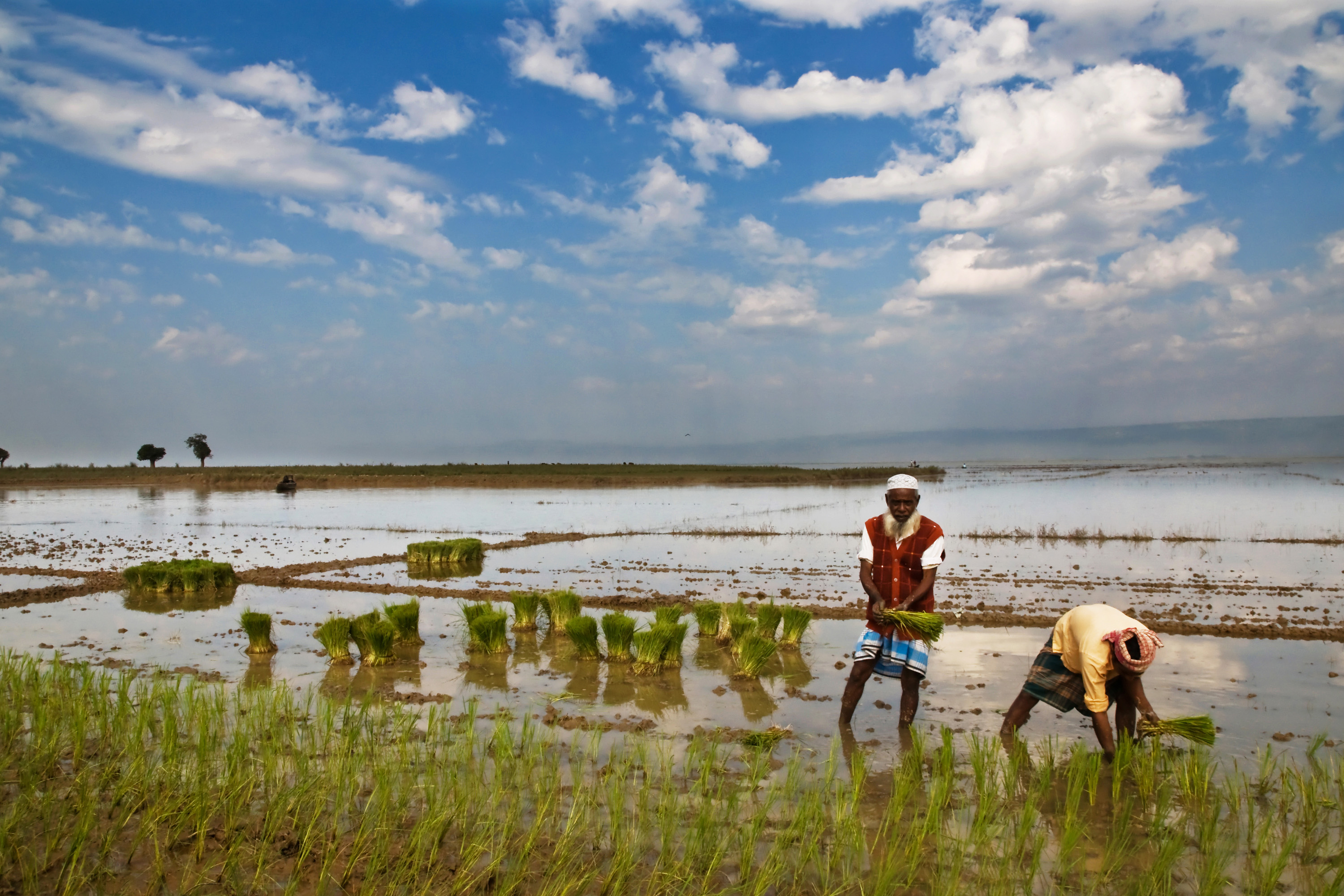
The dispute in Mohishbandi came at the height of transplanting across the north. On 16 February 2026, the state news agency BSS reported that farmers in the eight districts of the Rangpur agricultural region had transplanted boro seedlings on 65.04 percent of the target area. By the previous Sunday, 331,118 hectares had been planted.
BSS reported that for the 2025-26 season the government had set a record target for the region: boro on 509,094 hectares, to produce 2,308,715 tonnes of rice, the equivalent of 3,463,672 tonnes of paddy. The target was split by type of seed:
- Hybrid boro: 230,316 hectares, expected to produce 1,113,909 tonnes.
- High-yielding varieties: 277,753 hectares, expected to produce 1,175,867 tonnes.
- Local varieties: 1,025 hectares, expected to produce 1,939 tonnes.
According to the same report, the Department of Agricultural Extension (DAE), related agencies, the Northern Electricity Supply Company Limited and the Bangladesh Rural Electrification Board were working to ensure uninterrupted supplies of fertiliser and electricity to farmers. The DAE's additional director for the Rangpur region told BSS that boro cultivation was expected to exceed its targets in Rangpur, Gaibandha, Kurigram, Nilphamari and Lalmonirhat districts, and that farmers were being encouraged to adopt water-saving and low-cost practices such as alternate wetting and drying.
BSS also reported that, by that date, organic fertiliser had been applied on 259,297 hectares in the region against a target of 33,112 hectares, and balanced fertiliser on 266,000 hectares against a target of 198,671 hectares.
Set against those regional figures, the 100 bighas at Mohishbandi were a small area. For the roughly 50 farmers who till it, however, the season's rice depended entirely on the four pumps.
Electricity and the irrigation season
Electric pumps carry much of Bangladesh's dry-season irrigation, and the boro months put heavy pressure on the power system. On 16 January 2026, BSS reported that the government had begun preparing for the coming irrigation season because electricity use rises by up to 5,000 megawatts during boro cultivation. Citing the Power Cell, it said the country then had 498,000 irrigation connections (4.98 lakh).
A Bangladesh Power Development Board (BPDB) official told BSS that the country was then producing a maximum of 11,608 megawatts a day, but that demand could reach 17,000 megawatts in April during the irrigation season. The board had proposed close monitoring of irrigation pumps at peak hours and limits on their use, and steps were being taken to encourage farmers to irrigate at off-peak times. If most of the irrigation load could be moved to the hours between midnight and dawn, the official said, the evening peak demand could be cut by about 2,000 megawatts. The highest demand in 2025 had been 17,800 megawatts.
Three years earlier, in January 2023, the power division had told an inter-ministerial meeting that the irrigation season begins each February and runs until 31 May, when electricity demand rises. At that time it counted 465,456 irrigation connections and expected irrigation to need 2,400 megawatts, according to a Daily Star Bangla report of that meeting.
In rural areas, those connections are supplied mostly by the Palli Bidyut Samity cooperatives. Banglapedia explains that the Rural Electrification Board was set up under a government ordinance of 1977 and began work in 1978. It builds distribution lines and substations and distributes power through rural electric societies, the Palli Bidyut Samitys, run on cooperative principles. By March 2011, the board had formed 70 such societies. Banglapedia records that electricity was then available to run 240,542 irrigation pumps in rural areas, up from 86,766 in 2000.
Shallow tubewells and the national boro crop
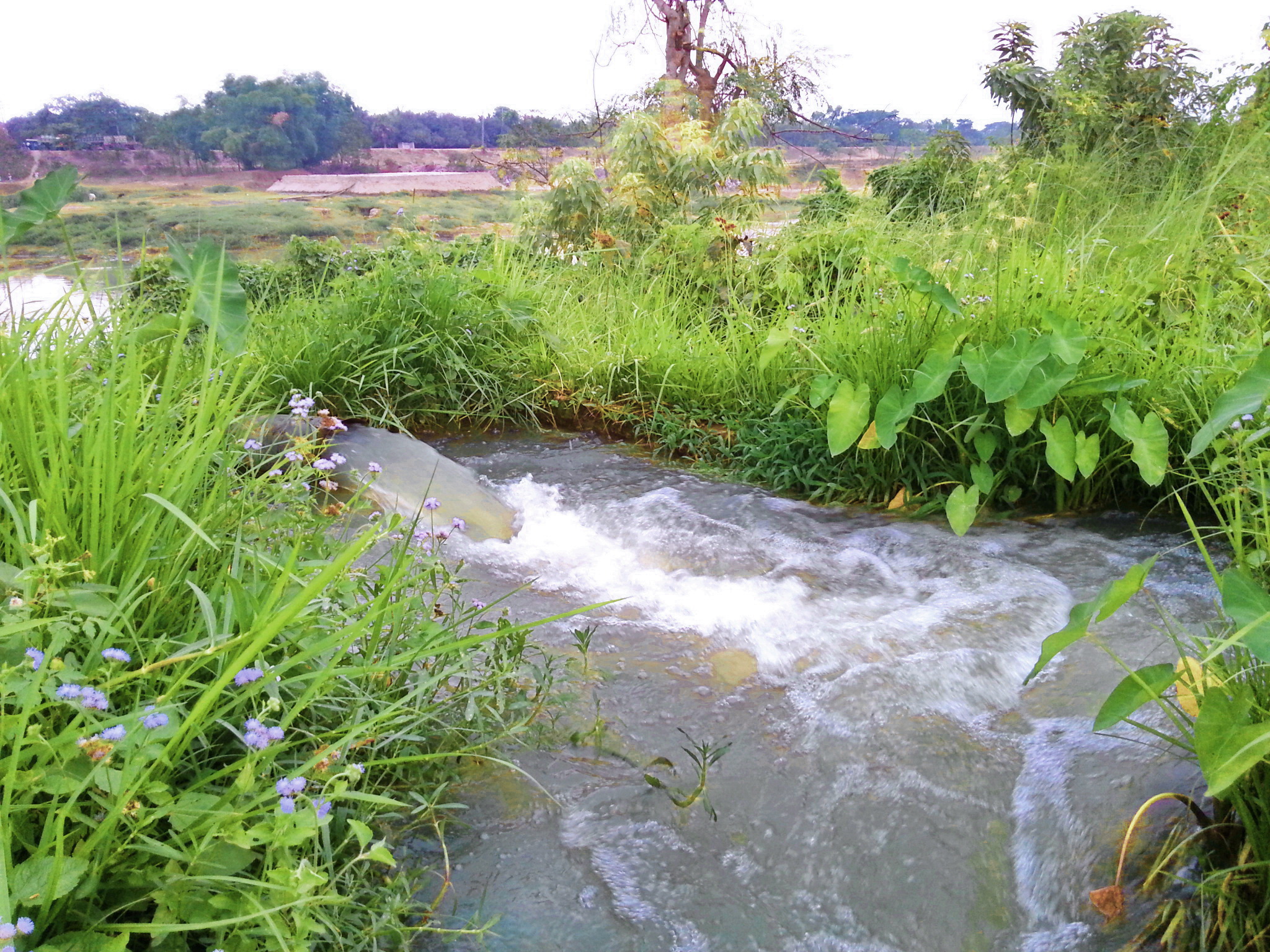
Most small irrigation schemes like the one at Mohishbandi rely on shallow tubewells. Banglapedia describes a shallow tubewell as a motorised device for irrigating a smaller area: the well is usually less than 30 metres deep, the engine or motor is of 4 to 8 horsepower, the discharge is under 28 litres a second, and the pipe is 10 to 12 centimetres across. It notes that shallow tubewells are used intensively in all parts of Bangladesh.
Deep tubewells are larger: wells of 60 to 90 metres, 20 to 30 horsepower and a discharge of 56 to 84 litres a second, using turbine pumps that can work where the groundwater lies beyond the reach of suction pumps. Low-lift pumps draw surface water from rivers, canals and ponds. Banglapedia adds that about 94 percent of the country's irrigated land is under small and minor irrigation, and that the overall efficiency of irrigation is only about 30 percent.
Boro has become the country's most important rice crop by output. Banglapedia's entry on rice shows that in 2009-10 boro occupied about 41 percent of the rice land but already produced more than either aman or aus. More recent figures were reported in January 2026: The Daily Star, citing the Food and Agriculture Organization (FAO), said the 2025 boro crop reached a record 3.17 crore tonnes, around 55 percent of the year's total output, while boro acreage rose by 3.35 percent to 50.5 lakh hectares, according to the DAE. The FAO estimated total paddy output in 2025 at 6.2 crore tonnes.
Those numbers show why a few silent pumps in one village mattered to the people who farm there. Each boro field is part of the crop on which the country's rice supply most depends, and in districts like Gaibandha it can be grown only with pumped water.
Saving water with alternate wetting and drying
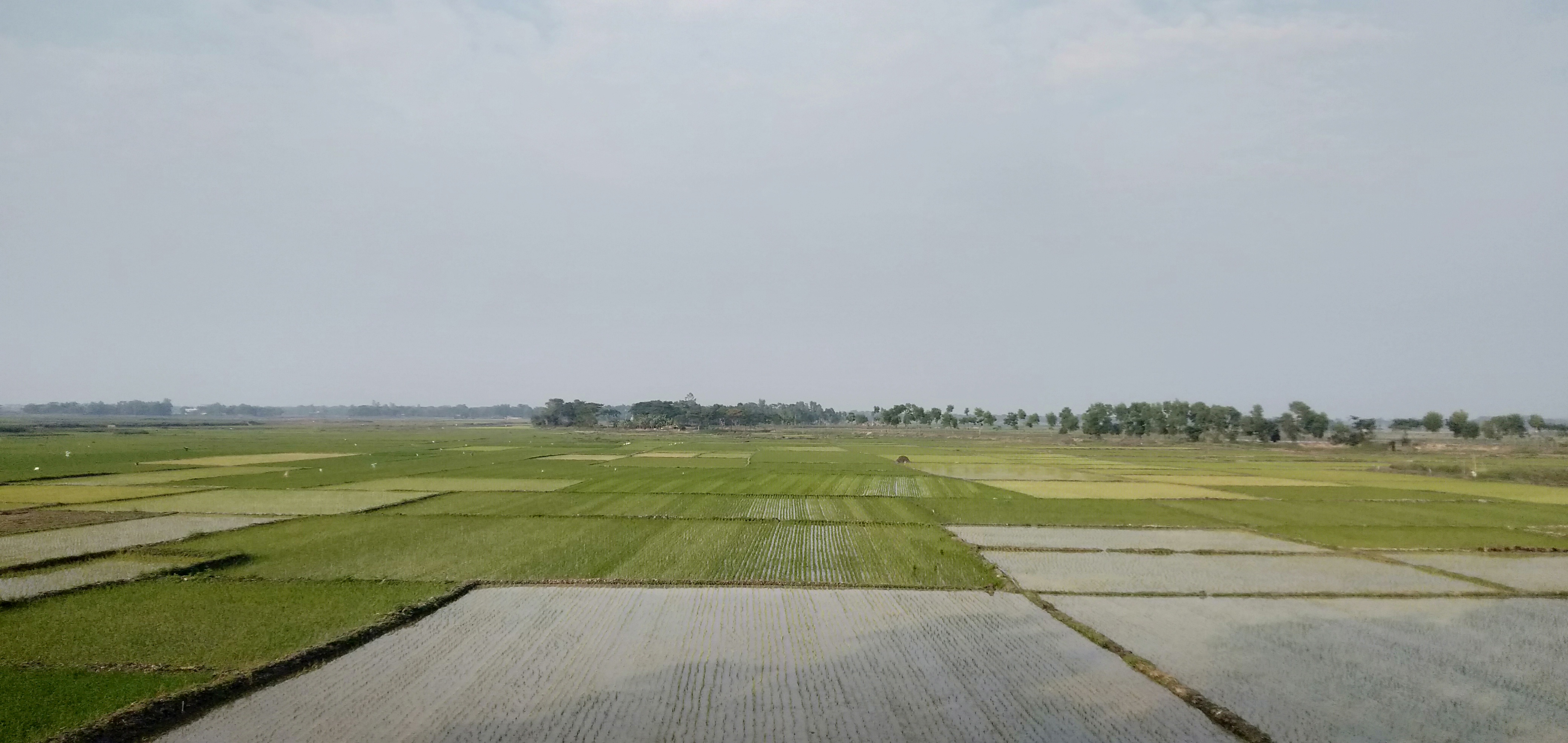
The DAE's push for alternate wetting and drying (AWD) in the Rangpur region, mentioned in the BSS report of 16 February, is aimed at cutting the amount of water, and so the pumping cost, that boro needs. IRRI describes AWD as a water-saving technology that lets farmers reduce irrigation water in rice fields without lowering yield. Instead of keeping the field flooded all the time, the farmer irrigates again only a few days after the standing water has disappeared, so the field is alternately flooded and not flooded.
IRRI's fact sheet sets out a simple way to do it safely:
- Make a field water tube ("pani pipe") about 30 centimetres long from plastic pipe or bamboo, 10 to 15 centimetres wide, with many holes on all sides.
- Hammer it into the soil so that 15 centimetres stand above the surface, and remove the soil from inside so the water level can be seen.
- After irrigation, let the water level fall; when it is about 15 centimetres below the soil surface, irrigate again to a depth of about 5 centimetres.
- Keep the field flooded from one week before to one week after flowering, then let the level fall to 15 centimetres again during grain filling and ripening.
- Start AWD one to two weeks after transplanting, or two to three weeks later where weeds are heavy.
Under AWD, IRRI says, the local fertiliser recommendations for flooded rice can still be used, and nitrogen fertiliser is best applied on dry soil just before irrigation. For specific advice on fertiliser and irrigation schedules for boro, farmers can consult their upazila agriculture officer.
Photo: Ibrahim Husain Meraj / Wikimedia Commons (CC BY-SA 3.0)
Sources: Jagonews24, BSS (Bangladesh Sangbad Sangstha), The Daily Star, Daily Star Bangla, Banglapedia, Rangpur Palli Bidyut Samity-1, International Rice Research Institute (IRRI)
Comments
(0)