
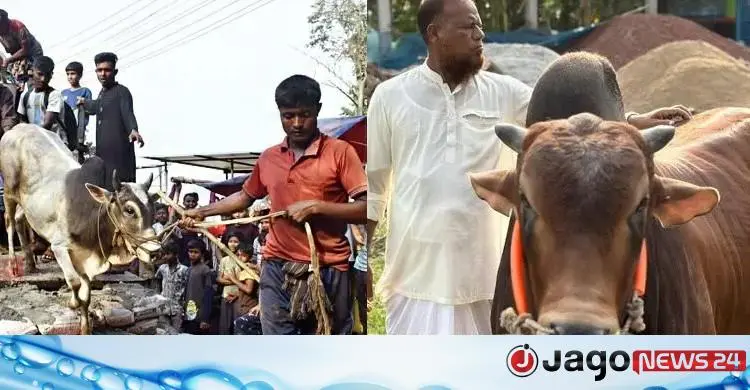
Qurbani is not just a religious festival; it also reflects the rural economy, farmers' dreams and a whole year of work by livestock farmers. Around the festival, farmers across the country spend years raising cattle, goats and buffalo. When those animals arrive at the markets in truckloads before Eid, the whole country changes.
Transporting animals is far from easy. On long journeys farmers and traders face many problems: accidents, extreme heat, traffic jams, shortages of feed and water, and animals falling sick all add up to a big challenge. Animals brought in hope of a good price often lose weight, fall ill or even die for lack of proper transport.
So moving a sacrificial animal is not simply taking it from one place to another; it is a planned, careful and responsible process. With the right preparation and safe transport the animal suffers less, stays healthier and the risk of financial loss falls. Here is how to take sacrificial animals to market safely and with less suffering.
Choose the right market
Not every market pays the same price. Some markets want big cattle, while at others medium cattle sell faster. Get in touch with traders or wholesalers you know. You can also get an idea from Facebook groups, phone calls or online animal markets.
Check the animal's health
Before the journey, check whether the animal has a fever, sores in the mouth or excessive drooling, swollen legs, difficulty breathing or loss of appetite. A sick animal cannot bear a long journey and may even die on the way, so it is best to consult a nearby veterinarian. One sick animal can also infect the others on the truck.
Feed lightly before loading
It is better not to give the animal too much bran or heavy feed. Give light grass and a moderate amount of water, and stop heavy feed four to five hours before loading. Many think an animal fed well before loading will stay strong, but the opposite may be true: standing for long on a full stomach causes discomfort, vomiting and gas. Water, however, must not be stopped altogether.
Use a suitable vehicle
The vehicle must have a strong bamboo or iron enclosure, a floor that is not slippery and ventilation. A roof protects against sun and rain. Animals must not be crammed in. In Bangladesh animals are usually moved by truck, pickup or boat, but not every truck is fit to carry animals. Often, in the hope of extra profit, more animals are loaded than a truck can hold, so they fall and get hurt, struggle to breathe or even die. Each large animal must have enough room to stand.
Load gently
A frightened animal suddenly jumps, gets hurt, injures others with its horns or falls itself. A common sight in the country is animals being beaten onto trucks with sticks or ropes, which is not only cruel but dangerous. Animals should be loaded slowly, using a wooden ramp if needed. Blindfolding often reduces fear, and an animal climbs more easily if an experienced person is in front.
Stop for rest and water
If possible, stop the vehicle at regular intervals. Give water, check the animals and sprinkle water on them in extreme heat. The trip from a village to a city market can take 8–15 hours, and animals should not be kept standing all that time without a break. Heatstroke is a major risk in hot weather, so travelling at night is often safer than at midday.
Carry the right papers
When moving animals, carry the farm's identity papers, purchase receipts, a veterinary health certificate, a copy of your national identity card and transport papers. At many checkpoints police or officials ask to see documents, so be prepared in advance. Having them means less harassment.
Beware of brokers
At the markets, brokers demand extra tolls, try to force a spot in the market on you and threaten that nothing will sell without their help. In the Eid season some dishonest people target farmers on the road or at the market, and new farmers suffer most from brokers. In such cases seek help from the local administration or the market committee, and stay in touch with traders you know.
Care at the market
On reaching the market, let the animal rest, give it water, clean it and arrange feed. The job is not over once the animal is unloaded and stood up for sale. Many farmers wash cattle to make them shine, but it is better not to use anything extra. A clean, healthy animal catches buyers' eyes quickly.
For the animals' security, keep watch at night, tie ropes firmly and do not hand responsibility to strangers. If possible, stay together in a group; animals are often swapped or stolen while people sleep.
Avoid harmful injections
Some dishonest traders use harmful injections to make cattle look fat. This is dangerous for the animals and harmful to human health too. Healthy, naturally raised animals are now in greater demand, and careful buyers watch an animal's behaviour, eyes and gait.
A little awareness, the right planning and humane treatment can make the animal's journey safe and comfortable. This keeps animals healthy, reduces risk and at the same time increases the chances of profit for farmers, livestock keepers and traders.
Source: Jagonews24. First published in Bengali on The Agro News.
Comments
(0)