
Rural women in Bangladesh play an important role in agriculture. Besides tending the land, women now take an active part in almost every stage of production, and productivity is rising. Yet their contribution to the sector goes unrecognised, because control of the market economy lies entirely with men, a major obstacle to women's empowerment.
Success without recognition
Fahima married Amjad, who worked for a private company in Gabtali upazila of Bogura. When her husband lost his job some time later, she planned to grow vegetables to earn money, and her fortunes soon changed. This season (the 2020-21 financial year) Fahima grew bottle gourd, aubergine, radish, tomato, sweet pumpkin, khira cucumber, cabbage, chilli, yardlong beans, bitter gourd, Malabar spinach and other vegetables on 75 decimals. Her total output was 49 maunds, double last year's. With her own earnings she expanded the business and bought ten decimals of land, and she also keeps a milk cow and native chickens. Even so, she has not been socially recognised as a woman farmer.
Speaking to this reporter by mobile phone, Fahima Begum said: "How much hardship I have gone through in life! After all of it I have succeeded by growing vegetables. Still this society does not recognise it. I have to take a shop allotment in my husband's name."
In Narsingdi, when Javed made losses growing bananas, his wife Ayesha started a nursery business with his help. As the nursery covers the homestead yard, she works on it alongside the housework, and the family is now self-reliant. The venture is Ayesha's, but the credit for its success now goes to Javed alone.
Women in 17 of 20 farm tasks
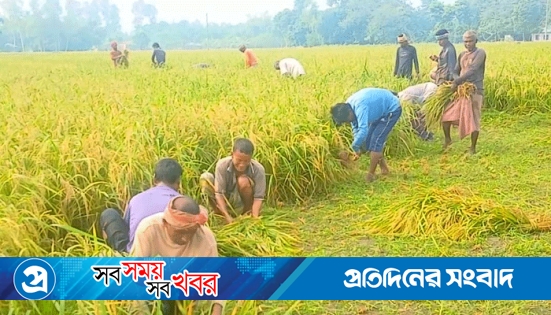
Not only Fahima or Ayesha: the labour of most rural women is hidden in this way behind unpaid household work. Rural women contribute equally with men to crop production, livestock and poultry rearing, vegetable and fish farming and forestry, playing an important role in the national economy. According to Karmojibi Nari, women take part in 17 of the 20 tasks in agriculture. Yet they are deprived of farm credit and government support for farmers.
A 2012 report by the Campaign for Sustainable Rural Livelihoods says the country's female labour force is 1 crore 62 lakh, of whom 77 per cent are rural women, and 68 per cent of those are involved in agriculture, poultry, forestry and fisheries. Research by the Bangladesh Institute of Development Studies (BIDS) found that 41 per cent of rural women are involved in potato cultivation and 48 per cent in fish farming.
Shahana Huda Ranjana, coordinator of Manusher Jonno Foundation, said recognising and valuing rural women's many-sided role and contribution is one of the key achievements on the path to women's empowerment, because such recognition ensures food security as well as rural development.
Sabina Yasmin, a member of Naripokkho, said the Sustainable Development Goals have been set for 2030, and it must be ensured how women take part in the rural economy. Women's labour in the family is unrecognised, and the rural economy cannot progress without women, she said.
It is against this background that the International Day of Rural Women is being observed today, with the theme "Rural women cultivating good food for all". As in other countries, various voluntary and development organisations in Bangladesh have taken up programmes to mark the day.
Source: Samakal. First published in Bengali on The Agro News.
Comments
(0)