
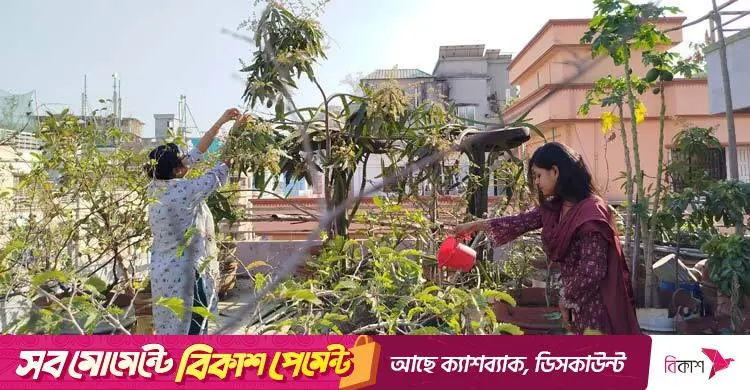
There was a time when cities, like villages, had many kinds of trees: shady paths, birdsong and greenery all around. But trees are dwindling day by day, felled in the name of development whether needed or not. Today the city is tired, its air heavy with smoke, surrounded by walls of brick and stone, with a suffocating daily mechanical routine. It is hard to breathe.
Nature seems to have left the city for somewhere far away. Yet the hope of bringing it back is still alive: if we want, we can green this city through rooftop gardens. A rooftop garden is no longer just a hobby; it is a quiet revolution to keep the city alive.
When we are worn out by the monotony, heat, pollution and artificial life of the city, a rooftop garden becomes the oxygen we need. A plant sprouting from the soil of a small pot is not just leaves: it is the right to breathe and the hope of a living world.
For World Environment Day, this feature looks at the importance of rooftop gardens in protecting the urban environment, and how this small step can bring big changes to our lives.
The city's lungs
We move around a city where car smoke, toxic factory gases and heavy dust make it hard to breathe. Plants absorb this pollution and purify the air. If every roof in the city became a green garden, these small lungs together could create one big breath. A rooftop garden means giving birth to clean air in the heart of the city.
Less heat, more comfort
The city's concrete roofs heat up in the sun, raising indoor temperatures, which pushes up electricity bills and reduces comfort. A rooftop garden shields the roof from direct sunlight, keeping rooms much cooler. It works like an eco-friendly natural air conditioner, smoothly and at no cost.
Peace of mind
Our greatest lack today is peace of mind. Work pressure, mechanical routine and social isolation leave us exhausted. A rooftop garden offers a shade of relief amid that fatigue. Spending time with plants, digging the soil and sowing seeds by hand, watching buds open: all of this is a kind of therapy. There is no better way to lift the mood.
A source of safe food
It is hard to trust vegetables bought from the market these days, with no control over which pesticides or chemicals have been used. Every fruit at the market is ripened with formalin, so people are afraid to eat them too, and they are especially harmful for children. In a rooftop garden you grow the food yourself and know what you give your plants, so it is healthy and free of poison. It becomes a safe food source for the family.
A more beautiful city
A rooftop garden does not only protect the environment; it makes the city more lively. Flower pots, fruit or gourd vines on the roof, the hum of bees and the wings of butterflies together create a wonderful beauty. When someone standing on a tall building sees rows of colourful flowers and vegetables on roof after roof, they see the city with new eyes, a little more lovingly and hopefully.
Holding rainwater
Waterlogging during rain is a major problem in the city. A rooftop garden helps absorb rainwater and releases it slowly into drainage, easing pressure on drains and improving water management. So a rooftop garden is not just beauty but a small yet effective way to tackle an infrastructure problem.
Building family bonds
Caring for a plant means building a relationship. When parents and children plant, water and enjoy the fruit together, family ties deepen. Leaving mobile screens for real life and doing something together increases love and connection in the family.
A classroom for children
Children today are cut off from nature. They do not know how a plant grows, which leaf smells of what, or how flowers become fruit. A rooftop garden can be their real-life classroom, where they learn patience, care and responsibility, and a love of nature can grow from that small garden.
Environmentally aware citizens
Through rooftop gardening, a person becomes aware of the environment, cares for plants, tries to create less waste and learns the value of natural living. This small step turns a person into an environment-friendly citizen, ready to take responsibility for future generations.
Source: Jagonews24. First published in Bengali on The Agro News.


Comments
(0)