
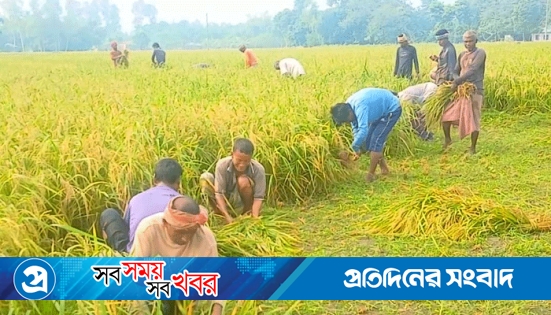
The paddy harvest in the haor areas is almost over, and in other parts of the country it is still going on. Farmers should remember that if paddy is cut when it is over-ripe, many grains shed, the panicles break, and the crop can be attacked by the panicle-cutting caterpillar and by birds. So they need to go to the field and check whether the paddy is ready: when the grains in 80 per cent of the panicle are hard and translucent, the crop can be taken as properly ripe.
Cutting the paddy is not the end of the job. Rather than leaving it lying in the field, it should be threshed as quickly as possible. When threshing on a bare earthen yard, spread a mat, sacking or polythene underneath; paddy threshed this way keeps a bright, clean colour. Threshed paddy should be dried well in the sun for at least four to five days, then winnowed and stored.
Choosing seed paddy
A good yield needs good seed. Seed should be kept from fields where the paddy ripened well, was not attacked by disease or pests, and was free of weeds. Before harvesting, remove the off-type plants: those that differ slightly from most plants in the field in size and shape, type of panicle, grain size, shape and colour, and time of ripening. All diseased plants must also be removed. The crop should then be cut, threshed and winnowed separately, dried well in the sun and stored.
Steps for storing seed
- Dry the seed well in the sun for five to six days, so that its moisture stays below 12 per cent. If a seed makes a cracking sound when bitten, it is properly dry.
- To pick out plump grains, winnow the seed with a kula (winnowing tray) at least twice.
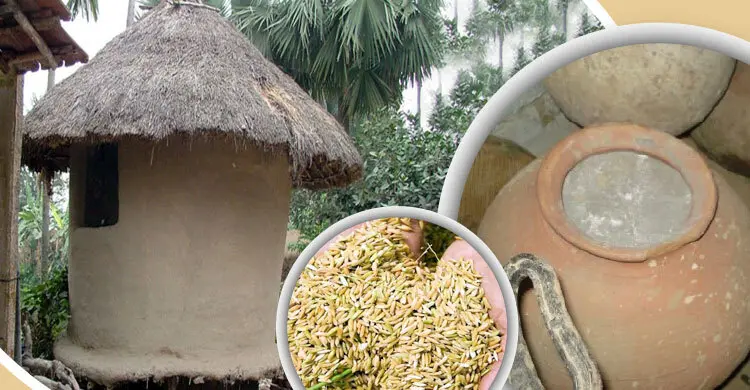
- Keep seed in airtight containers. Drums and biscuit or kerosene tins are good for storing seed.
- If seed is kept in an earthen jar or pitcher, coat the outside twice with coal tar and let it dry.
- Seed can also be stored in thick, moisture-proof polythene.
- Let sun-dried seed cool before filling the container, and fill it completely. If there is not enough seed to fill it, lay paper over the seed and top the container up with dry sand.
- Close the mouth of the container tightly so that no air can enter, and keep it where its base does not touch the ground.
- Mixing 3.25 kg of powdered neem, nishinda or bish katali leaves into each tonne of paddy before storage keeps insects away.
Citing the Agricultural Information Service.
Source: Jagonews24. First published in Bengali on The Agro News.

Comments
(0)