
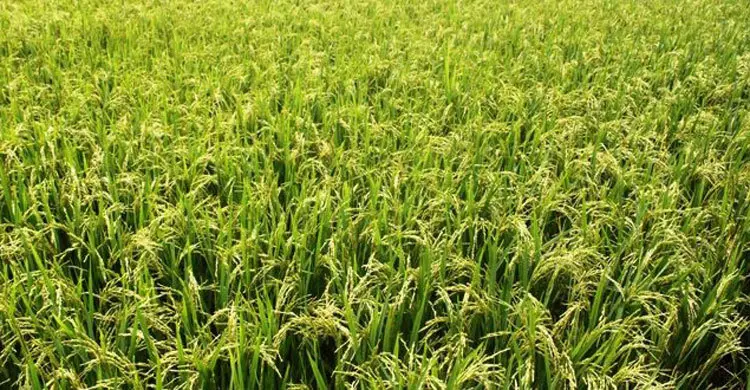
Rice plants across the country are now at the maximum tillering and booting stage. With nor'wester storms, rain and the rise in temperature and humidity that follows, outbreaks of stem borer, brown planthopper, leaf folder and rice bug may increase. The Bangladesh Rice Research Institute (BRRI) has therefore told farmers what to do to control rice pests.
The institute says farmers can inspect their rice fields regularly and take measures as needed.
Stem borer
The larvae of the stem borer damage rice plants. To protect the crop, collect and destroy the pest's egg masses. Planting branches in the field lets insect-eating birds perch there and reduce the pest's numbers.
Attract and kill the moths with light traps in the evening. If 10–15 per cent dead hearts or 5 per cent white heads are found in the field, apply any one of the following approved insecticides at the correct dose: Minecto Xtra 40SC, Vayego 20 SC, Vayego Superb 1 GR, Belt Expert 48SP, Batir 15 SP, Suntap 50 SP, Dursban 20 EC, Marshal 20 EC or Virtako 40 WG.
Brown planthopper
Both young and adult brown planthoppers sit at the base of the rice plant and suck its sap. To protect the crop, use light traps, and drain standing water from the field if the pest is likely to increase.
Avoid top-dressing fertile land with urea. When the attack reaches the economic damage threshold, that is, when four egg-bearing, fat-bellied adult females or 10 nymphs or both are seen, apply any one of the following approved insecticides at the correct dose at the base of the plants: Bio-Chamak, Ras 45 SC, Nimazol 1.2 EC, Prinam 50 WG, Ektara 25 WG, Mipcin 75 WP, Admire 20 SL, Sunmectin 1.8 EC, Asataf 75 SP, Platinum 20 SP, Marshal 20 EC or Suntap 50 SP.
Leaf folder
After hatching, the larvae use their saliva to roll the leaf lengthwise into a tube and scrape away the green part of the leaf from inside the fold.
Light traps also protect the crop from this pest. Set up perching in the field and avoid excessive use of urea.
If 25 per cent of the leaves in a field are damaged, apply any one of the following approved insecticides at the correct dose: Success 2.5 SC, Entrust 45 SC, Sevin 85 WP, Dursban 20 EC or Mipcin 75 WP.
Rice bug
The rice bug attacks the grain. Both young and adult bugs suck sap from the grains. If they feed when the grain is at the milk stage, the grains become empty.
To protect the crop, use light traps as well, and if on average one rice bug is seen per 2–3 hills, apply any one of the following approved insecticides at the correct dose: Dursban 20 EC, Mipcin 75 WP, Sevin 85 WP or Fifanon 57 EC.
Insecticides should be applied in the afternoon, and should not be applied during rain.
Source: Jagonews24. First published in Bengali on The Agro News.


Comments
(0)