
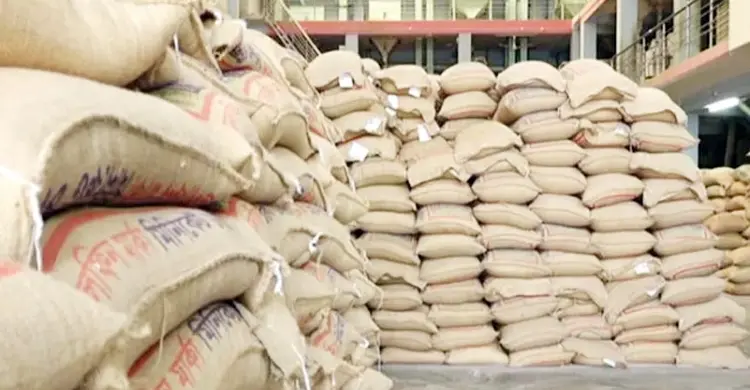
Some traders are calling for the big industrial groups to be reined in to keep the rice market stable, and are blaming them for the abnormal rise in prices. The food minister has backed them and called a meeting to check the claims. Yet an analysis of production capacity shows that the big groups' share of the rice sold in the country's market is less than one per cent. The corporate firms say it is in no way possible to control the market with such a nominal share.
Bangladesh now produces about four crore tonnes of rice. About 62 per cent of it is sold on the market and the rest is consumed by the producers themselves, according to research by the Bangladesh Rice Research Institute (BRRI). By that reckoning, about two and a half crore tonnes of rice are sold on the market each year.
Capacity of the six big firms
Annual production figures for the big groups' mills show that the six largest rice-marketing companies together have a maximum milling capacity of only 3 lakh 14 thousand tonnes, while actual output is under two lakh tonnes a year. Excluding aromatic and other types, the amount of ordinary table rice comes to around one and a half lakh tonnes. Against the overall market, the groups' share is purely nominal.
The data show that Meghna Group now has the largest share of the rice market, with an annual capacity of roughly 1 lakh 20 thousand tonnes. About 80 per cent of what it processes is parboiled rice and the rest atap (sun-dried) rice.
City Group, in second place, has a capacity of about 78,000 tonnes a year, 90 per cent parboiled and hybrid and the remaining 10 per cent aromatic rice. Next come ACI with 40,000 tonnes, Square with 30,000 tonnes, Pran with 28,000 tonnes and Akij with 18,000 tonnes. Of their output, about 60 per cent is table rice and the rest aromatic.
Traders' complaints and the minister's meeting
Despite their small share, the big groups have at various times been blamed for raising rice prices. Rice traders in particular have made this complaint to Food Minister Sadhan Chandra Majumder over the prices that suddenly began rising after the election. Last Wednesday, large, medium and small rice mill owners and retail and wholesale traders were called to a meeting at the Directorate General of Food, where they alleged that big companies had pushed the market up by buying paddy and rice at higher prices. They made the same complaint to the state minister for commerce at a traders' meeting at the Mohammadpur Krishi Market.
Against this background, the food minister held a meeting with the six big corporate firms at his office in the Bangladesh Secretariat on Monday (22 January) afternoon. The companies set out their position in the market, their capacity and their buying and selling figures.
The corporate representatives said controlling the market with such a small share was never possible, and that rice traders and small mill owners were making the allegations to damage the big firms' brand value.
What the companies say
Amin Siddiqui, chief financial officer (CFO) of City Group, told Jago News: "Our capacity is so small, and still we are being blamed without any understanding! In fact, one side is pointing fingers at others to hide its own fault."
He said: "The allegation that big companies are buying rice at inflated prices is also baseless, because there is competition between every company. No official of a company can buy at a higher price just because he wants to. Every company competes to buy rice at the lowest price. When selling, too, the big companies are under pressure to sell quickly on thin margins."
Amin Siddiqui said: "Rather, small traders who own a mill and run everything themselves can buy at whatever price they like. They are not accountable to anyone. Besides, every one of our companies has to report its stock, purchases and sales regularly, so we have nothing to hide."
Asked why prices had risen, he said: "A class of unregistered hoarders who bought and stockpiled rice in the name of stock business have destabilised this market."
Parvez Saiful Islam, chief operating officer of Square, told Jago News: "A large part of the rice the big companies supply to the market is aromatic rice. The big companies do not have much of a presence in the table rice market."
He said: "Even so, everyone has a responsibility to keep rice prices stable. From that standpoint, the big companies are being asked to control their rice purchases. We are cooperating on that so that the overall market comes down somewhat."
Parvez Saiful Islam said: "The corporates cannot even use their full production capacity. If someone's fortnightly capacity is 100 tonnes, his output does not reach all of that, and he cannot hold stock of more than three times that. Taking all this into account, it is in no way possible for just a few companies to control such a large market."
Kamruzzaman Kamal, director (marketing) of the Pran-RFL Group, told Jago News: "After the election, retail and wholesale rice prices rose by up to six taka. Yet the price of Pran's rice has not risen by a single taka in the last four months."
Minister's instructions
At Monday's meeting, Food Minister Sadhan Chandra Majumder told the big companies that since rice prices were rising, they must now refrain from competing to buy paddy on the market. No illegal stock beyond capacity would be allowed, and from now on the mill-gate price of rice must be printed on the sack.
He said he had earlier met millers, who said the corporate firms were competing to buy paddy and stockpile it. "If the corporate firms did not trade in coarse rice, there would have been no need to sit with us. The millers point the finger at you. The media also blames you. We want to know the real picture."
Five hands between farmer and consumer
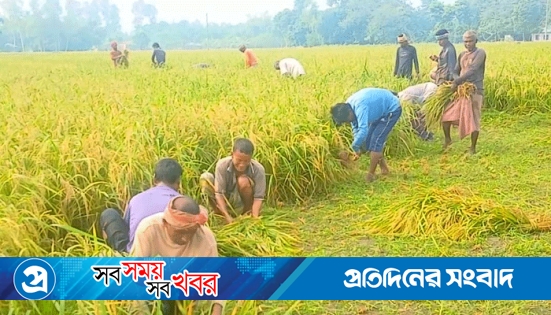
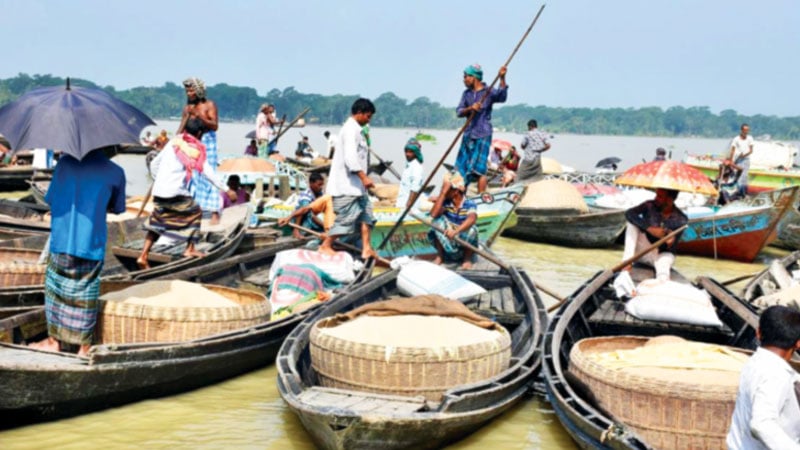
Data show that paddy and rice change hands five times between farmer and consumer in Bangladesh, and each time costs and profit are added. About 62 per cent of the rice produced in the country is sold on the market, with the highest share, 66.2 per cent, sold in the Boro season.
A BRRI study found that five parties are mainly involved in the paddy and rice trade: the farmers themselves, faria (small traders), aratdars (wholesale commission agents), rice mill owners and rice retailers.
Production of Bangladesh's main food grain is rising every year, so imports are not needed. Amid the dollar crisis and other economic problems, the rice price situation was somewhat comfortable until the election. After the election, prices rose suddenly and abnormally, which has put the new government in an awkward position and increased cost pressure on people of all classes.
Source: Jagonews24. First published in Bengali on The Agro News.
Comments
(0)