
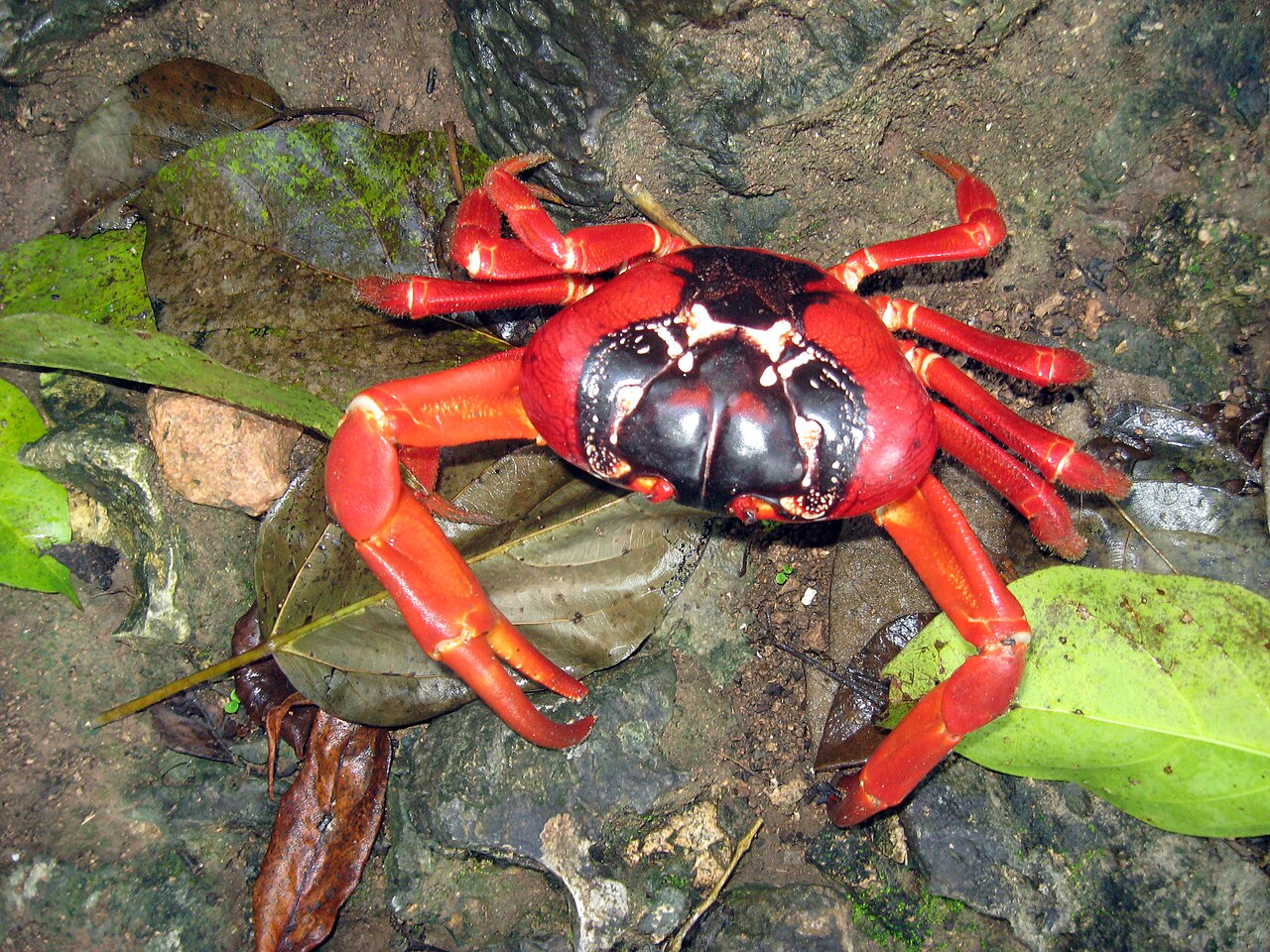
On Christmas Island, a remote island in the Indian Ocean, red crabs pour out of the forest every year at the start of the wet season, crossing roads and bridges on their way to the sea. The columns of crabs take over the roads so completely that the island seems to have no people at all. The purpose of the march is breeding, Ajker Patrika reports.
According to Australia’s parks authority, the moon and the tides set the timing. The crabs release their eggs before sunrise during the last quarter of the moon, when the high tide is falling, so at a particular time each year they leave the forest for the sea.
The island lies 350 km south of Indonesia and more than 1,000 km from the Australian mainland. Local conservation staff spend months preparing to keep the migration safe. Christmas Island National Park manager Chris Chartres said people come from all over the world to see it.
Long-running conservation work has been key to the crabs’ recovery, Chartres said, above all control of the yellow crazy ant. The ant, the red crab’s worst enemy, once took over crab burrows and the habitat of tens of millions of crabs, displacing huge numbers of them.
Thanks to ant control and other measures, the crabs have bounced back: conservation staff estimate that there were once 50 million on the island and now there are more than 100 million. The rise is a sign the crabs are healthy, Chartres said, and because red crabs keep the island’s forest in balance, the whole ecosystem benefits when they thrive.
Photo: Dragon187 / Wikimedia Commons (CC BY-SA 3.0)
Source: Ajker Patrika

Comments
(0)