
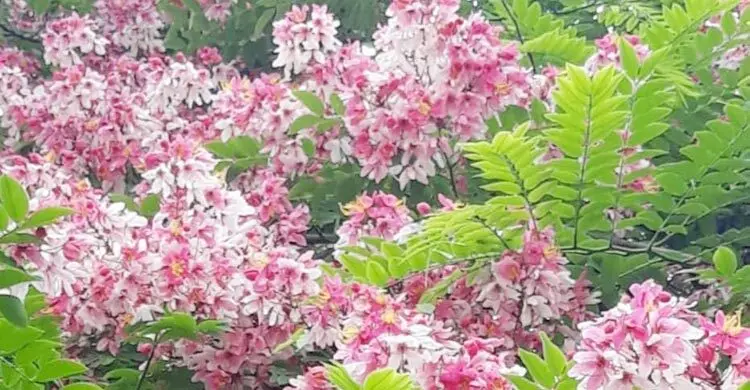
Cassia javanica, known as lal sonail or lal sonalu, is one of the rare flowers of the country. The flower has been seen at several places in Rajshahi, its pink and deep red blossoms peeking out between the green leaves and catching everyone's eye.
Amid the scorching summer heat, Rajshahi city has dressed itself in green trees and flowers of many colours. Krishnachura, jarul, sonalu and others have filled the surroundings with colour, and among the most notable is the lal sonail or lal sonalu, whose scientific name is Cassia javanica.
Origin and growth
The flower is native to South-East Asia and grows as a garden plant in tropical regions of the world. In Bangladesh it blooms between February and April, although its flowering time varies from country to country with the climate.
Cassia javanica is a fast-growing tree. Although it is called lal (red) sonail or lal sonalu, its flowers carry more of a pink tint. The beautiful blossoms are enchanting, and passers-by stop, if only for a moment, to enjoy them.
Herbal and industrial uses
Besides its beauty, the lal sonail has many herbal benefits. It has been used since ancient times to treat constipation, colic and chlorosis. The plant's leaves play an effective role against herpes simplex, a viral infection. Its bark is one of the ingredients of antidiabetic formulations in Ayurvedic and other traditional medicine.
The bark is also used in the tannery industry. The saying heard since childhood, that looks come first and qualities after, finds a fine example here: this rare plant wins everyone's heart with its beauty while being full of useful qualities.
The writer is a student at Rajshahi College, Rajshahi.
Source: Jagonews24. First published in Bengali on The Agro News.

Comments
(0)