
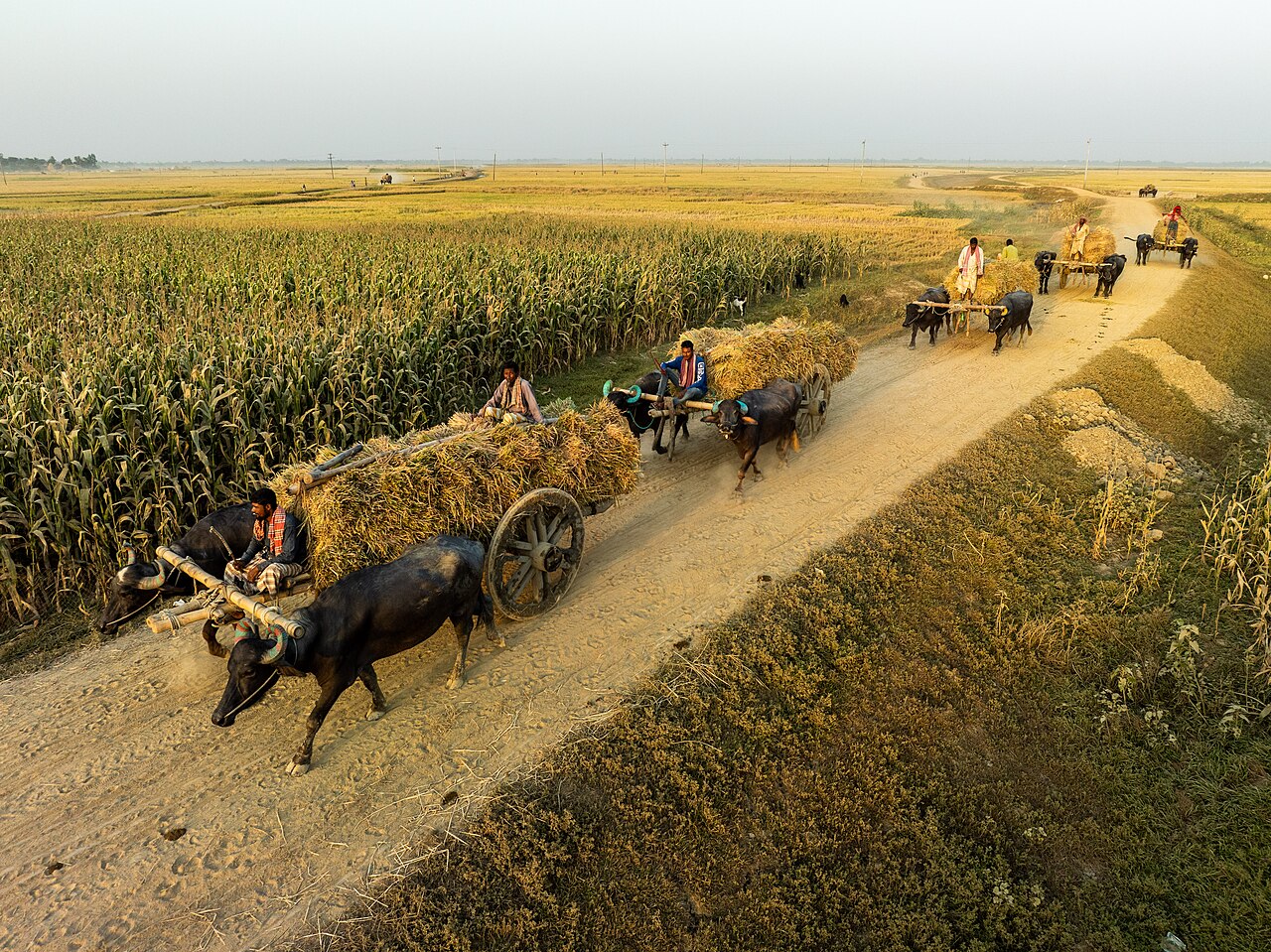
In Gangachara upazila of Rangpur, women work as farm labourers alongside men at almost every stage of cultivation, from planting to harvesting and threshing paddy, but they are paid less. A male labourer locally earns Tk 500 to 600 a day; a woman doing the same work gets Tk 350 to 400, which means Tk 100 to 200 less every day.
In a paddy field at Kaliar Mor in Nohali union, Arati Rani (35), Palashi Rani (40) and Rupali Rani (30) were cutting paddy with the men, harvesting and tying sheaves. There is little difference in the work, only in what they take home at the end of the day.
The women said they come from poor families and take up field work for extra income, finishing their housework in the morning and working from morning to late afternoon in sun and rain during the season. Palashi Rani, speaking in the local dialect, said they keep pace with the men cutting and bundling paddy, yet are paid less. "We do the same work, so why won't they give us the same money?" she asked.
Women's work is central to farming in the upazila, from cutting paddy to bringing the crop home, yet the wage gap has gone on for a long time, and they keep working for less because their households need the money. People in the area are calling for women's labour to be valued properly and for equal pay for equal work. The report is by Krishi Shomoy's Rangpur correspondent.
Photo: Sultan Ahmed Niloy / Wikimedia Commons (CC BY-SA 4.0)
Source: Krishi Shomoy

Comments
(0)