
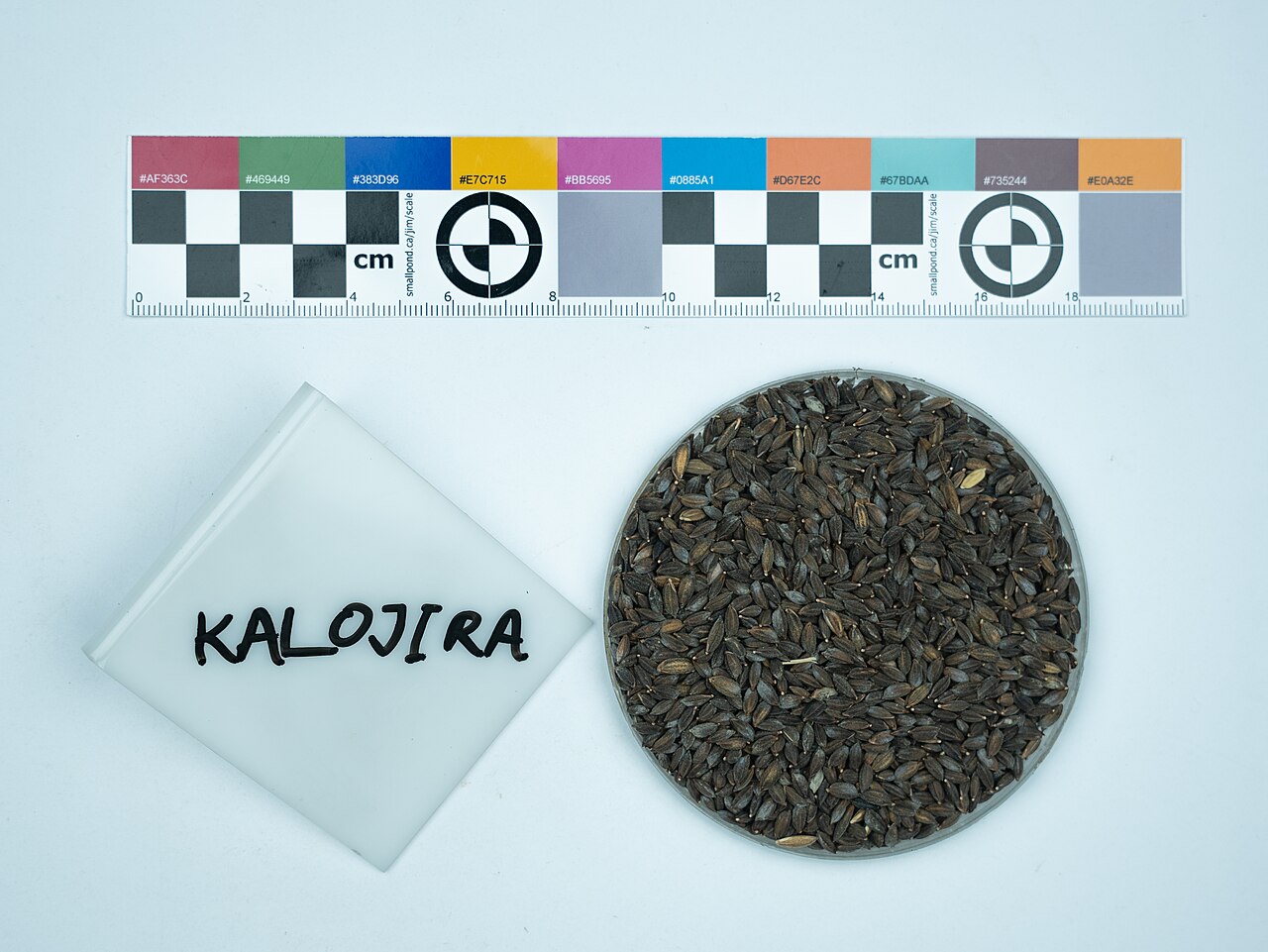
Farmers in Boalkhali upazila of Chattogram are giving up the fragrant Kalijira (kalojira) rice. This year it was grown on only 4.5 hectares in the upazila, against about 25 hectares five or six years ago. It now survives in scattered plots in Khitapchar, Amuchia, West Gomdandi and Jaistapura.
The rice, with its dark ears among the golden aman paddy, was once grown widely in the upazila. Its scented grain is used for pulao, biryani, khichuri, payesh, firni and zarda, and it was in demand at festivals. Farmers say shortages of seed, rising production costs and relatively low yields are driving them away from it.
Some still grow it for the price and the tradition. Taleb Ali, a farmer on the Uttar Tiur beel in Amuchia village, planted 10 decimals of Kalijira alongside his aman this year, with seed from a friend in neighbouring Saroatali union. The yield is a little lower than ordinary paddy, he said, but the price is higher: an arhi, a local measure, of the paddy sells for Tk 800 to 850.
Jamal Hossain, who farms on the Ahla Darbar beel in Karaldenga village, said the spread of high-yielding varieties, low output and the difficulty of keeping seed had slowly pushed farmers out of the crop. Monjur Alam of Boalkhali municipality once grew Kalijira on 20 acres; with every cost of cultivation up, tractor hire included, it is now almost a hobby for him. Seed used to be easy to find, he said, but is now scarce.
Upazila agriculture officer Md Shahanur Islam said many high-yielding aman varieties now give far more than Kalijira, which yields less and suffers more from disease. That is why the area under this traditional rice keeps shrinking. The report is by Krishi Shomoy's Chattogram correspondent.
Photo: ROCKY / Wikimedia Commons (CC BY-SA 4.0)
Source: Krishi Shomoy

Comments
(0)