
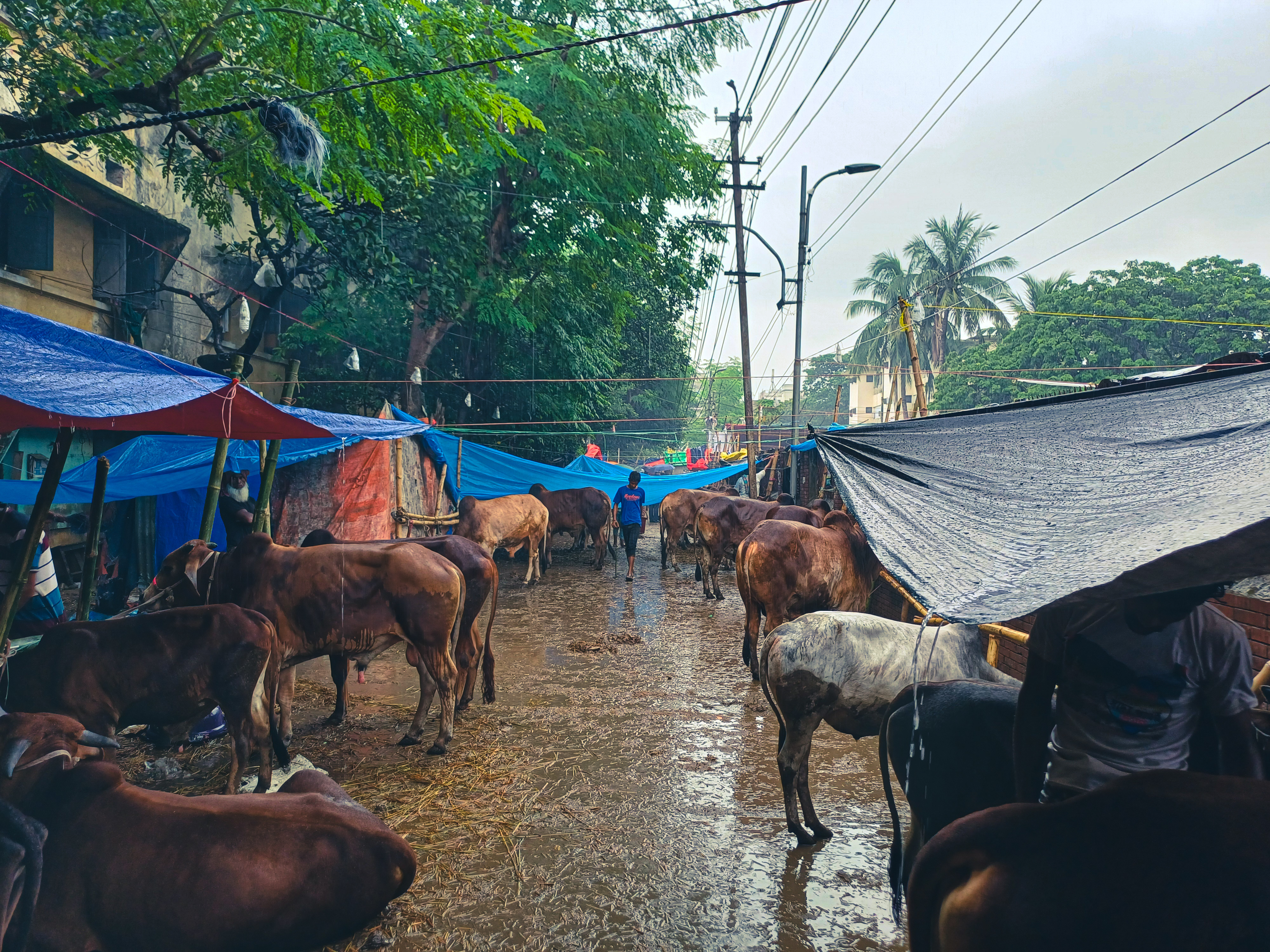
Ahead of Eid ul-Adha, a sudden heavy downpour at around noon on Tuesday, 26 May 2026, turned most of Dhaka's Shahjahanpur and Kamalapur sacrificial animal markets to mud and standing water. A large share of the buyers who had crowded in since morning quickly left, and traders who had brought cattle from districts across the country were left in difficulty. Jagonews24 reported the scene after visiting both markets that day.
The National Moon Sighting Committee had announced on 18 May that Eid ul-Adha would be celebrated in Bangladesh on 28 May. Citing the weather office, the Daily Inqilab reported at midday on 26 May that 80 millimetres of rain had been recorded in the capital over the previous 24 hours. A special forecast from the Bangladesh Meteorological Department warned of more rain or heavy thundershowers in and around Dhaka that day, with gusts of up to 40 km an hour.
Busy in the morning, empty by afternoon
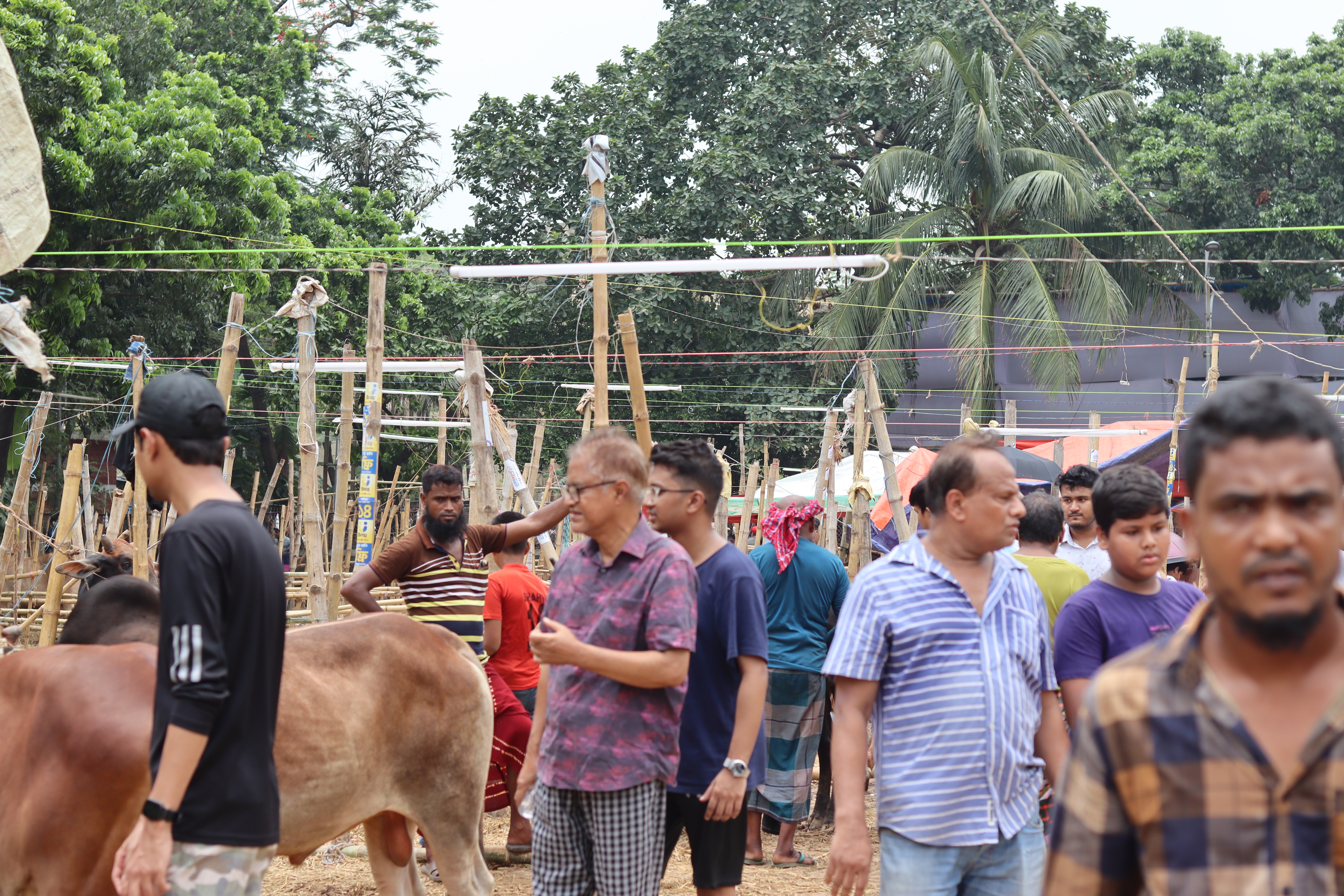
Both markets drew crowds from the morning, many of them families. After the heavy midday rain, walking inside the markets became difficult and water collected in places.
Abdul Malek, a trader from Kushtia at Shahjahanpur, told Jagonews that he had hoped for good sales from the morning and a few buyers had been bargaining, but they all left once the rain began. He said he had brought 22 cattle to Dhaka on three trucks; transport, feed and labour had cost much more this year, and with the animals soaked there was now a risk they would fall ill.
Saidul Islam, a trader from Pabna, said standing water made it hard to stay with the cattle, the straw was wet and he could not get the animals to sit down properly. He complained that the market lacked proper drainage, so even a little rain left it muddy and buyers did not want to stay long.
Md Asadul Islam, another Shahjahanpur trader, said sales had been good in the morning, but after rain the previous day there had been two more spells since that morning. He said many animals were now caked in dirt, which spoiled their looks, and cattle that got too wet could fall sick.
Wet cattle and higher costs worry traders
Kamalapur showed the same picture. During the rain many traders put up tarpaulins over their cattle, and some got soaked themselves trying to keep the animals dry. Buyers sheltered under covers, but most traders had to stay in the open.
Md Mintu Mia, a trader from Sirajganj, said transport had cost several thousand taka more than the year before, so a good price was essential, yet there had been no buyers since midday. Zakir Hossain, another Kamalapur trader, said cattle that get wet often catch cold and then eat less. Nur Islam, from Chuadanga, said the mud kept buyers away from the animals, though by his reckoning only one day was left before Eid.
People involved with the markets said crowds in Dhaka's cattle markets usually build in the afternoon and evening before Eid, but the rain could change that on the day. At Dhaka's Kachukhet market, too, buyers and traders suffered in the downpour and water collected on the roads; once it stopped, traders and farmers wiped the water off their cattle.
More animals than demand, and vets at every market
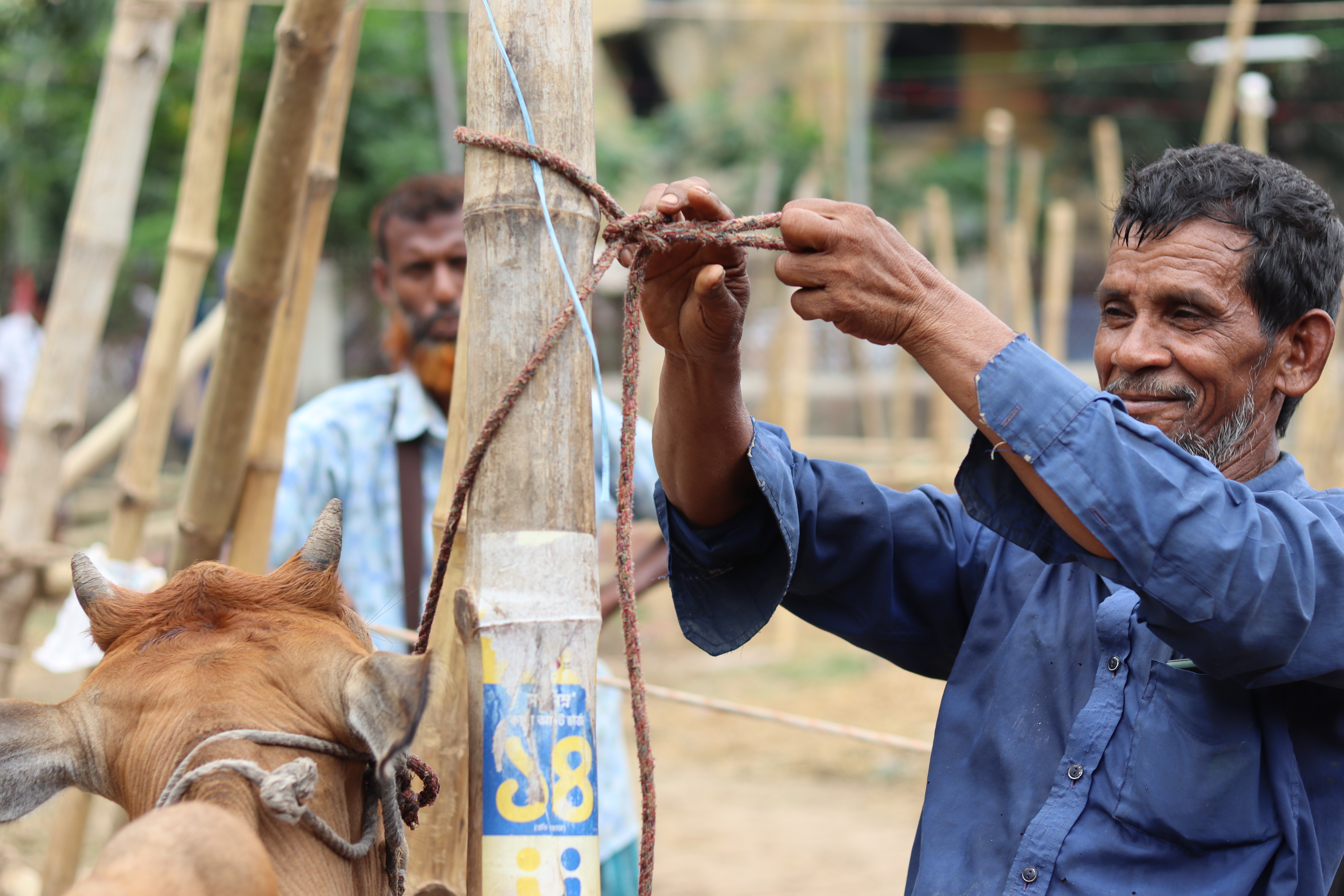
At a press conference at the Secretariat on 3 May, minister Amin Ur Rashid, citing the Department of Livestock Services (DLS), said 12,333,840 sacrificial animals were ready that year against an estimated demand of 10,106,334. They included about 5,695,878 cattle and buffalo, 6,632,307 goats and sheep and 5,655 camels, dumbas and other animals. By his figures some 2,227,506 animals would be left over.
The same briefing said more than 3,600 cattle markets would be held nationwide, 27 of them in Dhaka: 16 in the North City Corporation and 11 in the South. The minister said a team of specialist vets supervised by the DLS would be posted at every market so that any animal that fell ill could be treated quickly.
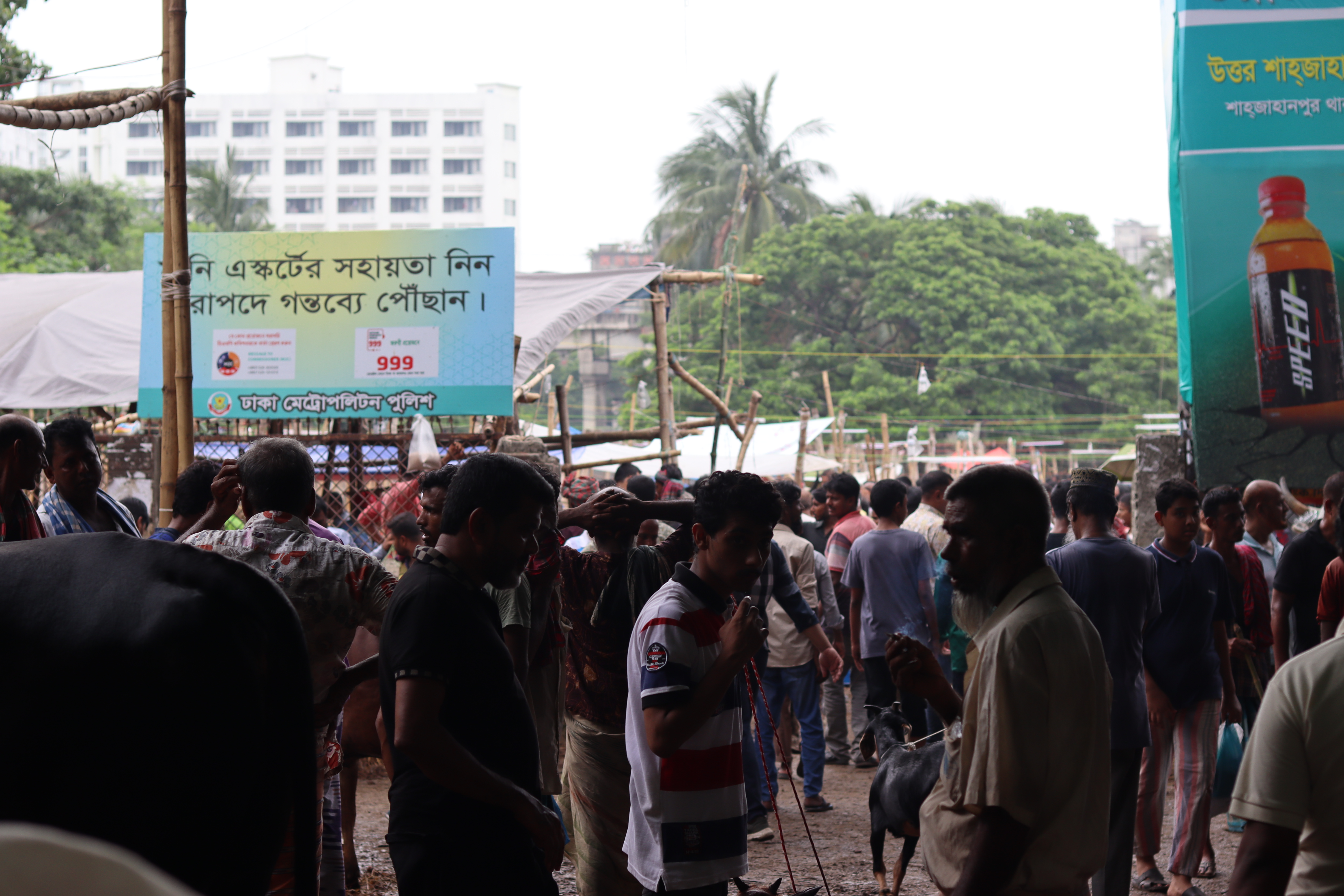
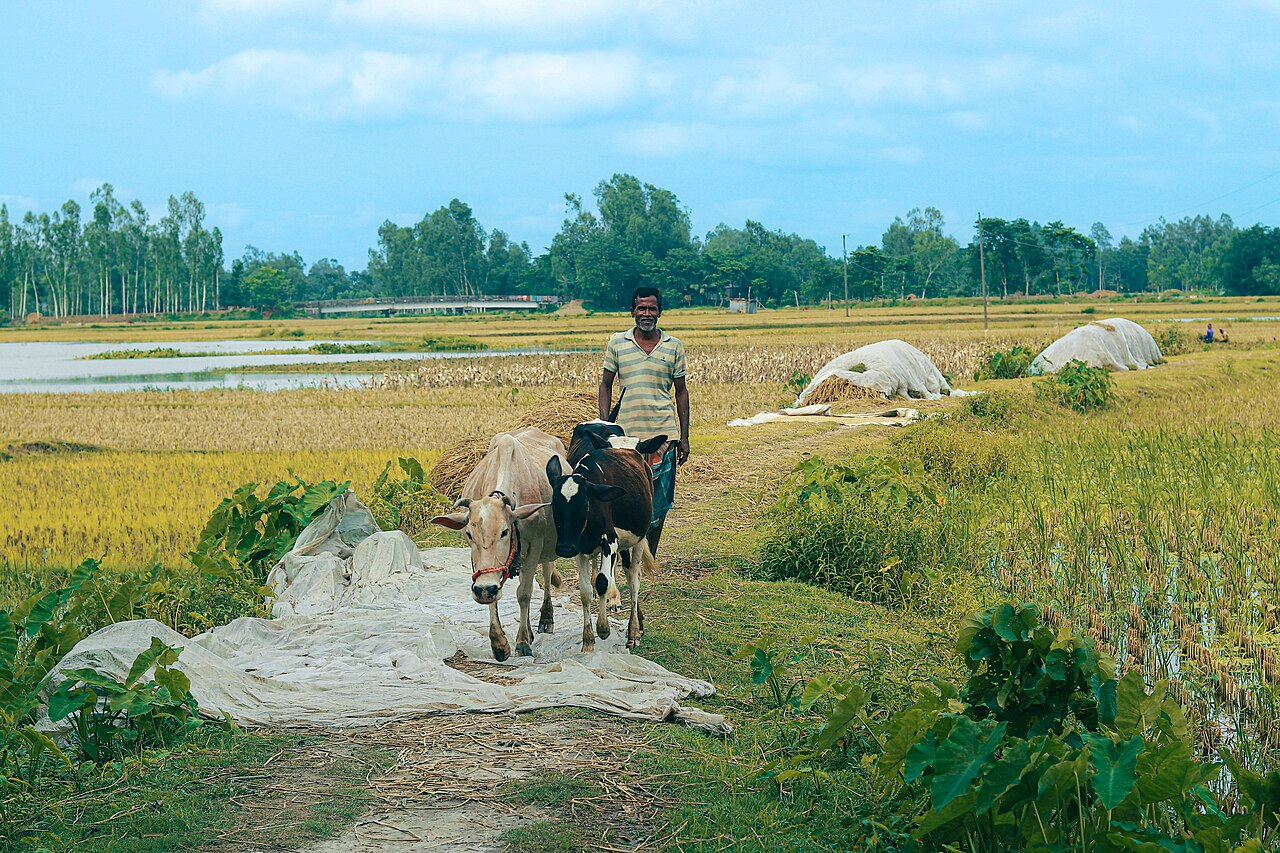
Photo: S.M.M.Musabbir Uddin / Wikimedia Commons (CC BY-SA 4.0)
Sources: Jagonews24, Bangla Tribune, Daily Amar Desh, Daily Inqilab, Independent Television
Comments
(0)