
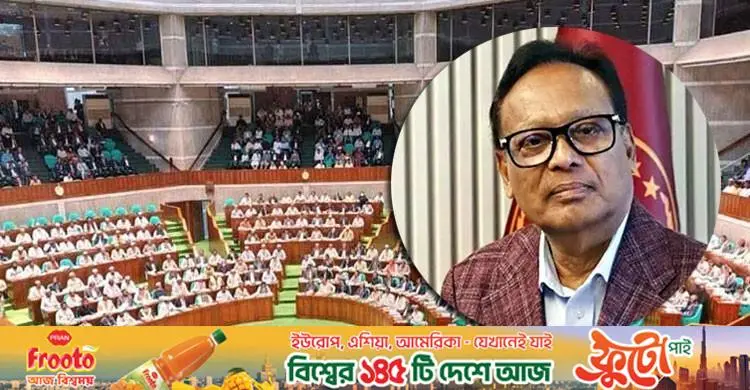
Science and Technology Minister Fakir Mahbub Anam has said there is a risk of harmful radioactive elements entering farm produce and food grains in very small amounts. He said effective steps are being taken to control the risk of artificial or abnormal radioactive contamination of food.
In parliament on 14 June, Md Abdul Bari Sardar, MP for Rajshahi-4, said: "With every meal we are taking in uranium, radium, thorium, antimony, heavy metals, pesticides and other chemicals. Does the government have any effective plan to stop the dangers of unsafe food?"
In reply, the minister said regular analysis and research is being carried out to determine the presence and amount of adulterants, pesticide residues, aflatoxin, harmful heavy metals, harmful microorganisms, antibiotic residues and harmful dyes in food.
Testing by several agencies
He said food is tested and reports are provided at the request of government agencies including the customs authority, the Bangladesh Food Safety Authority and BSTI. Relevant authorities also take steps against the risks of unsafe food based on data in scientific papers and reports published by the Bangladesh Council of Scientific and Industrial Research (BCSIR).
The minister said natural radioactive elements such as uranium, radium and thorium exist naturally at varying levels in soil, water, rock, the sea and other parts of the environment. In some places their presence is very slight, while in others it may be relatively higher because of geographical and geological conditions.
Through environmental cycles, he said, these natural radioactive elements can enter various farm products and food grains in very small amounts, which is why regular scientific monitoring is very important.
Fakir Mahbub Anam said testing is also arranged for domestically produced food when special circumstances, risk assessments or need require it. Work is also under way to make the food safety system more science-based, modern and risk-free by increasing laboratory capacity, developing technology, training staff and strengthening coordination between institutions.
Certificates for imported food
He said the Bangladesh Atomic Energy Commission regularly collects samples of soil, water, food grains, marine and environmental material through its laboratories in Dhaka, Savar, Chattogram, Mongla and elsewhere to test for radioactivity and monitor the environment. This is how the current state of radioactivity in the country's environment and food chain is assessed and changes are tracked.
The minister added that under the government's import policy, the Bangladesh Atomic Energy Commission regularly tests and evaluates radioactivity levels in imported food and food raw materials. Certificates for marketing are issued only after tests confirm that radioactivity in the food is within nationally and internationally recognised limits.
He said this is how effective steps are being taken to control the risk of artificial or abnormal radioactive contamination of food.
Source: Jagonews24. First published in Bengali on The Agro News.

Comments
(0)