
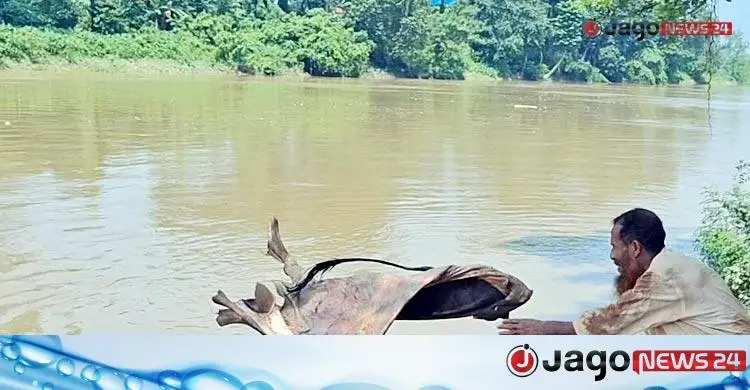
In Moulvibazar, when no one came to collect the hides of sacrificial animals after a daylong wait, those who had made the sacrifice were forced to throw them into the river or bury them in the ground. According to government figures, about 71,000 animals were sacrificed in the district, around 40,000 of them cattle. By the government's reckoning, the hides of these cattle are worth several crore taka.
Most Qawmi madrasas in the district did not collect hides this Eid, leaving the owners of sacrificial animals in difficulty. After waiting all day with no one taking the hides, many were forced to dump them in the river or bury them. The few who did collect hides struggled to cover their costs, having to sell each hide for just Tk 100.
Hide traders in the district's Balikandi area said: "Who will we sell to if we buy hides? Traders are owed crores of taka by the tanneries. Last Eid's hides still have not been sold. This Eid we bought some hides only to keep up a 200-year tradition. In reality the hide market is completely worthless."
Hides for Tk 100-150
On Eid day at the old bus stand area of the municipal town, sellers were seen bringing hides as evening fell, as in every year. Traders were buying them at Tk 100-150 apiece. Many sellers who brought hides by vehicle from far away did not even recover the fare, and many threw their hides away when they could not sell them. Both buyers and sellers expressed frustration.
Although hides have been preserved and sold at Balikandi bazar in the district for about 200 years, the traders were reluctant to buy this year. Partly out of compulsion and to keep the tradition alive, they bought some hides from the bus stand area of the district town.
Talking to teachers at various Qawmi madrasas in the district, it emerged that although the madrasas collect and sell hides every year, most did not do so this year because they had made a loss last year. The money spent collecting a hide is not recovered when it is sold.
Sellers' losses
Kawsar Ahmed said: "I collected 50 hides and sold them for Tk 4,000. It didn't even cover our effort and costs. I will never collect hides again. At the end of the day I have to pay the vehicle fare out of my own pocket."
Mansur Ali said: "I waited all day with the hides. This year nobody came to take them. In other years people came from the Qawmi madrasas, but this time they didn't come either. Since nobody would take them even for free, we were forced to throw them in the river."
Hide trader Abdus Shukur said: "I brought about 40 hides to Moulvibazar town, where hides are sold. No trader bought them. Then I took them and threw them in the river."
Md Shawkat, president of the Balikandi bazar hide traders' association, said: "Hide traders can't even cover their workers' wages by selling hides. The hide trade has gone on in our area for 200 years, and we are collecting some hides to keep up our tradition. The government has fixed a rate for hides, but in reality it is impossible to trade at that price. We still haven't been able to sell last year's hides, and the tanneries owe the traders money. This industry will be completely destroyed in the future."
Moulvibazar deputy commissioner Tauhiduzzaman Pavel said: "We spoke to the Balikandi hide traders about the overall situation. They bought as much as they could. On our side, salt was given to various Qawmi madrasas to preserve hides."
Source: Jagonews24. First published in Bengali on The Agro News.
Comments
(0)