
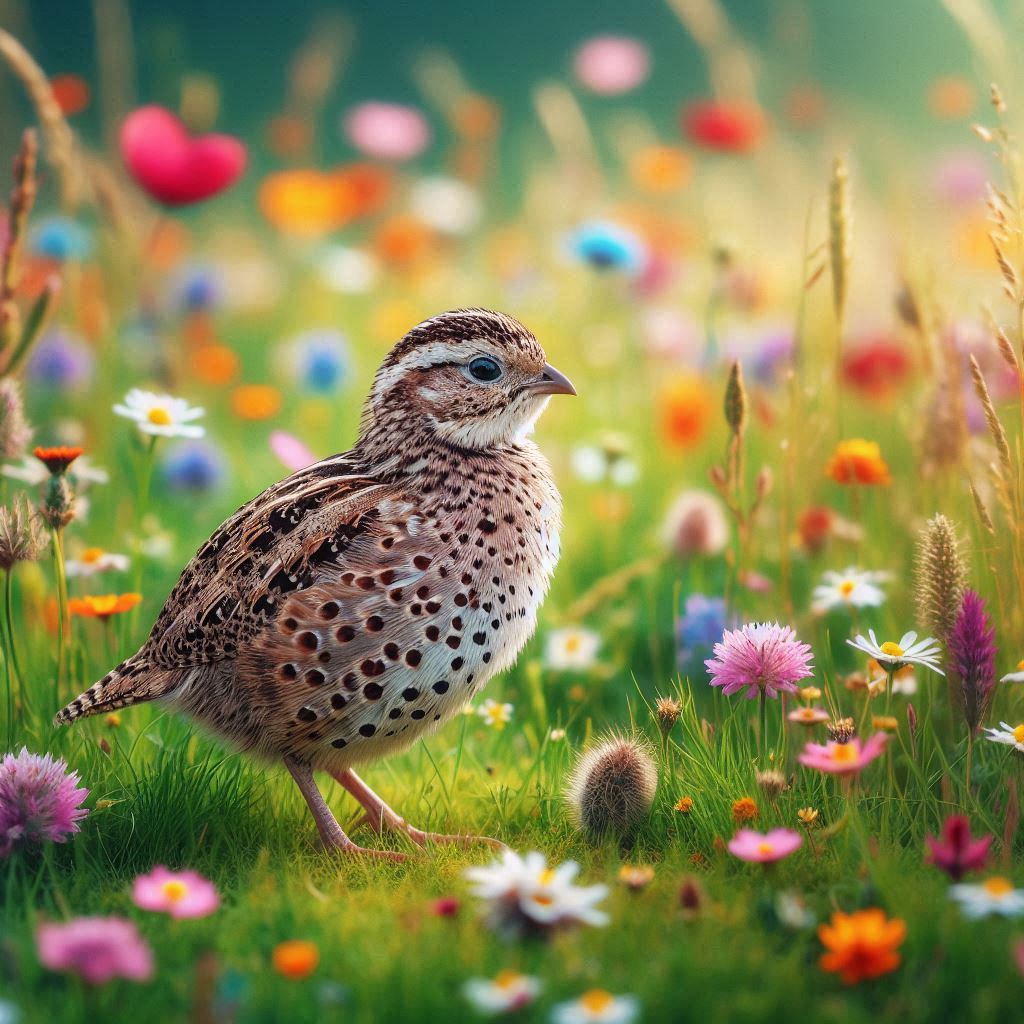
Quail farming is now a highly profitable business. Quail are popular as a complement to ducks and chickens. Their meat is very tasty and their eggs delicious, so they meet the demand for animal protein well.
An adult quail generally eats 20 to 25 grams of feed a day. In just 6 weeks, or 42 days, quail are physically ready to produce eggs and meat.
Quail can be reared in little space and with little capital. For example, eight quail can be kept in the space of one chicken. As a result, quail farming is becoming increasingly popular with marginal farmers and hobby farmers. Here we look at quail feed and quail rearing methods.
This guide covers rearing quail and hatching Japanese quail chicks, gives an idea of quail housing, and explains how to draw up feed for Japanese quail of different ages, along with feed and water management and lighting management in quail farming.
Breeds of Japanese quail
The Japanese quail is a new member of the poultry industry. There are many breeds and sub-breeds of commercial Japanese quail, such as Pharaoh, British Range, English White, Manchurian Golden, Tuxedo and Brown quail.
After chickens, the other poultry considered important in the industry include quail, ducks, geese and pigeons. Japanese quail have now emerged as an alternative poultry.
The breeds and sub-breeds differ in feather colour, weight, size, shape, laying rate, egg weight and survival rate, but their egg and meat production capacity is about the same.
Rearing basics
- The first step in rearing Japanese quail is hatching chicks from eggs.
- Each Japanese quail chick weighs 7 to 8 grams.
- Japanese quail do better reared in cages than on the floor.
Research has found that quail reared for 12 months in cages and on the floor reached body weights of 135.3 grams and 140.3 grams respectively, and monthly egg production rose by 60% and 58% respectively.
Balanced quail feed is needed for Japanese quail's health, growth, and egg and meat production.
The quail is a fancy bird whose meat and eggs are now very popular. Hatching, chick rearing, feed and water management, ration making and lighting management are all very important in quail farming.
Source: Online Desk. First published in Bengali on The Agro News.

Comments
(0)