
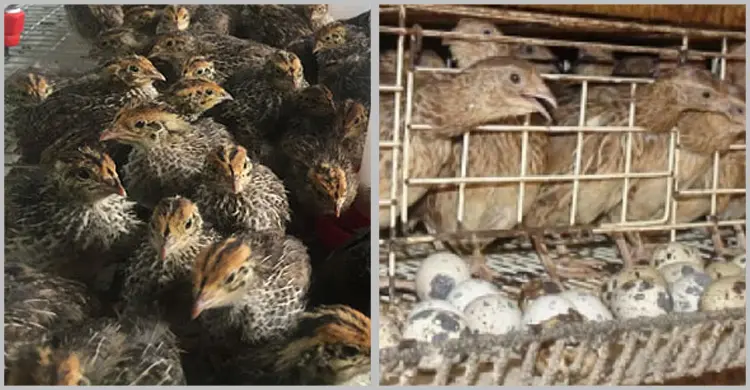
Quail farming is becoming more popular in Bangladesh day by day. Many unemployed young people have found work rearing quail, and many want to become entrepreneurs through it. But anyone starting a quail farm needs to know a few things.
Quail need proper housing, feed, health care and vitamin-rich food. They must be kept in cages, and eight birds can be kept per square foot.
Many say quail have no diseases and that all you need is to buy hens to lay eggs. That idea is completely wrong. Keepers need water and feed containers and must give feed and water on time. Quail farming takes a small investment for a large profit: an investment of Tk 40,000 can earn Tk 22,000 to Tk 25,000 a month if it is done properly. Farmers need to know the drawbacks of the litter system and the advantages of cages.
Problems with the litter system
Quail reared on litter suffer many diseases. The most dangerous is ulcerative enteritis, or quail disease. It is often unclear how the birds caught it, and all the quail can die within 72 hours.
The second is worms. Infected quail do not die at once, but they lay fewer eggs, gradually fall ill and die after some time. Another problem is dysentery: because the birds always stand on the litter and their own droppings, they get dysentery. Medicine cures it, but by then egg-laying has fallen.
The fourth problem is swollen eyes. Ammonia gas from the droppings often makes the eyes swell. With good ventilation they recover, but by then laying has fallen. Fungus can also grow on the litter, and quail that eat it will not survive.
Quail also fly, and sometimes land on eggs and break them, causing business losses.
Advantages of cages
In cages, by contrast, quail can be said to suffer no disease; only bird flu will kill them. Quail do die in cages too, not from disease but by getting their heads caught in the cage netting or their feet stuck in the gaps while pecking, though such deaths are very few. The start-up investment for cage rearing is higher.
The quail house or cages should be set on high ground, with netting on the roof and sides so that air flows freely.
Feed and health
Keepers must take great care over feed. Low-quality feed will cause dysentery or stomach problems even in caged birds. A vaccine may help them recover, but by then laying will have fallen, so feed should be checked carefully when buying. Keepers must watch the birds' health closely, as sick quail usually do not lay. Birds on litter are more likely to fall ill, so cages are better.
Source: Jagonews24. First published in Bengali on The Agro News.


Comments
(0)