
The Quran tells of a father and son who were prophets and also ruled a kingdom: the prophets Dawud (David) and Sulaiman (Solomon), peace be upon them. In a piece in Prothom Alo, the Islamic scholar and writer Mahmud Hasan Fahim sets out the lessons their reign holds for anyone who governs.
The first is knowledge and wisdom. Power without knowledge often leads to injustice and disorder, he writes, and the Quran opens its account of the two with the knowledge they were given: "We certainly gave knowledge to Dawud and Sulaiman" (Surah An-Naml, 27:15). A ruler's main task is justice; God made Dawud a successor on earth and told him to judge between people with justice and not follow his own desires (Surah Sad, 38:26).
The second is a worthy successor. The Quran says Sulaiman inherited from Dawud (Surah An-Naml, 27:16). He received prophethood and special knowledge as his father's heir, and his forces were made up of jinn, people and birds.
The third is humility in power. Once, as Sulaiman led his forces across the valley of the ants, an ant told the others to go into their homes so that Sulaiman and his army would not crush them without knowing. Hearing it, he smiled and asked God to help him stay grateful (Surah An-Naml, 27:18-19). The Quran calls him an excellent servant who constantly turned to God (Surah Sad, 38:30).
The fourth is oversight and accountability. Checking on the birds, Sulaiman found the hoopoe missing and demanded a reason for its absence. When the hoopoe brought news of the kingdom of Saba, he did not believe it blindly but set out to verify it (Surah An-Naml, 27:20-28).
The fifth is using wealth and strength for the public good. God softened iron for Dawud, who made armour from it, and made the wind and the jinn subject to Sulaiman, who had them build works for the people's benefit (Surah Saba, 34:10-13). He was still overseeing the jinn at his death, standing leaning on his staff; only when woodworms ate through the staff and his body fell did the jinn realise he had already died (Surah Saba, 34:14).
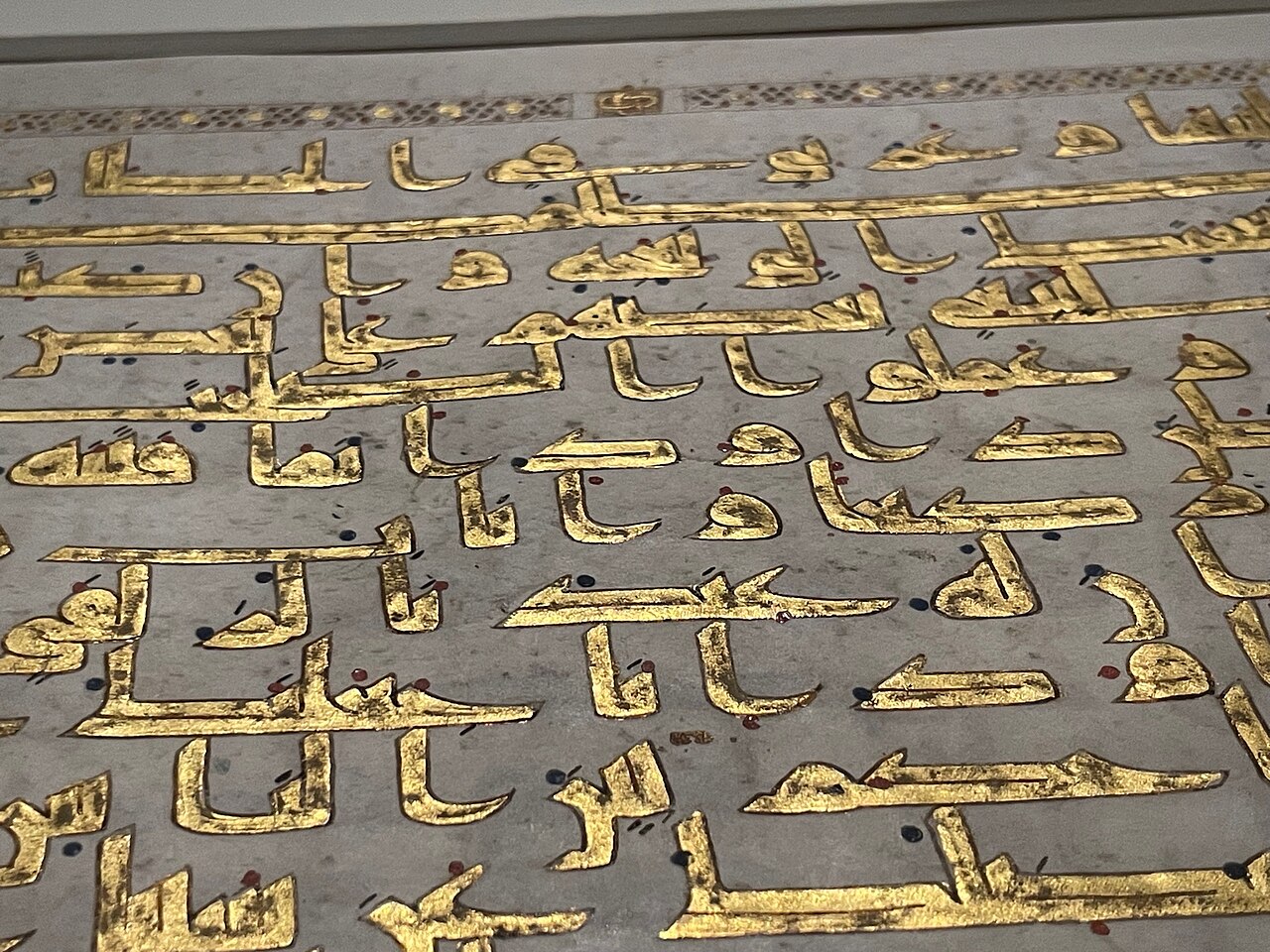
Writer: Mahmud Hasan Fahim, Islamic scholar and writer. The photograph shows part of a Kufic Quran manuscript, Surah Sad verse 24, pictured in Doha.
Photo: Bebo12321 / Wikimedia Commons (CC BY-SA 4.0)
Source: Prothom Alo


Comments
(0)