
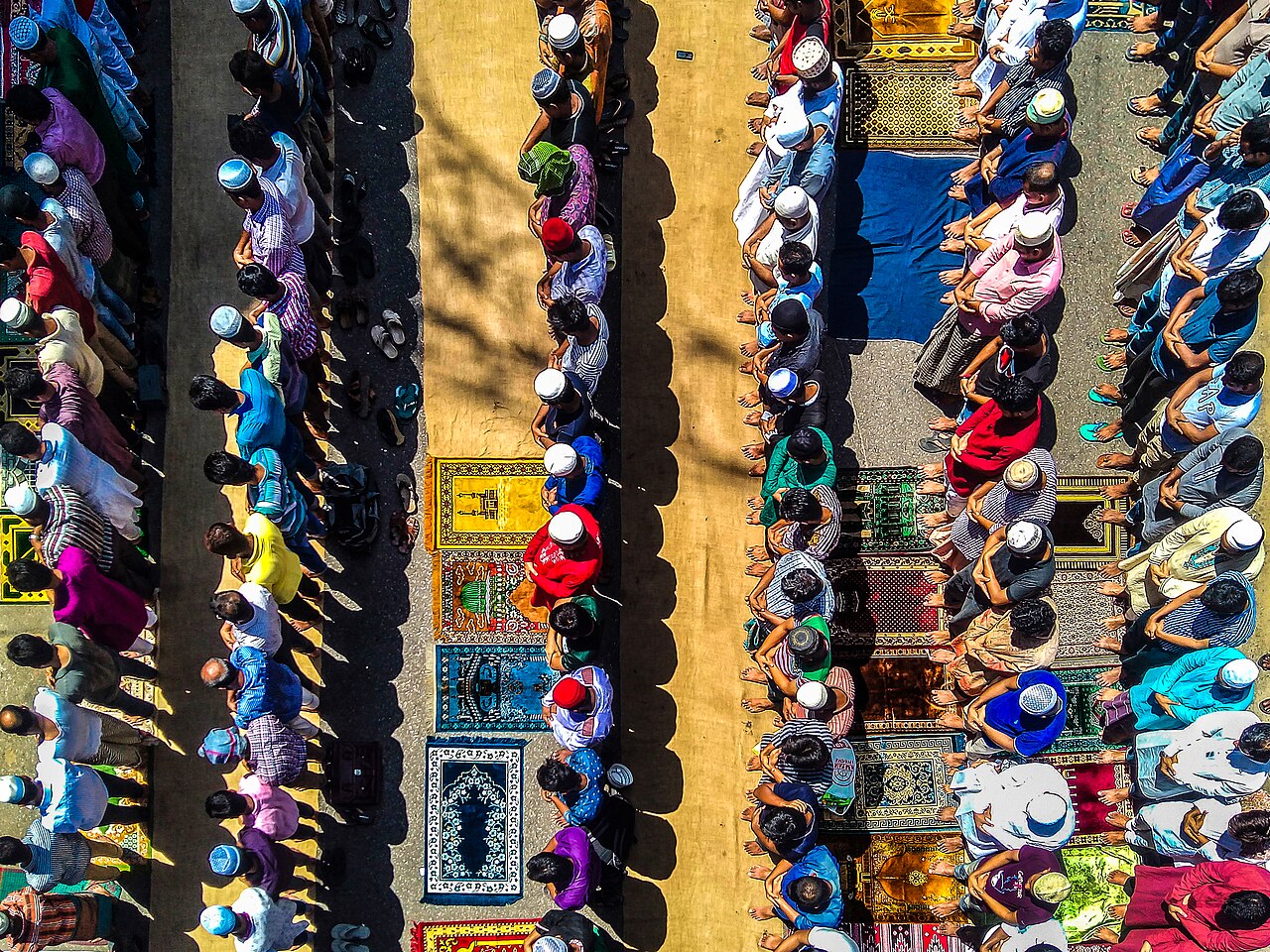
The Quran says that prayer restrains from shameful and evil deeds (Surah Al-Ankabut, verse 45). Yet some people pray and still do wrong. In an article in Prothom Alo, Saki Mahbub, an assistant teacher at Nadir Hossain Girls' High School in Rajbari, looks for the answer in the reasoning behind prayer, the attention it asks for and its effect on the mind.
His first reason is a sense of accountability. Leaving everything five times a day to stand before Allah raises a question in the mind: how can I disobey the One I stand before again and again? In his example, a man who prays Fajr before going to the office is held back from a bribe or a fraud by the thought of standing in prayer again at Zuhr.
Second, prayer cleanses the soul. In a narration in Sahih al-Bukhari (hadith 528), the Prophet (peace be upon him) asked his companions whether any dirt would remain on a man who bathed five times a day in a river at his door. When they said no, he told them that the five daily prayers are just like that. In another, in Musnad Ahmad (hadith 9777), told of a man who prayed at night and stole by day, the Prophet said his prayer would soon stop him from stealing. Regular prayer, the writer explains, builds a remorse that in the end helps a person leave sin.
The third reason is that prayer breaks pride. In congregation the rich and the poor, the powerful and the labourer stand shoulder to shoulder and prostrate together, and a mind freed of pride, he writes, does not easily oppress others. The fourth is discipline: the prayer times, from dawn to night, give life a frame and leave less idle, aimless time.
But prayer restrains a person from wrong only when it is offered with full attention, the writer reminds readers. Going through the motions for show is not real prayer. The opening verses of Surah Al-Muminun describe the successful believers as those who are humble in their prayer.
He also points to the social side of congregational prayer. Meeting five times a day lets Muslims look after one another and builds kindness towards the needy. Prayer, he concludes, matters not only for salvation in the hereafter but for building a clean, crime-free individual and society in this world.
Photo: Ehsanul Siddiq Aranya / Wikimedia Commons (CC BY-SA 4.0)
Source: Prothom Alo

Comments
(0)