
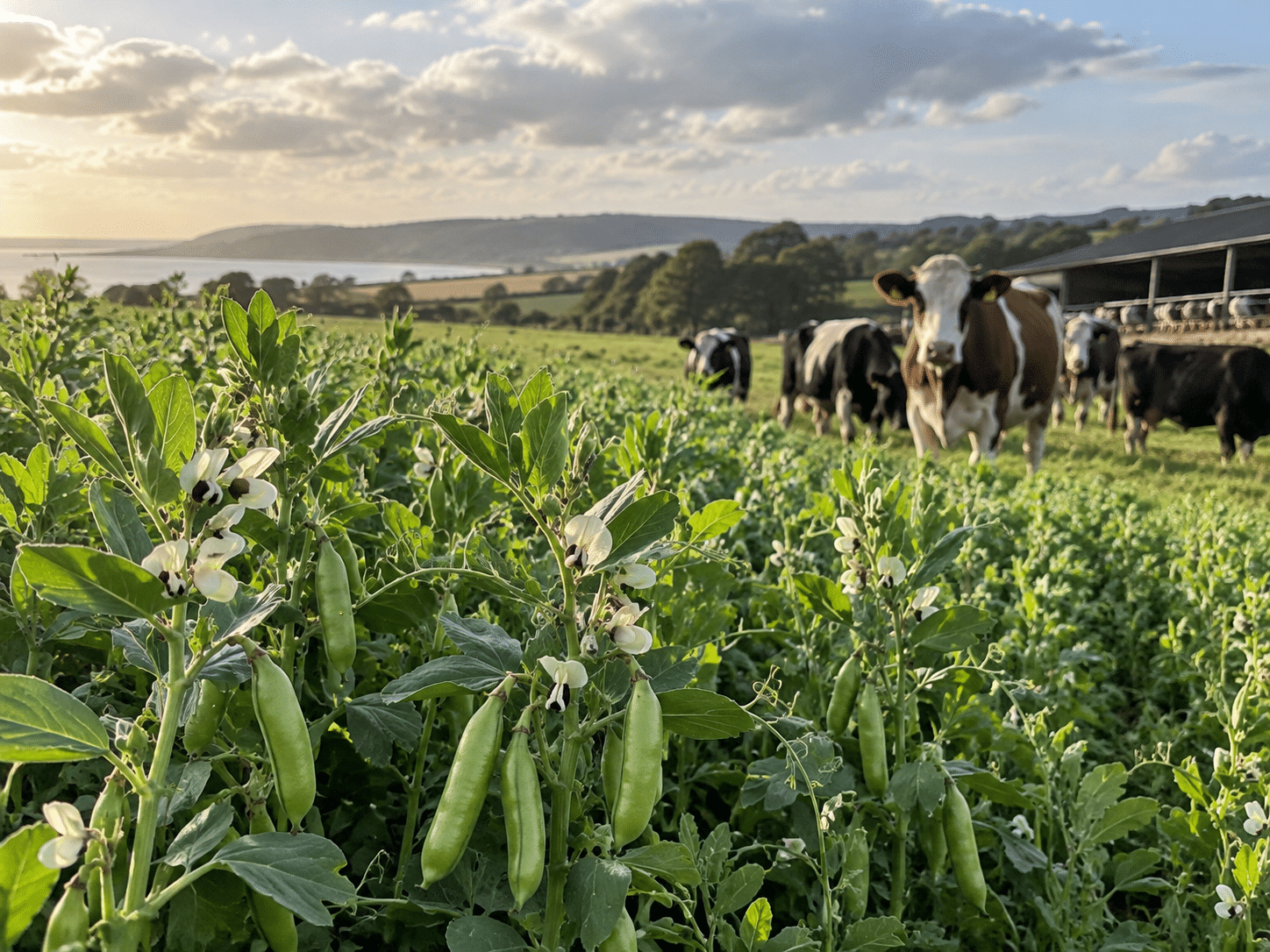
A new €5.5 million research project funded by the European Union's Horizon Europe programme aims to grow more protein crops in Europe and turn them into livestock feed locally, reducing dependence on imported soybean meal, Seed World Europe reports.
PROCEED brings together 20 partners from 12 EU countries and the United Kingdom, including Scotland's James Hutton Institute. The five-year project, which began in September 2026, focuses on grain and forage legumes and has two linked goals: raising and stabilising the yields of European-grown protein crops, and developing cost-effective local and regional processing to turn them into high-quality feed.
About 25% of the crude protein used in EU animal feed is imported, and soybean and soybean meal make up about 72% of that, leaving livestock systems exposed to trade disruption, price swings and climate shocks. "Across Europe, livestock production remains heavily dependent on imported protein feed," said Pietro Goglio of the University of Perugia, the project's scientific coordinator.
The James Hutton Institute will help set up 11 regional Practice Hubs across Europe and support the UK hub, connecting farmers, processors, feed businesses and researchers in pilot studies under real farm and supply-chain conditions. "Europe needs more than higher protein-crop yields; it needs viable routes from field to feed," said deputy coordinator Pete Iannetta, adding that policy and targeted investment will be needed for the systems to reach commercial scale.
Legumes fix nitrogen from the air with the help of soil bacteria, cutting the need for synthetic fertiliser and its emissions, and can improve soil function, biodiversity and support for pollinators as droughts, heatwaves and floods raise risks for European farming.
Source: Seed World Europe

Comments
(0)