
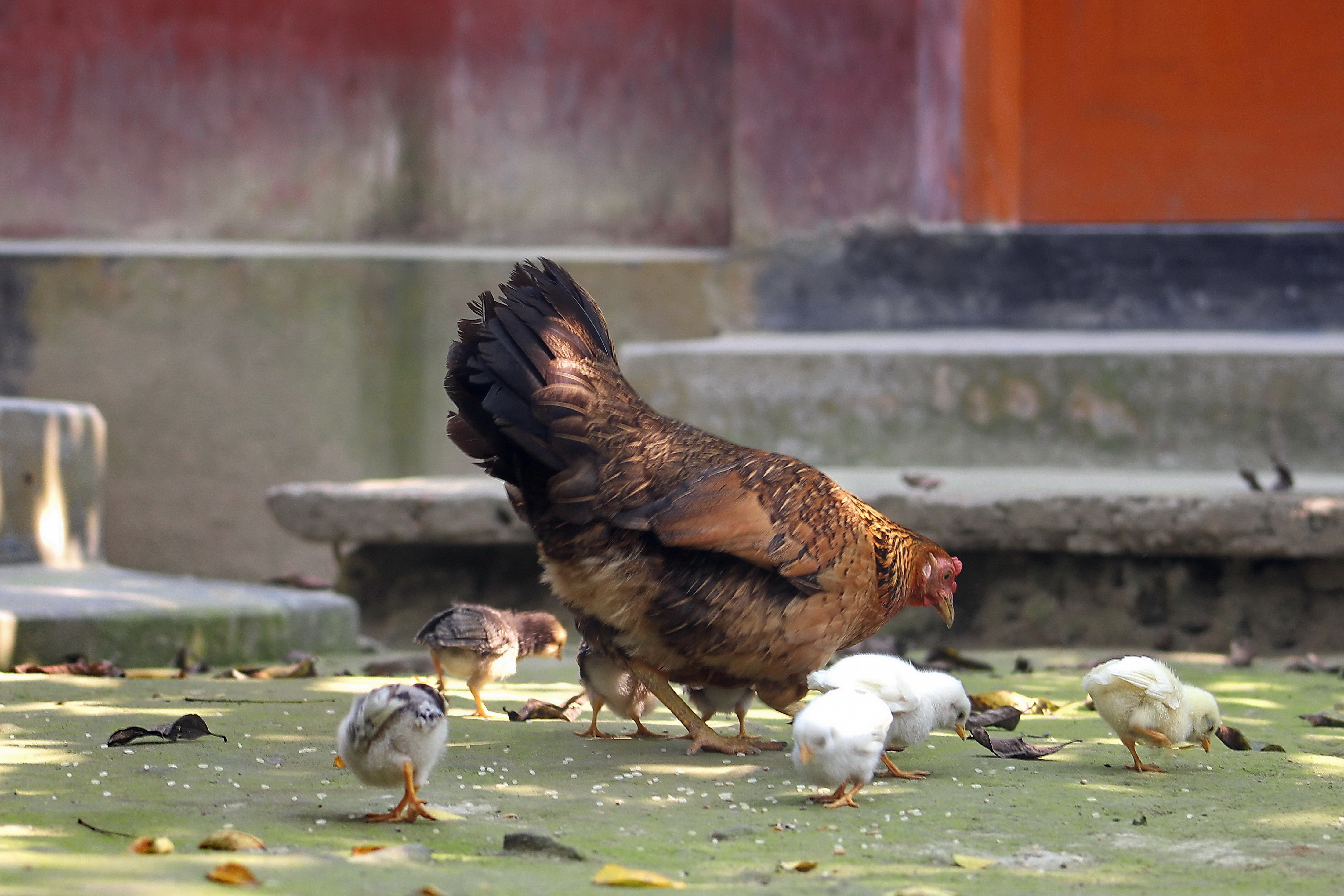
The Directorate of Primary Education (DPE) asked on Wednesday, 29 July 2026, that primary-level pupils across Bangladesh be encouraged to keep and care for animals, including helping their parents rear ducks, chickens and other domestic animals and birds at home. The request came in a letter sent to all divisional deputy directors of primary education and other officials concerned, Jagonews24 reported that evening. Alongside household poultry, the letter asked pupils to be kind to animals, to work in small groups to encourage their neighbours to keep animals, and asked that the subject be raised at Cub Scout and Holde Pakhi gatherings and, regularly, at mothers' gatherings and courtyard meetings.
According to the report, the letter said that encouraging pupils to keep animals was set out in a 180-day action plan for implementing election manifesto pledges, and that the listed activities were requested, on instruction, so that the plan could be carried out. Jagonews24 described it as the 180-day action plan adopted to implement the BNP's election manifesto pledges. The report did not publish the letter's reference number, a deadline or any reporting format, and it carried no reaction from teachers, parents or animal health officials.
The four instructions in the letter
The letter, as quoted in the Jagonews24 report, listed four activities for schools and pupils:
- Pupils should help their parents rear ducks, chickens and other domestic animals and birds at home.
- Pupils should be kind to all animals and encourage others to be kind to them.
- Pupils will form small groups and encourage the neighbours around their own homes to keep animals.
- The subject must be discussed at Cub Scout and Holde Pakhi gatherings, and discussed regularly at mothers' gatherings and courtyard meetings.
The first instruction is about the household: the pupil's role is to help the parents who already keep birds or animals, not to start a farm alone. The second is about behaviour, kindness to all animals, and the third turns pupils into small groups that carry the message to neighbouring homes. The fourth names the school forums through which the message is to travel: the two uniformed youth programmes that run in primary schools, and the meetings that schools hold with mothers and with families in their own courtyards.
The letter's word for the animals concerned, as Jagonews24 printed it, was "poshya prani", animals kept and cared for by people. The examples it gave were ducks and chickens, followed by "other domestic animals and birds". It did not name cattle, goats or pets such as cats separately, and it set no number of birds or animals for a household.
The directorate that sent the letter
The Directorate of Primary Education runs the government's primary schools under the Ministry of Primary and Mass Education. Its website lists the offices beneath it: district primary education offices, upazila primary education offices and primary training institutes (PTIs), which train teachers. A letter addressed to the divisional deputy directors therefore reaches the field offices that supervise schools in every district and upazila.
Banglapedia, the national encyclopaedia published by the Asiatic Society of Bangladesh, traces the present structure to the 1990s. A Compulsory Primary Education Act was approved by Parliament in 1990, a Primary and Mass Education Division was formed in August 1992, and in January 2003 the Primary and Mass Education Bureau was transferred to the Ministry of Primary and Mass Education. Banglapedia also records that the 1972 constitution identified education as a basic right, and that the duration of primary education was kept at five years. It lists four main kinds of schools under the ministry: government schools, experimental schools attached to the PTIs, registered non-government primary schools and community schools.
The age range matters for the letter. Banglapedia's entry on Bangladesh Scouts gives the cub section as children of 6 to 10-plus years, the same children who fill primary classrooms. The tasks the letter set, helping parents, being kind and talking to neighbours, are pitched at that age group.
Cub Scouts and Holde Pakhi: the school forums named
Bangladesh Scouts, the national scouting body, began in Dhaka on 22 May 1948 as the East Bengal Scout Association, according to Banglapedia. After independence, scout leaders formed the Bangladesh Scouts Samity in April 1972, which received government recognition on 9 September 1972; the World Organization of the Scout Movement recognised it as its 105th member on 1 June 1974, and it took the name Bangladesh Scouts in 1978. The movement has three branches: Cub Scouts for children of 6 to 10-plus, Scouts for school and madrasa pupils of 11 to 16-plus, and Rover Scouts for young people of 17 to 25.
Banglapedia describes scouting's methods as learning by doing, working in small patrols, badges for achievement and work in the open air. The cub motto is given as "trying the best". It also notes that scouts take part in community work such as tree planting, sanitation, environmental conservation and relief after disasters. A small-group discussion about looking after household animals fits that pattern of learning by doing in patrols.
Holde Pakhi, literally "yellow bird", is the programme of the Bangladesh Girl Guides Association for primary school girls. The association itself was incorporated by the Bangladesh Girl Guides Association Act, 1973 (Act No. XXXI of 1973), dated 3 October 1973, which turned the former East Pakistan branch of the Pakistan Girl Guides Association into the Bangladesh Girl Guides Association. The Act, published on the government's Laws of Bangladesh website, also gives the association exclusive rights to its titles, uniforms and badges.
The programme was being expanded in 2026. On 18 May 2026 the national news agency BSS reported that, under a "Holde Pakhi activities expansion programme 2026" organised by the association's Chattogram region, 90 Holde Pakhi members from five primary schools in Kaptai upazila of Rangamati were invested and given certificates and uniforms. Speakers at that event said, according to BSS, that guiding plays an important role in building children's moral education, discipline, leadership and human values. The 29 July letter added care for animals to the topics these groups were to discuss.
Ducks and chickens in Bangladesh's homes: the numbers
The letter's choice of ducks and chickens reflects how common the birds are. The Department of Livestock Services (DLS), in its "Livestock Economy at a Glance (2024-2025)" sheet based on Bangladesh Bureau of Statistics data, put the country's chicken population for 2024-25 at 3,360.70 lakh and its duck population at 705.82 lakh, with total poultry at 4,066.52 lakh. For comparison, the same table gives 2,683.93 lakh chickens and 522.40 lakh ducks for 2015-16.
Egg production, by the same DLS table, was 2,440.65 crore in 2024-25, against a demand of 1,850.16 crore calculated at 104 eggs per person per year; the sheet gives availability as 137.19 eggs per person per year. Meat production was 89.54 lakh tonnes against a demand of 77.92 lakh tonnes. The figures cover all livestock and poultry, including commercial farms, not only household birds.
The same DLS sheet puts the livestock sector's share of gross domestic product at 1.81 percent at constant prices in 2024-25 (provisional), and its share of agricultural GDP at 16.54 percent. It states that livestock provides direct employment to 20 percent of the population and partial employment to 50 percent.
Family poultry: who looks after the birds
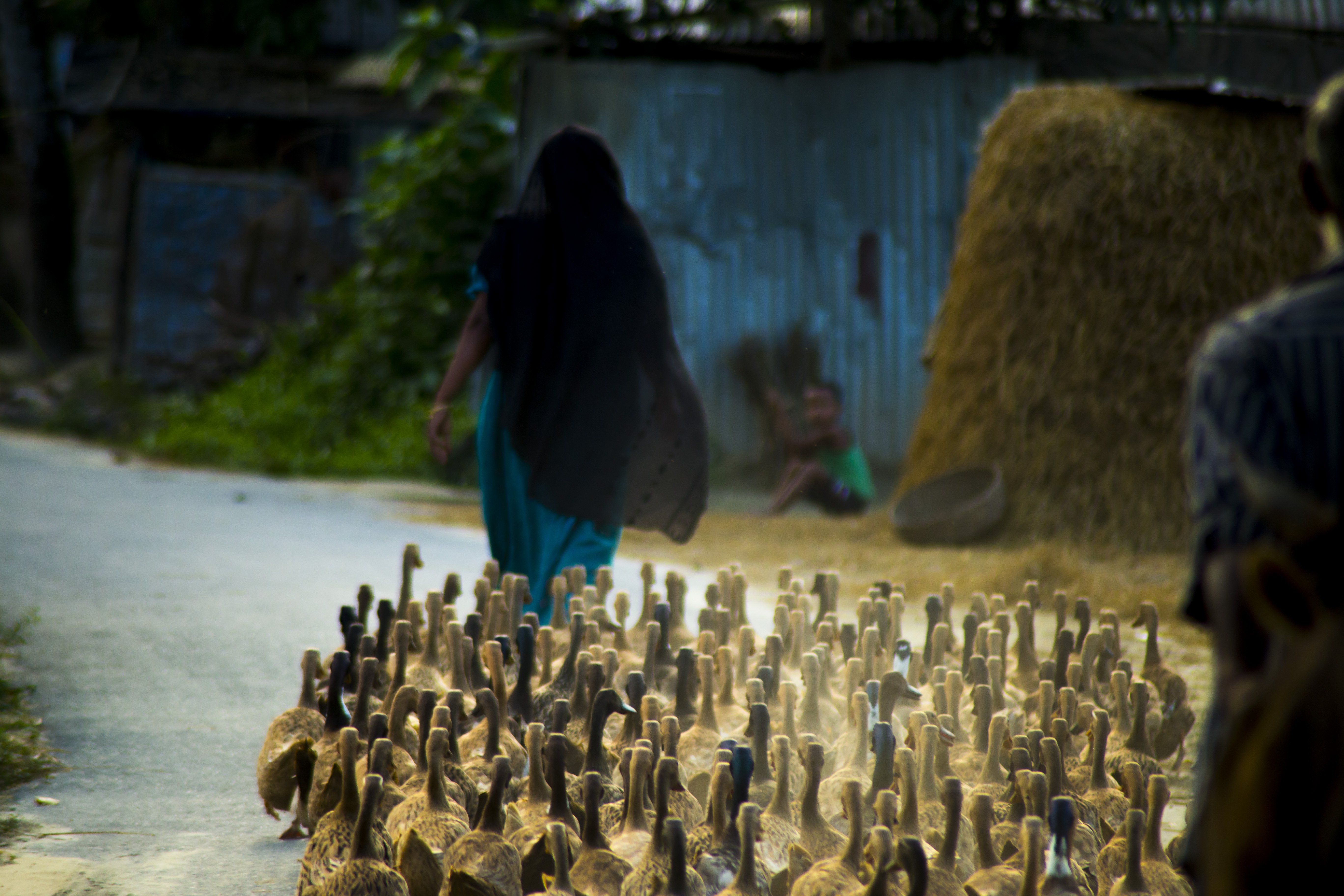
Most household ducks and chickens in villages are kept in what the Food and Agriculture Organization of the United Nations (FAO) calls family poultry. FAO's "Decision tools for family poultry development", published in Rome in 2014 with the International Fund for Agricultural Development (IFAD) and the Kyeema Foundation, describes family poultry as small-scale production by individual families for food security, income and employment. It says family poultry makes up to 80 percent of poultry stocks in low-income food-deficit countries, where owners keep anything from a single bird to a few hundred.
On who does the work, the FAO guide states that women generally undertake the day-to-day care and management of the birds, often with assistance from their children, while men usually build night shelters, buy inputs and occasionally help with marketing. It gives reasons for women's central role: family poultry needs little initial investment and brings quick, frequent returns, and it can be done without leaving the homestead. In that light, the letter's request that children help their parents describes a role that, by FAO's account, many rural children already play.
FAO lists what family poultry gives a household: eggs and meat with high-quality nutrients, a small income and savings that it calls especially important for women, and manure for vegetable gardens and crops. In Asia, it notes, poultry manure is also used to feed fish where birds are raised over ponds, as in fish-cum-duck farming. The guide divides family poultry into four systems, from small extensive scavenging, where birds find almost all their own food, to small-scale intensive units that use commercial feed and day-old chicks. In scavenging systems the most common supplement is small amounts of grain or household leftovers.
Banglapedia notes that Bangladesh's domestic ducks descend from the wild mallard, and that local chickens produce less meat and fewer eggs than improved breeds such as the White Leghorn, whose hens may lay nearly 230 eggs a year. The FAO guide names Sonali birds in Bangladesh as an example of a crossbred that has made a substantial contribution to small-scale poultry production, and it cites IFAD's experience in Bangladesh showing that poor women can run mini-hatcheries successfully.
Diseases that threaten household flocks
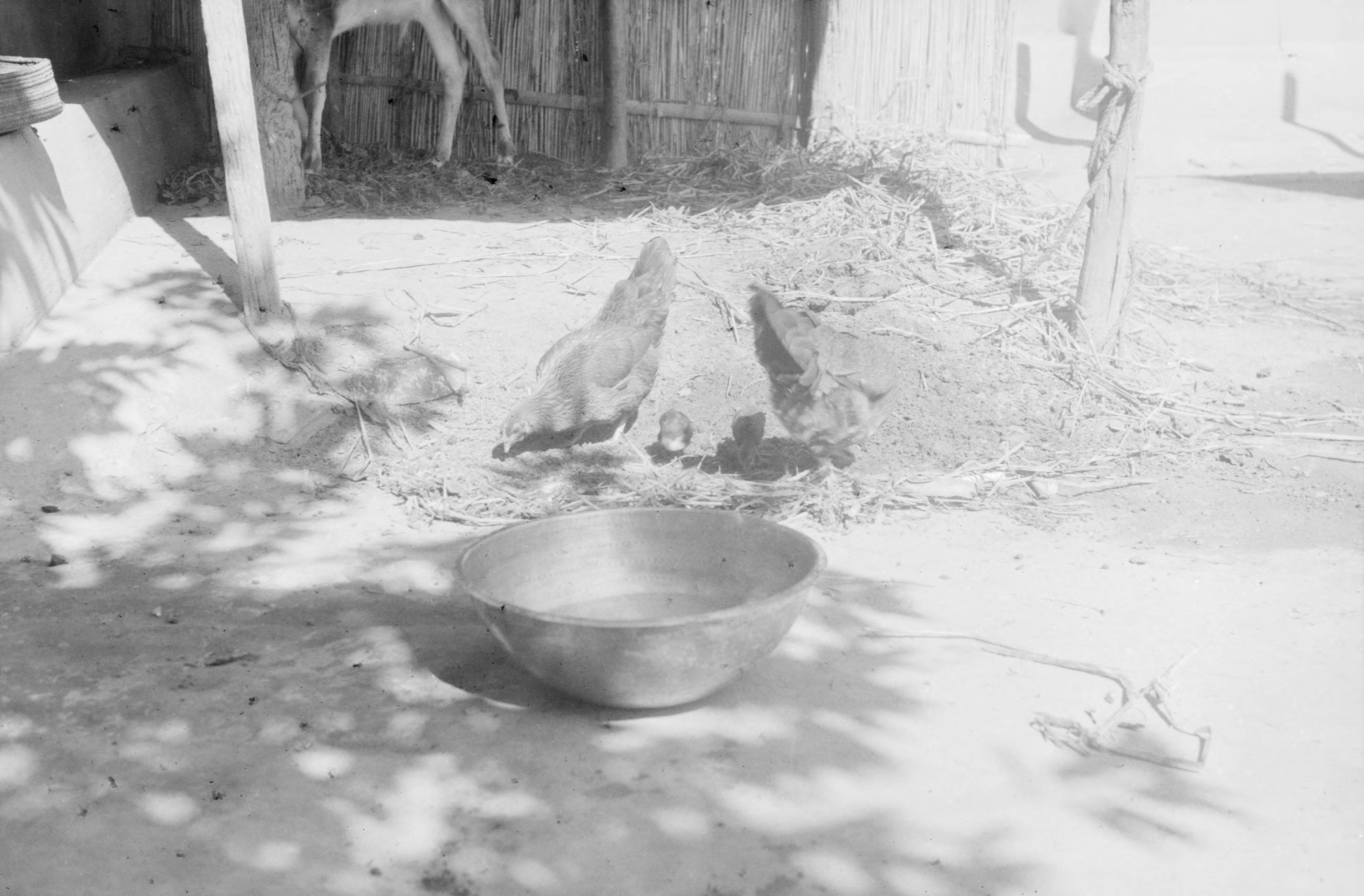
Disease is the main risk in household poultry. The FAO guide names Newcastle disease, in all regions, and fowl cholera, in Southeast Asia, as the diseases of economic importance that cause high mortality in chickens, and duck plague and duck cholera as the major concerns for ducks. It adds that the most successful control programmes in family poultry have used vaccination by community vaccinators or poultry workers, and that high mortality, often from Newcastle disease, discourages owners from investing in their birds.
Banglapedia describes Newcastle disease, known locally as Ranikhet, as quite prevalent in rural Bangladesh and the principal cause of fowl mortality, with sneezing, coughing, twisting of the head and neck or paralysis among its signs. It says the disease can be controlled through sanitary management and isolation of flocks, and that vaccines are available. The same entry describes fowl cholera as often appearing in epidemic form in Bangladesh and spreading through contaminated soil, food and water.
For a household that the letter asks children to help, the practical point is that vaccination and treatment are matters for animal health workers. The upazila livestock office of the Department of Livestock Services is the place to report sick birds and ask about vaccination; doses and medicines should come from that office, not from guesswork at home.
Kindness to animals and the law
The letter's second instruction, that pupils be kind to all animals, echoes the country's animal welfare law. The Animal Welfare Act, 2019 (Act No. 12 of 2019), dated 10 July 2019, replaced the Cruelty to Animals Act, 1920. Its preamble says it is necessary to ensure animal welfare by preventing cruelty to animals, showing them kind treatment and rearing them responsibly, and to raise social awareness for that purpose.
Section 4 of the Act sets out the duty of every owner or caretaker of an animal: to treat the animal in a beneficial and humane way and to refrain from cruel treatment unless there is a reasonable cause. The Act also has sections on unnecessary cruelty to animals, on mutilation, on poisoning, on registration of commercial production of pets, and on offences and penalties. The letter did not refer to the Act, but its call for kind treatment of all animals covers the same ground in terms a primary pupil can follow.
Keeping children safe around poultry
Health agencies advise simple precautions for anyone, and especially children, who handles poultry. The US Centers for Disease Control and Prevention (CDC), in guidance on backyard poultry last updated on 18 July 2025, says chickens, ducks and other poultry can carry germs such as Salmonella that make people sick, and that young children, older adults and people with weakened immune systems are more likely to fall ill. It advises washing hands with soap and running water after touching poultry or anything in the area where they live and roam, and says adults should supervise handwashing for young children.
The CDC adds that children younger than five should not handle or touch chicks, ducklings or other poultry, that people should not kiss or snuggle birds and then touch their face or mouth, and that poultry should be kept out of the house, especially where food is prepared or stored. It advises washing any peck, bite or scratch at once with soap and warm water and seeking medical care if the bird seems sick or the wound becomes red, painful, warm or swollen.
The World Health Organization's fact sheet on avian and other zoonotic influenza, dated 21 January 2026, says direct or indirect contact with infected animals is the primary risk for human infection with bird flu. It advises the public to avoid contact with sick or dead animals and to report them to veterinary authorities, to clean hands thoroughly before and after contact with animals and their surroundings, and not to eat animals that have died unexpectedly. It also states that there is no evidence that these viruses pass to humans through properly prepared and cooked poultry or eggs. Parents who want health advice for a child should consult a doctor.
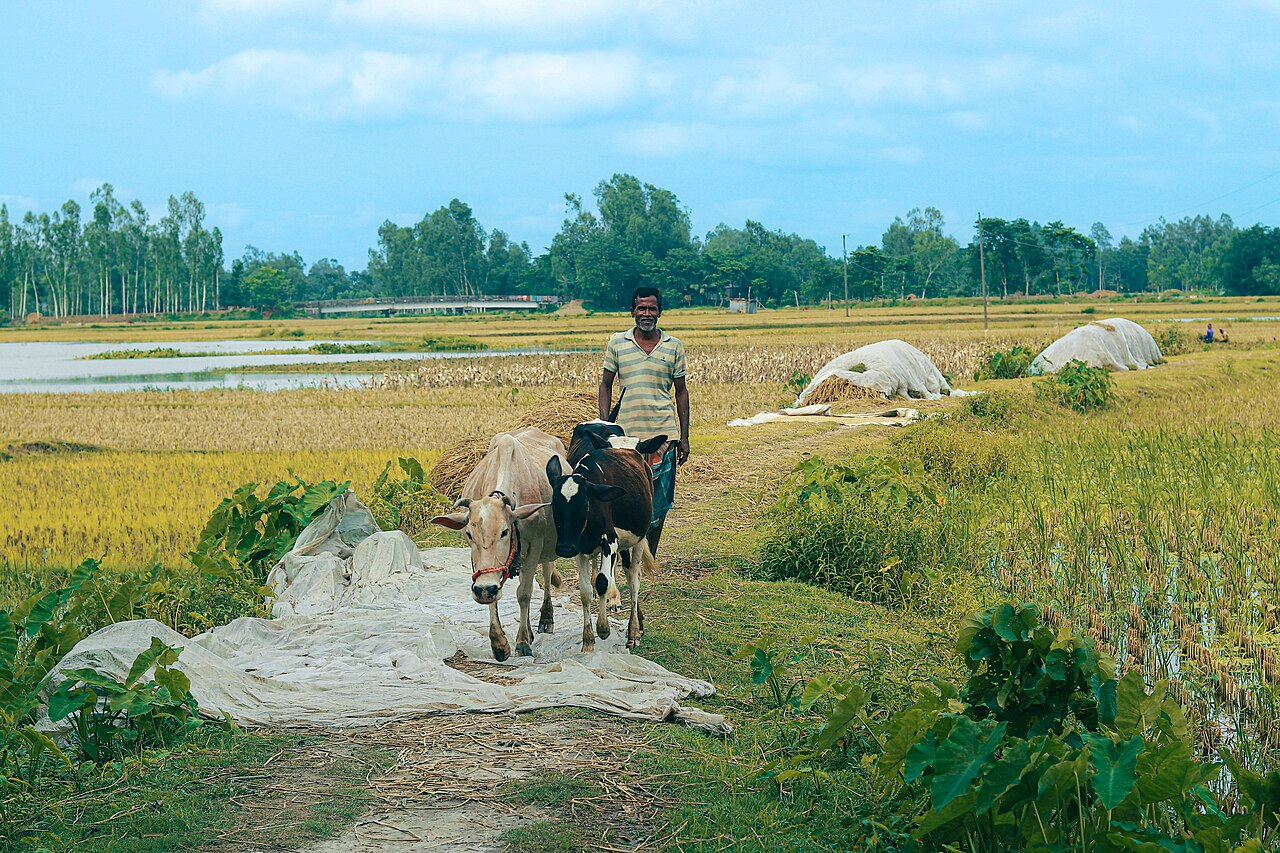
Photo: TawsifSalam / Wikimedia Commons (CC BY-SA 4.0)
Sources: Jagonews24, Directorate of Primary Education, Department of Livestock Services (Livestock Economy at a Glance 2024-2025), FAO (Decision tools for family poultry development, 2014), Banglapedia, Bangladesh Sangbad Sangstha (BSS), Laws of Bangladesh (Animal Welfare Act 2019; Bangladesh Girl Guides Association Act 1973), US Centers for Disease Control and Prevention, World Health Organization
Comments
(0)