
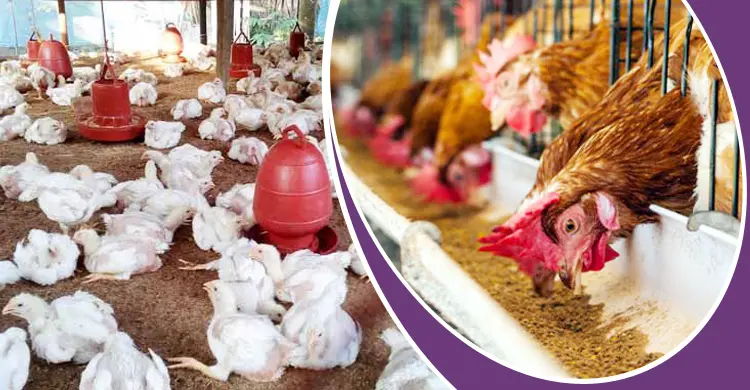
In winter, temperatures in some parts of our country fall as low as 4 to 5 degrees Celsius, and poultry farmers face many problems. Chicken farms therefore need special care in winter, and for profitable management farmers should pay close attention to the following.
Housing
In winter the conditions inside the poultry house must be set according to the birds' age, ensuring a suitable environment for the age of chickens being reared. Clear bushes and scrub around the house so that daylight falls fully on the roof.
Close the gaps in doors and windows so that cold wind cannot enter.
Litter management
Dry rice husk is the best litter in winter, as it keeps the chickens warm. Spread litter 5 to 10 centimetres thick in the brooder house. If chickens are reared on the floor, litter for grown birds should be no less than 4 inches thick.
Litter must be clean and free of contamination. If water spills and wets it, replace the wet litter with dry litter. The litter should not be so dry that it becomes dusty.
Temperature
A poultry house needs a normal temperature of 65 to 75 degrees Fahrenheit, but the brooder house needs an initial temperature of 23 to 35 degrees Celsius. When the outside temperature falls sharply, increase the number of electric bulbs in the brooder. If the roof is tin, fit a ceiling of hardboard or similar material.
Spread straw over the tin or roof to keep the house warm, while keeping air moving through it. So that chicks get heat evenly during brooding, install a brooder hardboard fitted with three 100-watt bulbs for every 500 chicks.
Light
Light the house so that it spreads evenly. During brooding, keep the light on continuously for the first three days.
Chicks per square metre
In the brooder house, keep 50 chicks per square metre at first and gradually increase the space from four days of age. After 14 days, keep the house temperature right and expand the space so that chicks can move about the whole house.
Although the body heat of laying hens moderates the house temperature somewhat, this is not good for high egg production. So stocking density should depend on the type of house, equipment used, the birds' age, breed and rearing method, not on the outside temperature.
Ventilation
Ventilation is very important in a poultry house. Airflow removes the toxic air produced inside and helps fresh air in. Even if all doors and windows are kept shut in winter to keep out cold wind, ventilation must be kept running.
Vaccination
Draw up a vaccination programme for proper farm management. For broilers, Ranikhet and Gumboro vaccines are enough, but a farm should follow a complete vaccination programme. With falling temperatures in winter, avian influenza and Ranikhet infections in particular may increase. It is thought that preventing Ranikhet disease can reduce avian influenza infection, so give the Ranikhet vaccine on time.
Feed in winter
Chickens eat more in cold weather, producing body heat from the extra food, so they need more calories in winter. Increase the carbohydrate and fat sources in the feed a little. Calories can also be raised by mixing in some oil while keeping all other nutrients at the right levels. During the first three days of brooding it helps to spread sacking or paper on the litter and scatter feed on it.
Give chicks feed a little at a time, often, which builds their interest in eating. Production of meat and eggs falls in birds of all ages in winter, so make sure the feed supplied has enough nutrients.
Water
Chickens drink twice as much water as the feed they eat, but in winter they drink less because of the cold. To keep intake up, give lukewarm rather than cold water in the morning during severe cold. Clean the containers well before filling them.
Source: Jagonews24. First published in Bengali on The Agro News.
Comments
(0)