
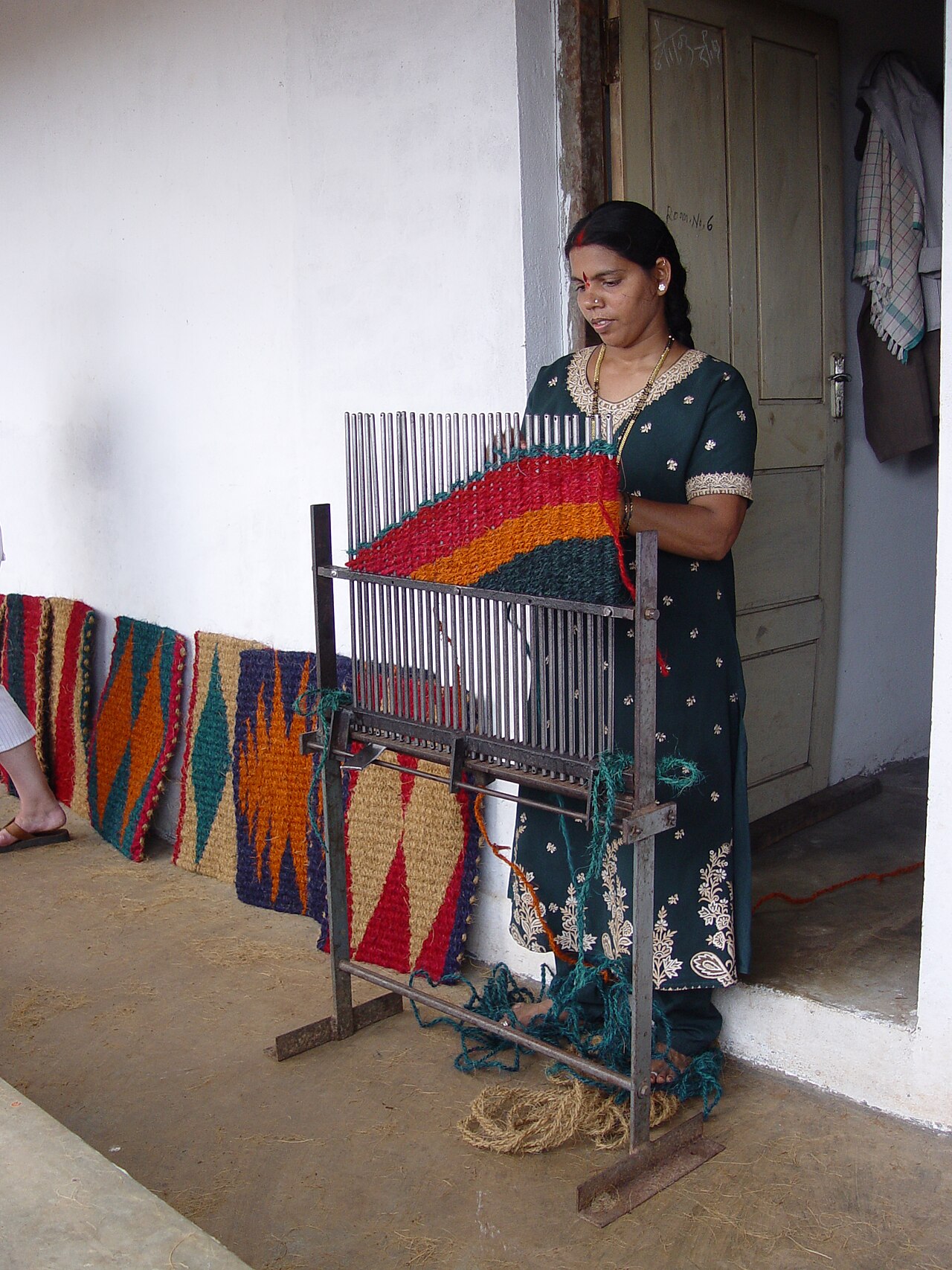
In several villages of Nesarabad upazila in Pirojpur, discarded coconut husk is the main source of a living. It is made into brushes, doormats and other household goods. Wholesalers carry the products of this cottage industry, more than seven decades old, to Dhaka and across the country.
How it is made: husks collected from homes and markets are soaked in water for about a month, then the strong fibre is separated by traditional methods. Small pieces of coir are threaded onto fine string to make doormats in many sizes and designs. In Alkirhat, fibre is cut to length, bound with string and nailed to wooden handles; a brush goes through about 10 steps.
A few families in Alkirhat and Sutiakathi villages have kept the craft alive over generations. Women make doormats between household chores to earn extra income, and men work alongside them. Husk that once littered the roadsides now provides work in the village.
Prices and pay: brushes sell for Tk 80 to 120 each, wholesale and retail, depending on size and quality. Small and medium doormats start at Tk 200, and large decorative ones fetch Tk 600 to 2,000. Yet an artisan earns only Tk 300 to 500 for a full day's work.
A lack of modern market links, limited marketing and shortages of capital and buyers have kept the industry small. Artisans say easy loans, wider markets and modern marketing could make it a large source of jobs.
H M Faizur Rahman, deputy manager of BSCIC in Pirojpur, called the making of car-wash brushes and doormats from coir environmentally friendly and said BSCIC would support artisans and entrepreneurs with technical advice and easy loans. The report was filed by Dhaka Mail's Pirojpur district correspondent.
Photo: making doormats from coconut coir, Wouter Hagens / Wikimedia Commons (CC BY-SA 3.0)
Source: Dhaka Mail

Comments
(0)