
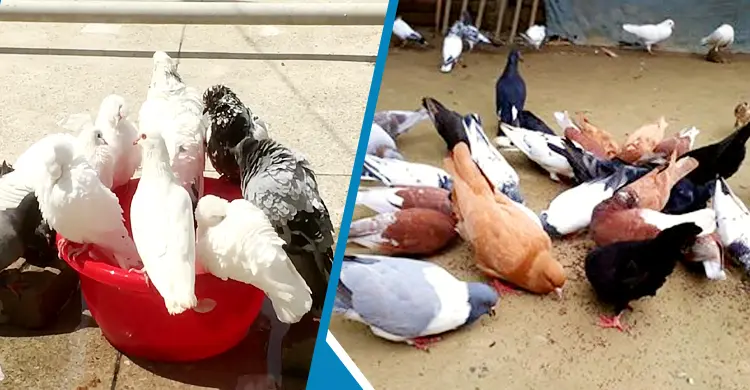
Pigeons are now reared commercially as well as for pleasure, and some people have escaped unemployment by keeping them. But to profit from pigeon rearing, keepers must know about the diseases pigeons suffer and stay alert to keep them from attacking the birds.
Paratyphoid is one of the main diseases of pigeons, and most infected birds die. It is the chief among the deadly pigeon diseases.
How it spreads and its symptoms
Paratyphoid can spread among pigeons in several ways. It spreads most through dirty feed and water containers, and also through breathing in dust carrying the germs. Insects, flies and rats spread it too.
An infected pigeon suffers intestinal inflammation with soft, mucus-rich green droppings, and the liver, kidneys and spleen are affected. The result is stunted growth, weakness and fatigue.
Treatment
Treatment must start as soon as symptoms appear, and all the pigeons should be treated, not only the infected ones. Severely affected birds should be separated and given care and treatment; any infected bird should be isolated as soon as the disease appears. Severely affected birds may need hand feeding, and in some cases multivitamins and electrolytes.
Fourteen days after a pigeon recovers, its droppings should be tested to judge the result of treatment. The test should then be repeated at least twice more at three-week intervals to make sure the disease has been eliminated.
Prevention
The danger of paratyphoid can be avoided by preventing it with a vaccine, but the vaccine is not readily available in Bangladesh.
Paratyphoid can be prevented by regularly using an acidifier to protect pigeons from paratyphoid and other harmful germs.
Source: Jagonews24. First published in Bengali on The Agro News.



Comments
(0)