
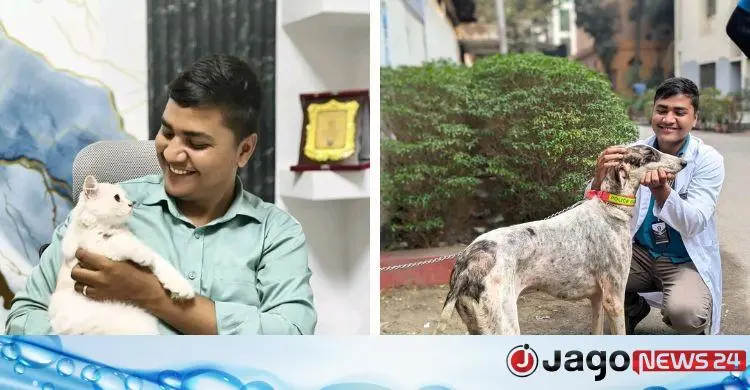
In the heatwave sweeping the country, pets and street animals are suffering along with people. Many animals are falling ill with dehydration, heat stroke, digestive problems and various skin conditions. Yet a little awareness and a few simple rules can greatly reduce the risk.
Veterinarian Dr Nazim Uddin spoke about protecting and caring for pets in the current conditions. "Like humans, animals are under physical stress in the heat," he said. "But they cannot put their discomfort into words, so owners have to read the signs and act quickly."
The main risks
Dr Nazim Uddin said the most common problem in animals in extreme heat is dehydration, caused by not drinking enough water or losing too much water from the body.
The most dangerous risk, he said, is heat stroke. Dogs and cats do not have as many sweat glands as humans, so they cannot easily regulate their body temperature. In extreme heat their body temperature can reach dangerous levels within a short time.
Food also spoils quickly in the heat, increasing vomiting, diarrhoea and gastrointestinal infections. Skin rashes, fungal infections and parasites such as ticks and fleas are more common too. Many animals lose their appetite, raising the risk of weakness and malnutrition.
Signs of heat stroke
The vet says it is vital to spot heat stroke in an animal quickly. If a dog or cat pants rapidly with its mouth open in an unusual way, drools heavily, or its gums and tongue turn bright red, purple or bluish, that may be a danger sign.
Other important signs include a body temperature of 104 degrees Fahrenheit or higher, difficulty standing or walking, trembling, lethargy, sudden vomiting or diarrhoea, and loss of consciousness.
Many owners dismiss these signs as ordinary tiredness or a normal reaction to the heat, he said, but this can make matters worse.
First aid
If signs of heat stroke appear, the animal must quickly be moved out of the sun or heat to a cool, well-ventilated place.
"Many people use ice or very cold water, which is wrong," Dr Nazim Uddin said. "It can send the animal into shock."
His advice is to wet the animal's body with water at normal temperature, especially the head, neck, belly and under the paws, which brings quick relief. Fanning the wet body lowers the temperature faster.
If the animal is conscious it can be given small amounts of water, but it should not be forced to drink or eat.
"Even after first aid, the animal must be taken to a vet quickly," he said, "because heat stroke can damage the kidneys, liver or other internal organs."
Water and food
Dr Nazim Uddin advises keeping clean water available for animals at all times in hot weather. One or two ice cubes can be added to the water bowl if needed.
"Heavy and very fatty food should be avoided," he said. "Easily digestible, fresh food is better."
He advises giving the main meal in the morning or evening rather than in the midday heat, because food can spoil quickly in the heat. Instead of leaving food in the bowl for a long time, fresh food should be given in small amounts several times.
Common mistakes
The vet warned that some common mistakes in hot weather can be fatal for animals. The biggest is leaving an animal inside a car parked in the sun, where the temperature rises dangerously within minutes.
Walking an animal in the harsh midday sun or on hot tarmac roads is also risky: their paws can be burned and the risk of heat stroke rises.
Shutting an animal in a room without ventilation, ignoring signs of illness, or shaving off too much fur to make it comfortable can also do harm.
"Many people think shaving off all the fur will make an animal comfortable," Dr Nazim Uddin said. "But in many animals the fur protects them from the sun's heat and sunburn, so cutting more fur than needed is not right."
Help for street animals
Street animals suffer most in the heat, and even a small effort can be a big help to them.
A bowl of water can be left in front of a house, beside a shop or in a shady spot so that dogs, cats and birds can drink.
Dr Nazim Uddin urged people not to chase away animals that take shelter on verandas or in shady places in the heat, and to give them some food if possible. If an animal is seriously ill, he advises contacting a local animal rescue organisation or a vet.
Calling for compassion towards animals in this extreme heat, he said: "Animals cannot express their suffering in words. So it is our moral duty to understand their needs and care for them."
In his view, the most important things now are to keep pets in the coolest, best-ventilated part of the house, watch them regularly and make sure they get the treatment they need.
During a heatwave, the safety of animals deserves the same attention as that of people, because a little awareness, a little care and some humane effort can save countless lives.
The article was written by Shamim Reza, a student and journalist at Gono University.
Source: Jagonews24. First published in Bengali on The Agro News.



Comments
(0)